Shared-packet shoppers
A packet of digestives suits a household that expects to open biscuits for tea breaks. Compare the biscuit type and pack weight, then check how the packet should be stored after opening.


Choose a packet of chocolate digestives for biscuits to share, or individually wrapped biscuit bars when separate portions matter more. If the coating is the deciding factor, check the exact variant: the Tesco-listed digestives and Fox’s rounds describe milk chocolate, while the checked Penguin and Club bars describe a milk-chocolate-flavour coating. Pack size, ingredients and allergy advice also differ by product.
A packet of digestives suits a household that expects to open biscuits for tea breaks. Compare the biscuit type and pack weight, then check how the packet should be stored after opening.
Biscuit bars suit lunchboxes or occasions when people want their own portions. Tesco describes the checked Penguin Original bars as individually wrapped; compare their filling and coating description with the Club Orange bars rather than treating the two variants as identical.
Use the ingredients and precautionary wording on the exact product. The checked Fox’s rounds and Sainsbury’s digestives carry different, product-specific allergy advice, so a warning on one packet cannot stand in for another’s label.
Start with how the biscuits will be eaten, then compare the exact coating description, pack and label.
| Priority | What to check | Your needs |
|---|---|---|
| Biscuit and coating | Check whether the base is a digestive, shortcake or biscuit bar. Read the coating name and ingredients for the exact variant; a declared chocolate percentage alone does not establish taste or coating thickness. | I want the biscuit and coating described on the packet, rather than assuming every chocolate-flavour coating is described as milk chocolate. |
| Pack format | Check net weight or the number and weight of bars. For an opened packet, follow its storage instructions; Tesco and Sainsbury’s advise keeping their checked digestives in an airtight container after opening. | Will we share an opened packet over several tea breaks, or would separate bars be more useful? |
| Allergy advice | Read ingredients and precautionary statements on the exact pack. The Tesco-listed Fox’s Milk Chocolate Rounds say they may contain nuts and peanuts; Sainsbury’s warns that its checked milk-chocolate digestives are unsuitable for customers with an oat allergy due to manufacturing methods. | Someone eating these biscuits needs product-specific allergy information, not an assumption based on the brand or biscuit category. |
| Nutrition per portion | Check whether the label gives values per biscuit, per bar or per 100g. Compare the portion likely to be eaten on the same basis, and distinguish total sugars from other sugar measures. | For a packet and a multipack, I want to compare the amount I would actually serve, not just the figures printed for different portion sizes. |
Tesco uses the milk-chocolate-flavour description for its checked Penguin Original and Club Orange bars, but identifies milk chocolate on the checked digestives and Fox’s rounds.
If the coating matters to you, read the description and ingredients for the particular variant before choosing.
The checked Fox’s rounds carry a nuts-and-peanuts precaution, while the checked Sainsbury’s digestives have a product-specific oat-allergy warning. Neither statement establishes the advice for every biscuit in that brand or category.
Check the exact pack intended for the person who will eat it, especially if the product or recipe changes.
These references describe particular listed products and variants, not every biscuit made under each name.
The Tesco-listed 266g milk-chocolate digestives are a named-brand shared-packet example. Penguin and Club are separate McVitie’s biscuit-bar lines.
The Tesco-listed McVitie’s Penguin Original seven-pack contains chocolate-flavour cream-filled biscuit bars.
The checked McVitie’s Club Orange variant contains seven 22g biscuit bars.
The Tesco-listed Chocolatey Milk Chocolate Rounds are coated shortcakes rather than digestives.
Tesco’s checked 300g milk-chocolate digestives provide an own-brand shared-packet example.
Sainsbury’s checked 300g milk-chocolate digestives are another own-brand shared-packet example.
These McVitie’s packets cover milk- and dark-chocolate digestives plus a chocolate-coated Hobnobs oat-biscuit twin pack. They are options for shoppers considering a shared packet or twin pack, rather than the individually wrapped bar format discussed above.
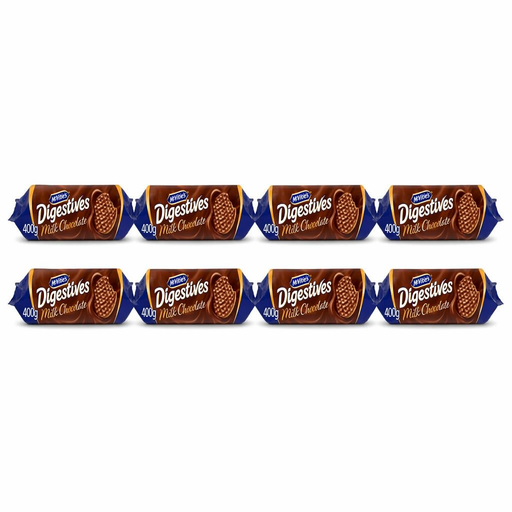 No image available
A 400g packet of milk-chocolate digestives for sharing. Check the pack’s ingredients and storage instructions for your household.
 No image available
A twin pack of chocolate-coated oat biscuits for a household choosing between biscuit types. Each pack is labelled 262g; check its ingredients rather than assuming an oat biscuit is suitable for a particular allergy.
 No image available
Dark-chocolate digestives in two 266g packs for shoppers who prefer that coating description and want more than one packet. Check the exact variant’s ingredients before buying.
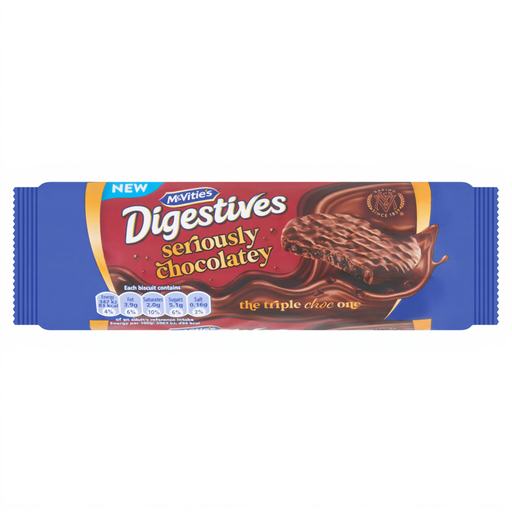 No image available
A 250g packet of the Seriously Chocolate digestive variant. If its coating is your reason for choosing it, check the exact pack description rather than inferring a chocolate proportion from the name.
 No image available
A single 400g packet of dark-chocolate digestives for sharing. Its pack format differs from the two-pack dark-chocolate option; check the label for ingredients and storage advice.
Follow the packet’s instructions. Tesco and Sainsbury’s advise storing their checked chocolate digestives in an airtight container after opening; check the date and storage wording on the pack when deciding how much to buy.
No: UK government food-labelling guidance says best-before dates concern quality, whereas use-by dates concern safety. Follow the product’s storage instructions and assess its condition.
No conclusion about allergy suitability follows from the category name. Tesco’s listing for the checked Fox’s rounds says they may contain nuts and peanuts, while Sainsbury’s gives its checked digestives an oat-allergy warning linked to manufacturing methods. Read the ingredients and precautionary information on the exact pack.
For a UK purchase, GOV.UK guidance says a seller must offer a full refund if an item is faulty or not as described. Keep the packaging and contact the seller about the problem; this is distinct from asking to return food simply because you have changed your mind.