No-bake dessert makers
If your recipe calls for a crushed biscuit base, match its biscuit type and weight. Good Food’s no-bake cheesecake specifies 300g of chocolate digestives.


For a crushed no-bake cheesecake base, start with the chocolate digestives named in your recipe: Good Food’s example uses 300g. Coated shortcake rounds and filled bars offer different shapes for a whole-biscuit topping or separate serving, but they are not established as like-for-like substitutes in that base. Check the coating description, pack weight and full allergen information before buying.
If your recipe calls for a crushed biscuit base, match its biscuit type and weight. Good Food’s no-bake cheesecake specifies 300g of chocolate digestives.
Coated rounds and filled bars have distinct shapes for a visible topping or for serving alongside dessert. Their different biscuit bases and fillings matter if you were considering them for a crushed digestive base.
Check the exact biscuit pack and every other ingredient in the bake. For example, Tesco’s listing for Fox’s Milk Chocolate Rounds says they may contain nuts and peanuts.
Decide whether the biscuits will be crushed or kept whole, then compare the coating, quantity and ingredient information of the exact pack.
| Priority | What to check | Your needs |
|---|---|---|
| Biscuit format | Check whether the recipe names chocolate digestives or calls for whole biscuits. Good Food’s no-bake cheesecake crushes chocolate digestives; a filled bar or coated shortcake is a different format. | I’m making a crushed base, so I want the biscuit specified in my recipe. For a visible topping, I may prefer a round or bar that stays whole. |
| Coating and flavour | Read the exact product description for milk chocolate, dark chocolate or chocolate-flavour coating. Penguin Original and the cited Club Orange bars also have cream fillings, according to their Tesco listings. | If the coating or an added flavour matters to my bake, I want to know which one the pack actually contains. |
| Ingredients and allergens | Read the full ingredients and allergy advice on the pack, including precautionary statements. McVitie’s lists butter oil from milk in its dark-chocolate digestives; Tesco’s listing for Fox’s Milk Chocolate Rounds says they may contain nuts and peanuts. | I’m baking for someone with an allergy, so I need to check the biscuit and everything else going into the finished dessert. |
| Pack quantity | Compare the recipe weight with the weight of the pack you intend to buy. Good Food’s cheesecake uses 300g of chocolate digestives; McVitie’s lists several pack sizes for its milk-chocolate version. | One pack needs to provide enough biscuits for the amount my recipe specifies. |
| Storage before baking | Follow the instructions on the exact pack. Tesco’s milk-chocolate digestive listing says to keep biscuits in a cool, dry place and use an airtight container once opened. | If I’m opening the pack before bake day, I want to store the remaining biscuits as directed. |
Good Food’s cited cheesecake uses 300g of chocolate digestives, while McVitie’s lists a 266g milk-chocolate pack among its sizes.
Compare the required weight with the exact pack weight before ordering.
McVitie’s and Sainsbury’s cited dark-chocolate digestives list milk-derived ingredients. The coating name alone cannot establish suitability for someone with a milk allergy.
Check the actual pack’s ingredients and allergy advice, along with every other ingredient in the bake.
The cited Penguin Original and Club Orange bars have fillings and milk-chocolate-flavour coatings; Good Food’s crushed cheesecake base instead specifies chocolate digestives.
Choose a bar for its shape or flavour when serving it whole or in visible pieces, rather than assuming it will behave like the biscuit in a base recipe.
These examples show how the named product lines differ; check the exact variant rather than extending one pack’s details to an entire brand.
Its milk- and dark-chocolate digestives are options when a recipe calls for a chocolate-coated digestive.
Penguin Original is a filled biscuit bar that can be served whole or used in visible pieces.
The cited Club Orange bar combines a coated biscuit with orange-flavoured cream.
The cited Milk Chocolate Rounds are coated shortcakes for a different whole-biscuit shape from a digestive.
Its cited own-label products include a half-coated milk-chocolate digestive and a separate half-coated malted-milk biscuit.
Its cited 300g dark-chocolate digestive is another coated digestive format.
These chocolate digestive options are relevant when you are buying biscuits for a recipe that calls for a crushed digestive base. Match the flavour and pack weight to your recipe; this selection does not assess coated rounds or filled bars for whole-biscuit toppings.
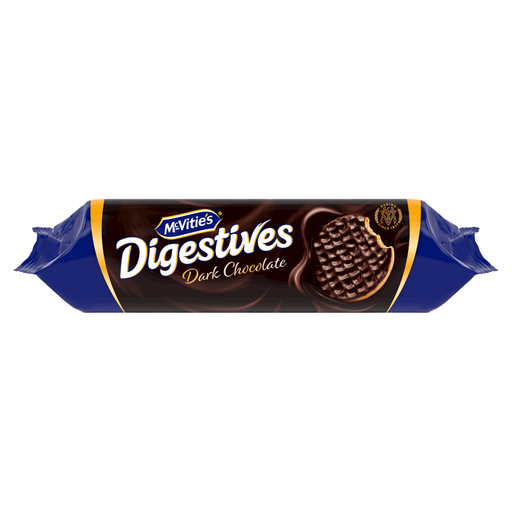 No image available
A dark-chocolate digestive to consider when a crushed digestive base suits your recipe. The 400g pack exceeds the 300g of chocolate digestives in Good Food’s cited cheesecake; check the exact pack’s ingredients if milk is a concern.
 No image available
A milk-chocolate digestive for a recipe specifying crushed chocolate digestives. Its 400g pack exceeds the 300g used in Good Food’s cited cheesecake; check the full pack label when baking for someone with an allergy.
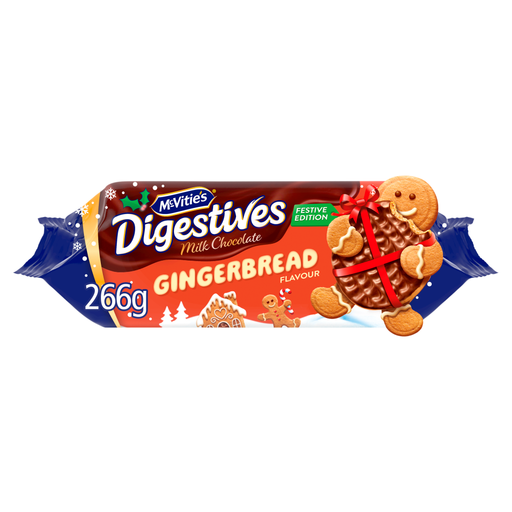 No image available
A gingerbread variant for a bake where that flavour suits the recipe. Its 266g pack is less than the 300g of chocolate digestives in Good Food’s cited cheesecake, so compare quantities before buying.
 No image available
A twin-pack option for a recipe using crushed chocolate digestives. Confirm the weights on the exact pack against your recipe, and check its ingredients rather than assuming a dark-chocolate digestive is milk-free.
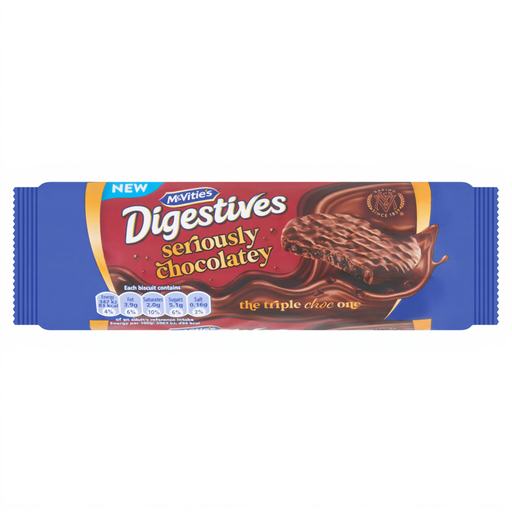 No image available
A distinct chocolate digestive variant to consider for a crushed base if its flavour fits your recipe. The 250g pack is less than the 300g of chocolate digestives in Good Food’s cited cheesecake.
Not in Good Food’s cited no-bake cheesecake. Its method crushes 300g of chocolate digestives, mixes the crumbs with melted butter and chills the pressed base; follow the method in your chosen recipe.
Yes. Good Food’s home-baking method dips half of each baked biscuit in chocolate and leaves it somewhere cool to set. That method does not establish how a shop-bought coating will behave if reheated.
Follow the directions on the exact pack. Tesco’s cited milk-chocolate digestives say to store them in a cool, dry place and transfer opened biscuits to an airtight container.
UK government guidance says a seller must offer a full refund for an item that is faulty or not as described. That is different from a change-of-mind return: the guidance identifies exceptions for some perishable items, not a blanket exclusion of remedies for food.