Do not choose chocolate-coated biscuits as a routine snack for a toddler: the NHS advises avoiding foods and drinks with sugar or sweeteners for children aged 4 or younger. If you choose to serve one as an occasional treat, check the current pack’s portion information, ingredients and allergens first; for food taken to nursery or school, check the setting’s policy separately.
Who is this for?
Parents choosing everyday snacks
For children aged 4 or younger, NHS advice to avoid foods and drinks with sugar or sweeteners makes a chocolate-coated biscuit a poor choice for a regular snack. The decision is what to offer routinely, not simply which biscuit comes in the smallest pack.
Families considering an occasional treat
If you decide to offer a chocolate biscuit occasionally, the amount served and the exact product label matter. An individually wrapped bar shows the portion, but its wrapping does not change its sugar or saturated-fat content.
Parents packing food for a setting
Food taken to nursery or school needs a separate check against that setting’s food and allergen policy. The NHS advises checking nursery food policies rather than assuming that a snack served at home can also be packed.
What should you check?
Decide whether this is an everyday snack or an occasional treat before comparing biscuit formats; then check the particular pack and where it will be served.
| Priority | What to check | Your needs |
|---|
| Everyday snack |
For a child aged 4 or younger, use the NHS advice to avoid foods and drinks with sugar or sweeteners. Consider options such as fruit or plain, unsweetened yoghurt instead of making a chocolate-coated biscuit the default. |
I’m choosing something to offer regularly between meals, rather than planning a sweet treat. |
| Amount served |
Read sugars and saturates per item, not just the multipack size. Sainsbury’s lists 9.2 g sugars and 3.6 g saturates for a 22 g Club Orange bar, and 10.2 g sugars and 3.8 g saturates for a 24.6 g Penguin Original bar; these are different products and portion sizes. |
If I offer a biscuit occasionally, I want to know what the portion I’m serving contains. |
| Ingredients and allergens |
Read the current physical pack’s ingredients, highlighted allergens and any precautionary allergen statement. Check specifically for ingredients the child needs to avoid; do not rely on an earlier purchase or another flavour. |
My child may need to avoid a particular ingredient, so the exact pack matters more than the brand name. |
| Nursery or school |
Check the setting’s policy for food brought from home and tell it about a child’s food allergy, as the NHS advises. In England, the Requirements for School Food Regulations 2014 define products wholly or partly coated with chocolate as confectionery; do not apply that definition as a rule for every home snack or every UK setting. |
Before packing food, I need to know what this particular nursery or school permits. |
Common mistakes
-
Taking individual wrapping as a snack recommendation
A wrapper makes one bar easy to identify, but it does not change the amount of sugars or saturates inside. Sainsbury’s lists 9.2 g sugars per Club Orange bar and 10.2 g per Penguin Original bar.
For regular toddler snacks, follow the NHS advice to avoid sugary foods. If serving a biscuit occasionally, use the current per-bar figures to see what you are offering.
-
Relying on an old allergen check
Ingredients and allergen statements can change, as Tesco’s product information cautions. A familiar brand or flavour is not a substitute for checking the pack being served.
Read its ingredients, highlighted allergens and precautionary statement, particularly when a child has an allergy or intolerance.
-
Treating school rules as rules for every setting
England’s school-food regulations define chocolate-coated products as confectionery. That definition does not, by itself, tell you what a particular nursery permits in a packed lunch or what applies elsewhere in the UK.
Check the relevant setting’s policy before packing the biscuit, rather than applying a school-food definition to food served at home.
Relevant brands and retailers
These references help identify formats to compare; a brand name alone does not establish whether a biscuit is suitable for a child.
McVitie’s
McVitie’s makes the Penguin and Club biscuit bars discussed here.
- The listed bars have identifiable per-bar portions, making their nutrition panels easier to compare with what is served.
- Check each variety separately; figures for one bar do not describe every McVitie’s biscuit.
Penguin
Penguin Original is a McVitie’s chocolate-flavour biscuit bar sold in a multipack.
- Sainsbury’s lists a 24.6 g bar with 10.2 g sugars and 3.8 g saturates per bar.
- Individual wrapping does not make it a routine toddler snack under the NHS advice on sugary foods for children aged 4 or younger.
Club
Club Orange is a McVitie’s chocolate-flavour-covered biscuit bar sold in a multipack.
- Sainsbury’s lists a 22 g bar with 9.2 g sugars and 3.6 g saturates per bar.
- Its per-bar figures describe Club Orange, not other Club flavours or chocolate biscuits generally.
Fox’s
Tesco lists Fox’s Rocky Original biscuit bars among its chocolate biscuits.
- A named multipack gives shoppers a specific product whose current label can be checked.
- Do not assume its ingredients or nutrition match the Penguin and Club bars.
Tesco and Sainsbury’s
Tesco lists its own milk chocolate digestives, while Sainsbury’s lists the named Penguin and Club bars used for the per-bar examples above.
- Their listings identify particular products to check, rather than relying on a general biscuit category.
- Use the exact product’s current pack for ingredients, allergens and nutrition; one retailer listing does not describe another product.
Joybuy snack options
These are savoury stick options for routine snack time, not chocolate-coated biscuits or substitutes for checking a child’s individual needs and the current pack.
 No image available
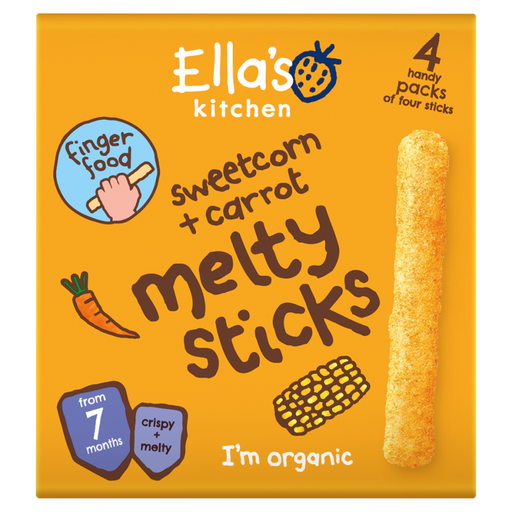
Ella’s Kitchen Sweetcorn & Carrot Melty Sticks, 7+ Months, 4 x 6g
For a savoury option at routine snack time rather than a chocolate biscuit, these sweetcorn and carrot sticks are sold as four 6 g packs and labelled 7+ months. Check the current pack’s ingredients and precautionary allergen statement before serving.
View on Joybuy
 No image available
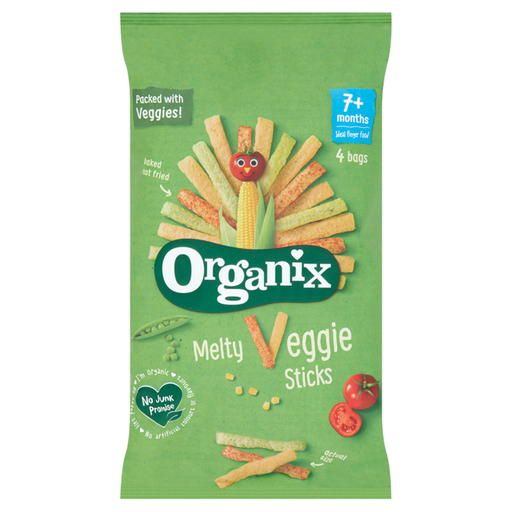
Organix Melty Veggie Sticks, 7+ Months, 4 x 15g
For routine snack time instead of a chocolate biscuit, these veggie sticks are sold as four 15 g packs and labelled 7+ months. Check the current ingredients and supervise the child while eating.
View on Joybuy
Questions about toddler snack time
Are chocolate-coated biscuits suitable as a regular toddler snack?
No. The NHS advises avoiding foods and drinks with sugar or sweeteners for children aged 4 or younger. For regular snacks, consider alternatives such as fruit or plain, unsweetened yoghurt rather than making a chocolate-coated biscuit the default.
What if I choose to serve a chocolate biscuit occasionally?
Treat it as a separate choice from a regular snack and check the exact pack’s per-item nutrition and ingredients before serving. A single wrapper shows the amount offered, but does not make the biscuit a routine toddler-snack choice.
What should I check for allergens in Penguin or Club bars?
Read the current physical pack for wheat or gluten, milk, soya and any other relevant ingredients or precautionary allergen statements. Check the particular variety each time rather than assuming that an earlier pack’s declaration still applies.
Can I pack a chocolate-coated biscuit for nursery or school?
Check the individual setting’s packed-food and allergen policy first; the NHS specifically advises checking nursery food policies. England’s Requirements for School Food Regulations 2014 define products wholly or partly coated with chocolate as confectionery, but that definition alone does not settle a particular packed-lunch policy or the rules outside England.


