No chocolate-coated ginger biscuit is automatically suitable for everyone managing diabetes: Diabetes UK advises paying attention to the total carbohydrate in the portion eaten. Gullón Zero has much less listed sugar than the conventional chocolate-coated biscuits considered here, but still contains 57g carbohydrate per 100g, according to ASDA Groceries; whichever type you choose, check the portion as well as the sugar figure.
Who is this choice for?
Shoppers comparing sugar claims
A no-added-sugar chocolate ginger biscuit may appeal if listed sugars matter to you. Check total carbohydrate and the sweetener too: a lower sugar figure does not, by itself, tell you how much carbohydrate is in your portion.
People planning carbohydrate portions
If you count or estimate carbohydrate, look for the amount in the number of biscuits you intend to eat. Diabetes UK emphasises total carbohydrate, while the NHS notes that labels give nutrition information per 100g and sometimes per portion.
Shoppers choosing an occasional biscuit
If you want a conventional chocolate-and-ginger biscuit, compare its portion size with a plain ginger nut or a no-added-sugar option. Diabetes UK advises keeping treats occasional and portions small for people with type 2 diabetes.
What should you compare?
Choose the type of biscuit you want, then compare carbohydrate in your intended portion before checking sugars, saturated fat and the ingredient panel.
No-added-sugar chocolate ginger biscuit
Consider it when: Reducing listed sugars matters to you and you still want a chocolate coating.
Keep in mind: ASDA Groceries lists 57g carbohydrate per 100g for Gullón Zero, and the product carries an excessive-consumption laxative-effect warning.
Conventional chocolate ginger biscuit
Consider it when: You specifically want a conventional chocolate-and-ginger biscuit and can plan the portion you will eat.
Keep in mind: Dark chocolate does not replace a check of the biscuit’s carbohydrate, sugars and saturated fat.
Plain ginger nut
Consider it when: Ginger flavour matters more than a chocolate coating and an individually smaller biscuit helps you plan a portion.
Keep in mind: McVitie’s lists 7.2g carbohydrate per 10.1g Ginger Nut, but 71.3g carbohydrate per 100g.
| Priority |
What to check |
Your needs |
| Carbohydrate and portion |
Compare carbohydrate per 100g, then per biscuit or serving. Check the serving weight if you plan to eat more than one; Diabetes UK says total carbohydrate eaten is particularly relevant to glucose levels after eating. |
I want to know the carbohydrate in the biscuits I will actually eat, rather than compare differently sized biscuits by their per-biscuit figures alone. |
| Sugars and sweeteners |
Read sugars and total carbohydrate as separate figures. ASDA Groceries lists Gullón Zero at 1.0g sugars and 57g carbohydrate per 100g; check its ingredients and pack warning as well. |
A no-added-sugar option interests me, but I do not want the front-of-pack claim to stand in for the full nutrition panel. |
| Saturated fat |
Check the value for the portion, not just the chocolate type. Tesco Groceries lists 3.6g saturated fat per Tesco Finest cookie; Sainsbury’s lists 3.8g per Taste the Difference cookie. |
If I choose a conventional chocolate-coated biscuit as an occasional treat, I want to compare more than its sugar figure. |
| Ingredients and warnings |
Read the current pack’s allergen declaration and sweetener information. Morrisons carries an excessive-consumption laxative-effect warning for Gullón Zero. |
For an allergy or intolerance, I need to check the particular pack before buying or sharing it. |
What is easy to overlook?
-
Reading “no added sugar” as “low carbohydrate”
ASDA Groceries lists Gullón Zero at 1.0g sugars but 57g carbohydrate per 100g. Diabetes UK explains why the total carbohydrate eaten matters when considering glucose levels after eating.
Use the claim as a reason to inspect the full label, then work out the carbohydrate in the portion you intend to eat.
-
Comparing biscuits only by the per-biscuit number
McVitie’s lists a Ginger Nut at 10.1g, while Tesco Groceries lists a Tesco Finest chocolate ginger cookie at 25g. Their per-biscuit figures describe different-sized portions.
Compare products per 100g first, then use the per-biscuit figure to plan your portion.
-
Assuming dark chocolate settles the nutrition comparison
Tesco Groceries lists 3.6g saturated fat per Finest dark chocolate ginger cookie, and Sainsbury’s lists 3.8g per Taste the Difference cookie.
Check saturated fat alongside carbohydrate and sugars for the serving you are considering.
-
Missing sweetener warnings or allergens
Gullón Zero contains a sweetener, and Morrisons displays a warning that excessive consumption may produce a laxative effect. Ingredient and allergen requirements may also change which biscuit you can choose.
Read the current pack’s ingredients, allergen declaration and warnings, particularly when buying for someone else.
Relevant brand references
These named products illustrate different label and portion comparisons; a brand’s inclusion does not describe every biscuit it makes.
Gullón Zero
Its dark-chocolate-covered ginger oat biscuit offers a no-added-sugar alternative to the conventional chocolate ginger biscuits considered here.
- ASDA Groceries lists 1.0g sugars and 57g carbohydrate per 100g.
- The sugar claim does not make it low in carbohydrate; Morrisons also displays an excessive-consumption laxative-effect warning.
Tesco Finest
Its dark chocolate ginger cookie is a conventional coated option with a stated 25g serving.
- Tesco Groceries gives both per-100g and per-cookie figures for portion comparisons.
- Tesco Groceries lists 15.5g carbohydrate, 9.9g sugars and 3.6g saturated fat per cookie.
Sainsbury’s Taste the Difference
Its dark chocolate and ginger cookie provides another conventional coated comparison.
- Sainsbury’s lists carbohydrate and sugars per 100g as well as sugars per cookie.
- The listing gives 64.0g carbohydrate and 40.6g sugars per 100g, with 10.1g sugars and 3.8g saturated fat per cookie.
McVitie’s
Its plain Ginger Nuts are a comparison when the chocolate coating is optional.
- McVitie’s lists 7.2g carbohydrate and 2.9g sugars per 10.1g biscuit.
- The same listing gives 71.3g carbohydrate per 100g, so the smaller biscuit is not evidence of a low-carbohydrate recipe.
Ginger and chocolate biscuits on Joybuy
These options include a no-added-sugar dark chocolate ginger oat biscuit and conventional chocolate biscuits with ginger or gingerbread flavour. Compare the pack information for each product rather than treating them as interchangeable portions.
 No image available
Gullon Zero Dark Chocolate Ginger Oaties 285g
For a no-added-sugar chocolate ginger option, compare both figures on the label: the Joybuy listing gives 1g sugars and 57g carbohydrate per 100g. Check the pack’s sweetener warning and the carbohydrate in your intended portion.
View on Joybuy
 No image available
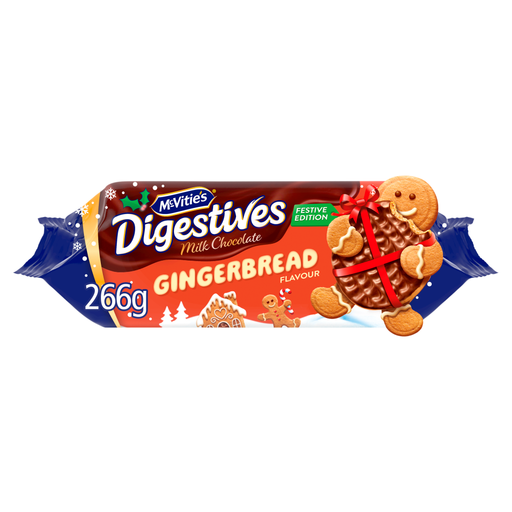
McVitie’s Gingerbread Chocolate Digestives 266g
A gingerbread-flavoured chocolate digestive for shoppers considering a conventional biscuit. Check the pack’s carbohydrate per biscuit and the number you intend to eat; this is not the plain McVitie’s Ginger Nut described above.
View on Joybuy
 No image available
Border Biscuits Dark Chocolate Gingers 150g
A conventional dark chocolate ginger biscuit. Compare its carbohydrate, sugars and saturated fat on the current pack, and use the biscuit weight to work out the figures for your intended portion if needed.
View on Joybuy
Common questions
Is a no-added-sugar chocolate ginger biscuit automatically suitable for someone with diabetes?
No. Diabetes UK advises considering total carbohydrate rather than relying on a diabetes-related food label. ASDA Groceries lists Gullón Zero at 1.0g sugars but 57g carbohydrate per 100g, so the amount in the portion still matters.
Which label figures should I compare first?
Start with carbohydrate per 100g for a like-for-like comparison, then check the amount per biscuit or serving for the portion you intend to eat. Diabetes UK emphasises total carbohydrate; the NHS explains that nutrition information is given per 100g and sometimes per portion. Sugars and saturated fat add further context.
Why does Gullón Zero carry an excessive-consumption warning?
It contains a sweetener, and the Morrisons listing warns that excessive consumption may produce a laxative effect. Read the current pack warning when deciding on a portion.
What should I check if allergies or intolerances matter?
Read the ingredient list and allergen declaration on the particular pack before buying or sharing it. Check the chocolate coating and biscuit ingredients as well as any precautionary allergen statement; do not rely on the product name alone.


