Guests having tea with a biscuit
If you want chocolate on the biscuit itself, distinguish a coating or dip from chocolate chips before choosing a pack.


Choose a chocolate-coated oat biscuit if you want chocolate on the biscuit without adding a topping. A chocolate-chip biscuit offers pieces of chocolate instead, while a plain oatcake leaves the topping to you. For a hotel stay, check the pack format, opened-pack storage directions and the exact variant’s ingredients and allergens before choosing.
If you want chocolate on the biscuit itself, distinguish a coating or dip from chocolate chips before choosing a pack.
If you will eat only some of the biscuits during your stay, consider the pack format and how the remainder needs to be stored.
If gluten or another ingredient matters to you, check the exact variant. An oat-based biscuit is not automatically gluten-free, and a gluten-free oat product may not suit everyone who reacts to oats.
Decide whether you want a coating, chocolate chips or a plain oatcake first; then compare the pack and label for the stay you have planned.
| Priority | What to check | Your needs |
|---|---|---|
| Chocolate finish | Look for a stated coating, dip or chocolate layer if you want chocolate on the surface. Check whether the finish is milk or dark chocolate; chocolate chips are a different format. | I want chocolate on the biscuit rather than scattered through it. If I prefer to add my own topping, a plain oatcake is another choice. |
| Pack format | Compare the stated pack weight and whether biscuits come in smaller pouches. Check the directions for storing an opened pack; Tesco and McVitie’s specify airtight storage for the cited larger packs. | Will I finish the pack during my stay, or have somewhere suitable to keep the remainder? |
| Ingredients | Read the current pack for ingredients, allergens and precautionary statements. Check for a specifically labelled gluten-free variant if that distinction matters; do not infer milk-free ingredients from dark chocolate. | I need the precise biscuit variant to fit my ingredient requirements, rather than relying on the words “oat” or “dark chocolate”. |
| Portions | Use pack weight alongside the serving information on the label when comparing different formats. Check which pack you would actually use during the stay. | A smaller pack may make more sense for one tea break; for several breaks, I also need to consider how opened biscuits will be kept. |
Nairn’s describes chocolate chips in its cited oat biscuits, while the cited M&S and coated McVitie’s variants describe chocolate on the biscuit’s surface.
Look for “coated”, “dipped” or a stated chocolate layer in the description rather than relying on “chocolate oat”.
The cited standard coated recipes include wheat, and McVitie’s Dark Chocolate Hobnobs list milk-derived butter oil. Coeliac UK also notes that a small number of people are sensitive even to gluten-free oats.
Check the current pack for the exact variant’s ingredients and precautionary statements against your requirements.
Tesco Milk Chocolate Oaties and the cited McVitie’s Hobnobs listing direct shoppers to keep opened biscuits in an airtight container in a cool, dry place.
If you are unlikely to finish the pack during your stay, check whether you can follow its storage directions.
Following an airtight-storage direction may mean bringing a suitable container if you will keep the pack after opening.
These examples help distinguish coated biscuits from chip varieties; each ingredient or storage detail applies to the named product, not every biscuit from that brand.
M&S describes its Milk Chocolate Oat Crunch as rolled-oat biscuits dipped in milk chocolate and presents them for dunking.
Tesco describes its Milk Chocolate Oaties as oat biscuits half-coated with milk chocolate.
The cited Hobnobs variants include standard milk-chocolate, dark-chocolate and separately labelled gluten-free milk-chocolate options.
Nairn’s cited Dark Chocolate Chip Oat Biscuits and Chocolate Chip Oat Biscuit Breaks are chip varieties rather than coated biscuits.
These options cover coated-style oat snacks for tea and one Nairn’s alternative for anyone considering chocolate pieces instead. Compare their stated pack formats with what you can use during your stay.
 No image available
Consider the 431 g pack if you expect to have biscuits across several tea breaks. Check the chocolate finish and current ingredients on the pack, and plan for airtight storage if you will leave it unfinished.
 No image available
The twin-pack format may suit several tea breaks or people sharing. Each pack is stated as 262 g; consider how you will store biscuits after opening one.
 No image available
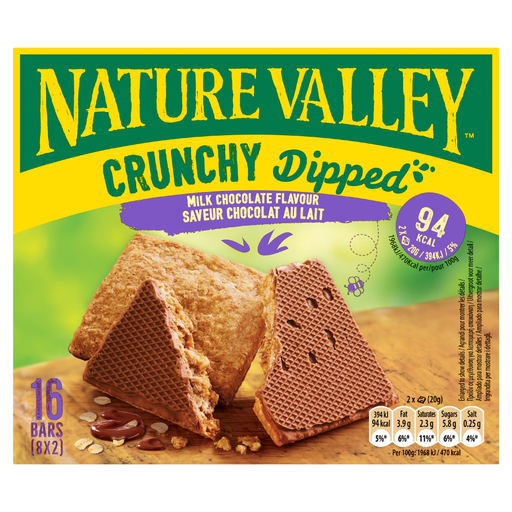
The dipped finish makes this worth comparing if chocolate on the outside is your priority. For a hotel stay, check the individual pack format and the coating description before choosing it instead of a chocolate-coated oat biscuit.
 No image available
Consider this variant if both dark chocolate and ginger appeal to you. Check the pack’s coating description, ingredients and storage directions rather than assuming it has the same recipe as another dark-chocolate oat biscuit.
 No image available
This is an alternative to consider if a chocolate-chip oat biscuit appeals more than a coating. It is labelled gluten-free, but check the exact pack’s ingredients and precautionary statements against your requirements, including whether you can eat oats.
No. Nairn’s describes chips in the cited biscuits, whereas M&S describes a chocolate dip and McVitie’s describes a layer on its cited dark-chocolate Hobnobs. Check the description if you want chocolate on the biscuit’s surface.
The cited biscuits are presented as ready to eat. If you open a larger Tesco or McVitie’s pack and keep some for later, follow its directions for airtight storage in a cool, dry place.
No. Coeliac UK notes that standard oats can be contaminated with gluten-containing grains and that a small number of people are sensitive even to gluten-free oats. Check for a specifically labelled gluten-free variant and read its current pack if this affects your choice.
Check the product name, ingredients and allergens, net quantity, date marking and storage directions. UK government food-labelling guidance identifies ingredients, allergens, net quantity and date marking as pack information; the physical pack also lets you check the exact variant you will eat.