Crushed-base makers
If your recipe names chocolate digestives, match both the biscuit format and the weight it specifies. Good Food’s no-bake cheesecake recipe uses 300g of chocolate digestives.


Choose ready-coated chocolate digestives when your recipe calls for them in a crushed biscuit base; a Good Food no-bake cheesecake recipe specifies 300g, so check the pack weight before buying. Plain digestives let you choose and add the chocolate separately. Milk and dark coatings are different ingredient choices, but the cited recipe does not establish how either substitution will turn out.
If your recipe names chocolate digestives, match both the biscuit format and the weight it specifies. Good Food’s no-bake cheesecake recipe uses 300g of chocolate digestives.
Plain or homemade digestives leave the chocolate choice to you. Good Food’s homemade digestive method dips the cooled biscuits in chocolate rather than starting with a ready-coated biscuit.
Work out the biscuit weight needed across your recipes, then compare it with the net weight of each pack. A larger pack is useful only if its format and ingredients suit the bakes you have planned.
Start with the biscuit format named in your recipe, then check the required weight, chocolate type and ingredients on the exact pack.
| Priority | What to check | Your needs |
|---|---|---|
| Biscuit format | Check whether the recipe names coated digestives, plain digestives or another biscuit. Penguin and Club are filled bars, while the cited Fox’s product is a chocolate-chunk cookie; their results in a digestive base are not established. | I’m making a crushed digestive base, so I want the biscuit format the recipe names. |
| Chocolate choice | Check whether the pack says milk or dark chocolate. If adding chocolate yourself, check the quantities and method in that recipe rather than swapping ingredients by weight without adjustment. | I’d choose a ready-coated biscuit when the recipe calls for one; for homemade biscuits, I want to choose the chocolate separately. |
| Pack weight | Compare the recipe’s biscuit weight with the net weight on the pack. Good Food’s cited base calls for 300g; one 266g pack would be short of that quantity. | For a recipe measured in grams, I need enough biscuit without relying on an approximate biscuit count. |
| Ingredients and storage | Read the current ingredients and allergen statements on every ingredient used in the bake; do not take “dark” to mean milk-free. Follow the pack’s storage directions for biscuits left after opening. | Someone eating my bake may have a relevant allergy, and I may have biscuits left for another batch. |
Good Food’s cited base uses 300g of chocolate digestives, whereas the McVitie’s milk-chocolate pack listed by Tesco contains 266g.
Compare the recipe quantity with the net weight before deciding how many packs you need.
A second pack would be needed to reach that recipe’s stated biscuit quantity using 266g packs.
Filled Penguin and Club bars and Fox’s chocolate-chunk cookies differ from coated digestives. Their results in the cited digestive base have not been established.
Choose the biscuit format your recipe specifies, or follow a recipe written for the alternative you want to use.
Tesco’s listed dark-chocolate digestives say “May contain milk”, while Sainsbury’s listed dark variant includes butteroil from cows’ milk.
For a relevant allergy, read the current pack and check every other ingredient in the finished bake.
Its chocolate-coated digestives are directly relevant to recipes calling for that biscuit format.
Tesco lists 300g own-label milk- and dark-chocolate digestives.
Sainsbury’s lists 300g own-label milk- and dark-chocolate digestives.
The cited McVitie’s Penguin product is an individually wrapped, cream-filled biscuit bar.
The cited McVitie’s Club Orange product is an orange-cream-filled biscuit bar.
The cited half-coated chocolate-chunk product is a cookie rather than a digestive.
These McVitie’s milk- and dark-chocolate digestives are options for a bake calling for coated digestives. Compare each pack weight with your recipe; they do not represent the plain-digestive route.
 Image unavailable
A dark-chocolate digestive option when your bake calls for coated biscuits. The twin pack contains 2 x 266g; measure out the weight your recipe requires, and check the current ingredient and allergen label.
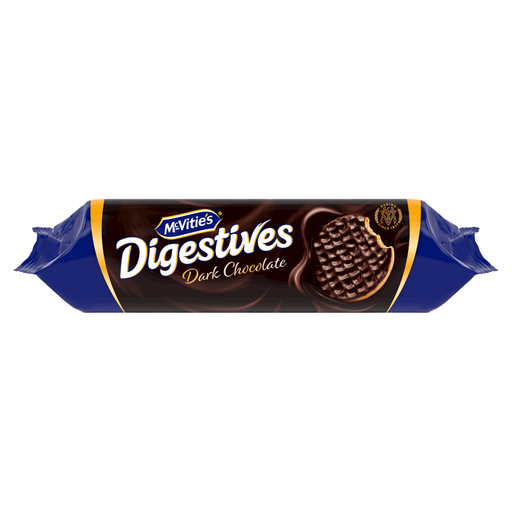 Image unavailable
A dark-chocolate digestive in a 400g pack, enough by weight for the cited recipe’s 300g biscuit quantity. Check the current ingredient and allergen label rather than assuming a dark variant is milk-free.
 Image unavailable
A milk-chocolate digestive in a 400g pack, enough by weight for the cited recipe’s 300g biscuit quantity. Check the current pack’s ingredients and allergen information for everyone eating the bake.
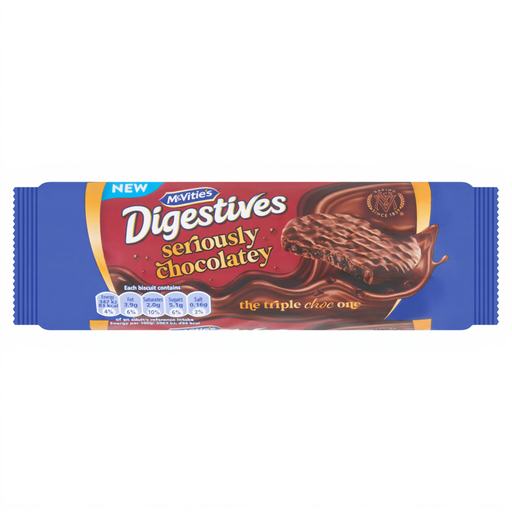 Image unavailable
This chocolate digestive variant comes in a 250g pack. One pack is short of the 300g biscuit quantity in the cited base recipe; check the current label for its ingredients and allergen statements.
Not in Good Food’s cited no-bake cheesecake recipe: it crushes 300g of chocolate digestives, mixes the crumbs with melted butter, presses them into a tin and chills the base. Follow your own recipe if it specifies a different method.
Do not rely on the word “dark” to determine whether a product is suitable. Tesco’s listed dark digestives say “May contain milk”, and Sainsbury’s listed dark digestives contain butteroil from cows’ milk. Read the exact current pack and check every other ingredient in the bake.
Follow the directions on the pack you buy. The cited McVitie’s and supermarket listings direct shoppers to keep the biscuits in a cool, dry place and use an airtight container after opening.