Shoppers comparing pack sizes
Different weights make it worth checking how much is in each pack, particularly when choosing between own-label and branded digestives.


Choose the chocolate variety you want, then compare the amount in each pack rather than assuming a larger pack suits your shop. Recipes and allergen information differ even among similar-looking digestives, so check the label on the exact pack before deciding.
Different weights make it worth checking how much is in each pack, particularly when choosing between own-label and branded digestives.
You may prefer milk or dark chocolate, or want a particular biscuit recipe rather than treating every chocolate digestive as interchangeable.
Check the exact pack’s allergens and per-100 g nutrition. A dark-chocolate topping does not, by itself, establish that a biscuit is free from milk.
Start with the variety and pack size, then use the exact pack label to settle ingredient and storage questions.
| Priority | What to check | Your needs |
|---|---|---|
| Pack size | Read the net weight on each pack. The varieties covered here include 250 g, 266 g, 300 g, 400 g and 433 g formats. | I want an amount that fits my shop, rather than choosing by the appearance of the packet. |
| Chocolate and recipe | Choose milk or dark chocolate, then check the particular recipe. Tesco Groceries lists 30% chocolate for its 300 g milk variety, Sainsbury’s lists 27% and M&S lists 32%; those figures alone do not establish which you will prefer. | The topping matters to me, but I also want to know whether the biscuit recipe is the one I had in mind. |
| Allergens | Read ingredients, declared allergens and relevant precautionary wording on the exact pack. ASDA Groceries lists milk fat in its dark variety; Sainsbury’s gives oat-allergy advice for its milk variety. | If someone eating the biscuits has an allergy, I need to check this pack rather than rely on the words ‘dark chocolate’ or on another brand’s label. |
| Nutrition | Use per-100 g figures when comparing different biscuits. Check the stated weight of a biscuit before comparing per-biscuit figures. | I want to compare like with like, since one biscuit is not necessarily the same-sized serving across packs. |
| Keeping the pack | Check the best-before date and storage instructions. Food Standards Scotland distinguishes best-before dates, which concern quality, from use-by dates, which concern safety. | If I expect to keep an opened pack, I want to follow its storage instructions and consider its best-before date. |
ASDA Groceries lists milk fat in its dark-chocolate digestives. Sainsbury’s gives separate oat-allergy advice for its milk-chocolate variety, so similar packs cannot be treated as having identical allergen information.
Check the ingredients, allergens and precautionary wording on the exact pack being bought.
The Tesco and Sainsbury’s listings use different per-biscuit weights, so their per-biscuit figures do not describe equal amounts of food.
Compare the per-100 g figures first, then consider the portion you expect to eat.
These references concern particular listed recipes, not every biscuit made by each brand.
Its listed 300 g milk-chocolate digestives provide one own-label recipe to compare.
Its listed 300 g milk-chocolate digestives offer another own-label recipe.
The listed 300 g options include both milk- and dark-chocolate digestives.
Its listed 300 g milk- and dark-chocolate recipes include demerara sugar.
A branded recipe to consider if you specifically want McVitie’s chocolate digestives.
These McVitie’s packs cover dark chocolate, milk chocolate and two differently flavoured variants. Compare their stated weights and check each variant’s label when choosing for a budget shop.
 Image unavailable
A dark-chocolate option in two 266 g packs. Check the ingredients on the pack if milk is a concern; dark chocolate alone does not establish that it is milk-free.
 Image unavailable
A single 400 g dark-chocolate pack. Read its own ingredient and allergen label rather than assuming that dark-chocolate digestives are free from milk.
 Image unavailable
A 400 g milk-chocolate option for shoppers choosing that topping. It is a different pack size from the researched McVitie’s 433 g listing, so check the details of this variant.
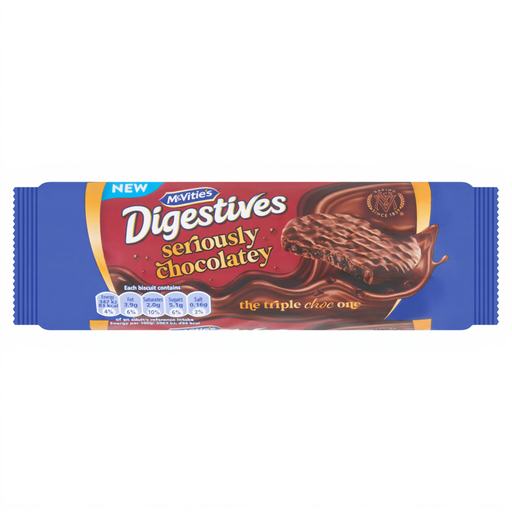 Image unavailable
A distinct 250 g McVitie’s variant. ‘Seriously Chocolate’ is its product name, not a basis for assuming a particular flavour or chocolate proportion; check the pack details when comparing recipes.
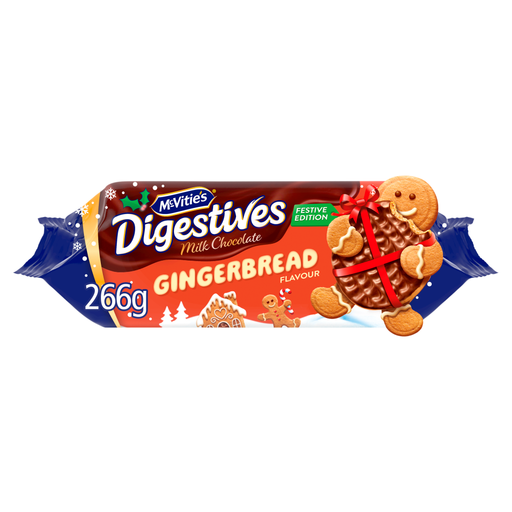 Image unavailable
A 266 g gingerbread-flavoured chocolate digestive. Choose it if that recipe appeals, and check its ingredients rather than treating it as the standard milk- or dark-chocolate variety.
No. ASDA Groceries lists milk fat in its dark-chocolate digestives. If milk is an allergen concern, check the ingredients and allergen information on the exact pack.
Follow the instructions on your pack. The researched Tesco, Sainsbury’s and M&S milk varieties say to keep them in a cool, dry place and use an airtight container after opening.
No. Food Standards Scotland explains that best-before dates concern quality, while use-by dates concern safety. Follow the pack’s storage instructions; biscuits past their best-before date may be stale.
Read the ingredients and allergen information on the pack you receive. Food Standards Scotland says food businesses must declare applicable allergens; the name of a chocolate variety is not a substitute for that information.