Late-night chocolate-biscuit snackers
If you plan to have a biscuit after dinner, the per-biscuit figures make it easier to compare sugars, saturated fat and energy for the portion you actually choose.


If listed sugar is your deciding factor, Sainsbury's Dark Chocolate Digestives contain 3.5g per biscuit, compared with 4.1g in its milk-chocolate version; both labels mark saturated fat as high per biscuit. For a snack close to bedtime, compare the portion you intend to eat and check the exact pack for allergens; Lancashire and South Cumbria NHS Foundation Trust advises avoiding sugary foods at bedtime.
If you plan to have a biscuit after dinner, the per-biscuit figures make it easier to compare sugars, saturated fat and energy for the portion you actually choose.
Sainsbury's dark-chocolate version lists less sugar per biscuit than its milk-chocolate version, but its saturated fat is still labelled high. Compare both figures rather than relying on the chocolate style alone.
A personal retail snack and food supplied in a state-funded school are different decisions. The Department for Education's school food standards for England prohibit chocolate-coated products across the school day.
Start with the flavour you want, then compare the current labels using the same measure and check the portion you intend to take.
| Priority | What to check | Your needs |
|---|---|---|
| Portion | Read energy and sugars per biscuit as well as any traffic-light labels. Decide how many biscuits you intend to take from the pack. | I want figures for the portion I will eat. In the Food Standards Agency and Ipsos Northern Ireland's 2024 Making Food Better Tracker Survey, 49% of 611 adults interviewed in Northern Ireland said they actively used traffic-light labelling when shopping for food; interviews ran from 16 September to 23 November 2024. |
| Chocolate style | Compare sugars per biscuit or per 100g on the same basis. Sainsbury's labels give 3.5g sugars per biscuit for its dark-chocolate digestives and 4.1g for its milk-chocolate digestives. | If I prefer dark chocolate or am comparing listed sugars, I want to check the exact variety rather than assume every dark-chocolate digestive has the same values. |
| Saturated fat | Check it separately from sugars. Sainsbury's labels mark saturated fat as high per biscuit in both its dark-chocolate version, at 1.9g, and its milk-chocolate version, at 1.8g. | A lower sugar figure alone would not settle my choice; I want to see the saturated-fat figure too. |
| Ingredients | Read the allergen statement on the exact pack. Sainsbury's dark-chocolate digestives are also labelled unsuitable for customers with an oat allergy because of manufacturing methods. | If milk, soya, wheat or oats matter to me, I cannot use the words “dark chocolate” as a shortcut for suitability. |
| Bedtime timing | Consider when you plan to eat the biscuit. Lancashire and South Cumbria NHS Foundation Trust advises avoiding sugary foods and drinks at bedtime because saliva flow is lower then. | If the snack would be immediately before sleep, its timing matters alongside flavour and portion size. |
| School food | For food supplied in state-funded schools in England, check the Department for Education's school food standards, which prohibit chocolate-coated products across the school day. | If I am buying for an England school rather than for a personal snack, I need to apply the school-food rules to that purchase. |
Sainsbury's dark-chocolate digestives list less sugar per biscuit than its milk-chocolate version, but both labels mark saturated fat as high per biscuit.
Compare sugars and saturated fat separately, using per 100g figures for a like-for-like product comparison and per-biscuit figures for your portion.
The name does not tell you how much sugar or energy is in the number of chocolate-coated biscuits you take. The compared ASDA, Sainsbury's and McVitie's labels list 78–85 kcal and 3.5–4.8g sugars per biscuit.
Check the current pack's per-biscuit figures and choose your biscuit count before taking them from a shared pack.
The compared dark-chocolate digestives list milk, soya and wheat. Sainsbury's also states that its dark-chocolate version is unsuitable for customers with an oat allergy because of manufacturing methods.
Read the allergen information on the exact pack, including after a substitution or reformulation.
The Department for Education's standards concern food supplied in state-funded schools in England, not whether someone may buy a chocolate-coated digestive as a personal snack.
For England school food, follow the prohibition on chocolate-coated products across the school day. Check the applicable local school-food rules separately when buying for a school elsewhere in the UK.
McVitie's Milk Chocolate Digestives combine a wheatmeal biscuit with milk chocolate; the brand lists milk chocolate as 30% of this product.
Sainsbury's lists both milk- and dark-chocolate digestives in 300g packs, allowing a comparison between those two labelled products.
ASDA lists milk- and dark-chocolate digestives in 300g packs.
M&S describes its milk-chocolate digestives as wholemeal biscuits with a thick chocolate layer and demerara sugar.
These McVitie's packs offer milk-chocolate, dark-chocolate and Seriously Chocolate digestive options for comparing flavour and pack size before choosing a snack.
 No image available
For a milk-chocolate snack, McVitie's lists 83 kcal and 4.8g sugars per 16.7g biscuit, which you can use when deciding your portion. Its product information lists milk chocolate at 30% and identifies wheat, milk and soya as allergens.
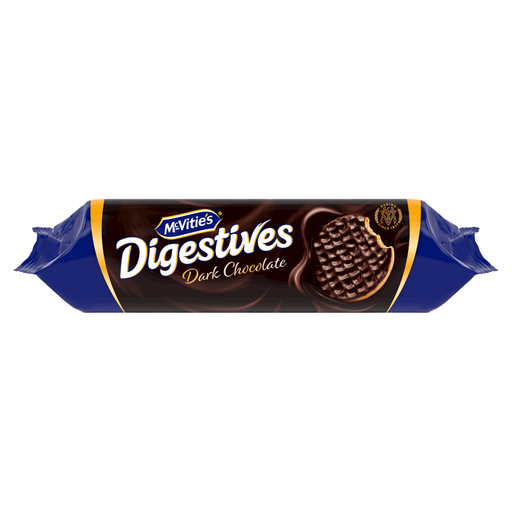 No image available
This 400g dark-chocolate variant is an option if you prefer that chocolate style. Check its own pack for per-biscuit nutrition and allergen information rather than applying figures from another brand's dark-chocolate digestives.
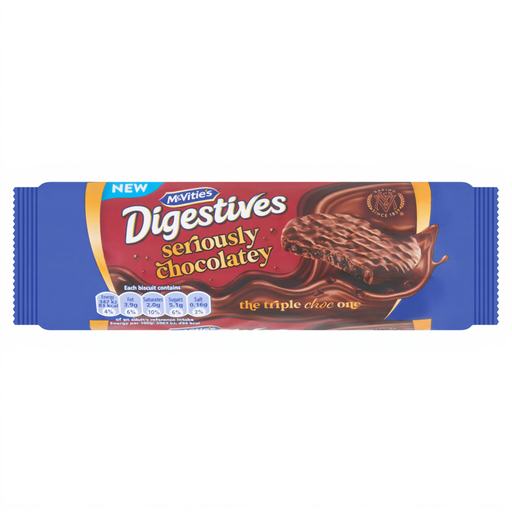 No image available
This 250g Seriously Chocolate variant offers another chocolate-digestive choice. Use the nutrition and ingredient information on its own pack when comparing it with a standard milk- or dark-chocolate version.
No; compare the exact products rather than chocolate types in general. Sainsbury's lists 3.5g sugars per biscuit for its dark-chocolate digestives and 4.1g for its milk-chocolate version, while both labels mark saturated fat as high per biscuit.
Use each pack's per-biscuit figures and decide how many biscuits you intend to take. Labels for the compared ASDA, Sainsbury's and McVitie's products list 78–85 kcal and 3.5–4.8g sugars per biscuit; check the current pack for the variant you buy.
Not under the Department for Education's school food standards for state-funded schools in England: the standards prohibit chocolate-coated products across the school day, and the Requirements for School Food Regulations 2014 define confectionery to include products wholly or partly coated with chocolate. This England school-food rule should not be described as a single UK-wide rule for retail snacks.
Timing is worth considering for a sugary snack. Lancashire and South Cumbria NHS Foundation Trust advises avoiding sugary foods and drinks at bedtime because saliva flow and its protective effects are lower then.