Conference refreshment organisers
Plan how many biscuits the break needs, then decide whether attendees will collect them from a shared serving point or receive individually wrapped portions.


Choose individually wrapped chocolate digestives when you need a defined biscuit to hand to each attendee; choose shared packs when you can manage a serving point and plan quantities from the chosen pack’s serving information. Milk or dark chocolate can offer a flavour choice, but neither name establishes allergy suitability: check each product’s current label against attendees’ requirements.
Plan how many biscuits the break needs, then decide whether attendees will collect them from a shared serving point or receive individually wrapped portions.
Keep the ingredient information for each variety identifiable. A milk or dark chocolate description alone cannot tell you whether a biscuit meets an attendee’s dietary requirements.
Decide how biscuits will be handed out before comparing pack quantities. Treat chocolate flavour and allergen information as separate decisions.
Choose when: Each attendee needs an allocated biscuit or a grab-and-go portion. Ocado lists six individually wrapped biscuits in the M&S milk-chocolate pack.
Plan for: Work out the number of six-biscuit packs needed; the wrapping does not replace a check of the ingredients.
Choose when: Biscuits can be offered together at a staffed refreshment point, with information about each variety available.
Plan for: Follow the selected pack’s instructions after opening and keep allergen information clear when biscuits are served loose.
| Priority | What to check | Your needs |
|---|---|---|
| Portions | Check the biscuit count or suggested servings for the exact pack. Ocado lists six biscuits in the individually wrapped M&S pack; Asda suggests 18 servings for its 300g milk-chocolate pack. | I need to know how many people can be served at this break, rather than order by pack count alone. |
| Allergens | Read each current ingredient and allergen declaration. Food Standards Agency guidance says UK food businesses must provide allergen information for both prepacked and non-prepacked food. | Attendees need information that clearly belongs to the biscuits being offered, especially when varieties are served loose. |
| Chocolate choice | Compare milk and dark varieties as flavours, then check their ingredients separately. Asda’s dark-chocolate digestives declare milk. | I’d like to offer a dark-chocolate option without presenting it as a dairy-free alternative. |
| Keeping biscuits | Read the chosen pack’s storage directions. Tesco instructs customers to keep its milk-chocolate digestives in a cool, dry place and in an airtight container once opened. | If packs will be opened before the break, I need somewhere appropriate to keep them until service. |
Asda’s dark-chocolate digestives declare milk, so the coating’s name does not establish suitability for someone avoiding it.
Check the current label against each attendee’s stated requirements and choose a separately checked alternative where necessary.
Ocado’s individually wrapped M&S pack contains six biscuits, while Asda suggests 18 servings for its 300g shared milk-chocolate pack. The formats call for different order calculations.
Start with the portions needed and use the exact product’s biscuit count or serving information.
Once varieties are removed from their packs, attendees and staff still need to know which allergen information applies to each one. Food Standards Agency guidance requires UK food businesses to provide allergen information for loose food.
Keep the current pack details identifiable at the serving point, and make sure staff can distinguish the varieties.
These product listings illustrate different packs and ingredient checks; a brand name alone does not determine serving format or dietary suitability.
Ocado lists M&S milk-chocolate digestives in a six-biscuit, individually wrapped pack and a separate 300g shared pack.
Asda lists 300g milk- and dark-chocolate digestive packs.
Tesco lists a 300g shared pack of milk-chocolate digestives.
Sainsbury's lists a 300g milk-chocolate digestive pack with approximately 18 servings.
Tesco lists McVitie's milk-chocolate digestives in a 266g pack; Joybuy lists a distinct 400g pack.
These McVitie's packs are options for a shared conference serving point, with milk- and dark-chocolate varieties in different pack sizes. Check the exact pack’s ingredients and portion information before ordering.
 No image available
A dark-chocolate choice for a shared serving point. The twin pack contains 2 x 266g; check its current ingredient declaration rather than treating dark chocolate as an allergy indication.
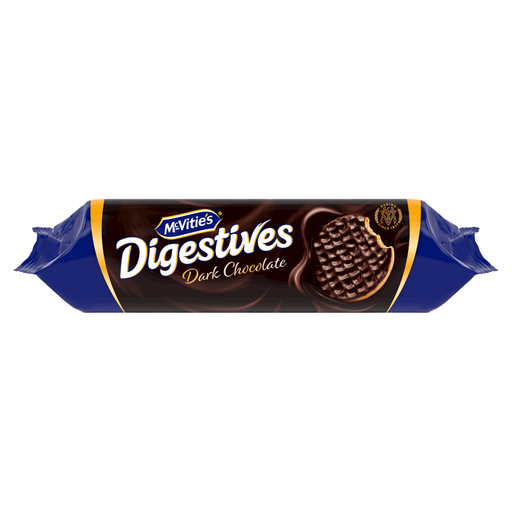 No image available
A 400g dark-chocolate pack for shared service. Plan portions from this pack’s own information and check its label against dietary requests.
 No image available
A 400g milk-chocolate pack for a shared serving point. Joybuy’s listing declares milk, soya and wheat; check the current pack label when catering for attendees with allergies.
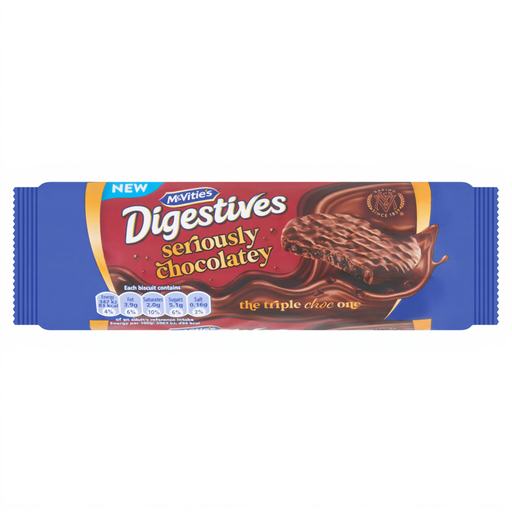 No image available
A 250g pack to consider for shared service. Calculate how many packs the planned portions require, and check its current ingredients for dietary requests.
Not necessarily. Asda’s dark-chocolate digestives declare milk, so check the exact product’s current label against the attendee’s requirements rather than relying on the word “dark”.
Keep accurate allergen information identifiable for each variety. Food Standards Agency guidance requires UK food businesses to provide allergen information for loose as well as prepacked food; arrange the serving point so staff can tell which details belong to which biscuits.
Follow the selected pack’s directions. Tesco instructs customers to keep its milk-chocolate digestives in a cool, dry place and in an airtight container once opened.
Calculate the portions needed from the exact pack’s biscuit count or suggested servings, then check the seller’s current delivery details for the conference address and date. Do not assume packs of different sizes provide the same number of portions.