Steady-distance riders
If you plan to eat at a stop or during a steadier stretch, the carbohydrate in each biscuit can help you work out what that portion contributes alongside your other food and drink.


For a planned stop or a steadier ride, a chocolate digestive can be part of the food you take if you check the carbohydrate in the portion you will eat alongside your other food and drink. If separate pocket portions matter, compare wrapped bars instead. On a harder ride, consider whether a biscuit is practical to carry and eat, rather than assuming it will suit every effort.
If you plan to eat at a stop or during a steadier stretch, the carbohydrate in each biscuit can help you work out what that portion contributes alongside your other food and drink.
If access and packaging matter, compare a pack of digestives with separately wrapped bars. A wrapped biscuit bar is not necessarily a digestive.
Think about when you could eat and whether a biscuit is comfortable and practical at the intended intensity. A different carbohydrate format may suit the session better.
Start with the ride and the portion you expect to eat, then compare packaging and ingredients on the exact product.
| Priority | What to check | Your needs |
|---|---|---|
| Carbohydrate per portion | Use the carbohydrate figure for the stated serving and count the portion you actually eat. Sainsbury's lists 10.4g per 16.7g biscuit for McVitie's 433g milk-chocolate digestives; Tesco lists 11.1g available carbohydrate per 17g biscuit for its 300g pack. British Cycling's indoor-cycling guidance discusses 30–60g carbohydrate an hour on rides over 90 minutes, not a serving size for biscuits. | I want to know what a biscuit contributes without treating one biscuit as all the food I need for a long ride. |
| Carrying and eating | Check whether portions are individually wrapped and how you would protect and access them. Tesco describes the checked Penguin bars as individually wrapped; ordinary digestive packs are a different format. | A separate pocket portion matters if I cannot conveniently open and put away a pack while riding. |
| Ingredients and allergens | Read the current ingredients, allergen declaration and any precautionary statement on the exact pack. The checked McVitie's digestive lists wheat, milk and soya; Tesco warns that product information can change. | If an ingredient affects what I can eat, I need to check the product I am buying and its physical label before eating. |
| Biscuit type and serving | Confirm whether it is a digestive, filled bar or shortcake. Compare carbohydrate using the same serving basis: the checked digestive listings give per-biscuit figures, while Tesco's Fox's Chocolatey Rounds listing gives a per-100g figure. | I may want a classic digestive at a stop, but I do not want to mistake another chocolate biscuit for the same product or serving size. |
The checked McVitie's and Tesco digestives list 10.4g and 11.1g carbohydrate per biscuit respectively. British Cycling's indoor-cycling guidance discusses 30–60g an hour for rides over 90 minutes; it does not describe one biscuit as an hourly portion.
Consider the biscuit alongside everything else you plan to eat and drink, taking the ride and the portion you will actually eat into account.
Tesco describes the checked Fox's Chocolatey Rounds as shortcake, while Club Orange is a biscuit bar. Their stated serving information is not interchangeable with a digestive's per-biscuit figure.
Check the biscuit type and put carbohydrate figures on a comparable portion basis before choosing.
Ingredients and allergen information can change, as Tesco notes on its product listing. An earlier pack's details may not describe the one you buy.
Check the current listing when ordering and the physical pack before eating, particularly when you need to avoid an ingredient.
These examples cover different biscuit formats; the nutrition figures apply to the named products and portions, not every product from each brand.
The checked 433g milk-chocolate digestive is an example with per-biscuit nutrition information.
Penguin is a McVitie's chocolate biscuit-bar line rather than a classic digestive.
The checked Club Orange product is a chocolate biscuit bar with an orange flavour.
The checked Chocolatey Rounds offer a different chocolate-biscuit format: Tesco describes them as shortcake.
The checked own-label 300g milk-chocolate digestive has per-biscuit figures.
Its own-label milk-chocolate digestive is another classic-digestive option to assess by exact pack and portion.
These options include chocolate digestives for a planned stop and a caramel wafer bar to consider when comparing biscuit formats. Check the exact pack for portion nutrition, ingredients and how you would carry it.
 No image available
A milk-chocolate digestive to consider for a planned stop. Check this 400g pack's per-biscuit carbohydrate and ingredients rather than using figures from a different pack size; protect the biscuits if carrying them in a pocket or bag.
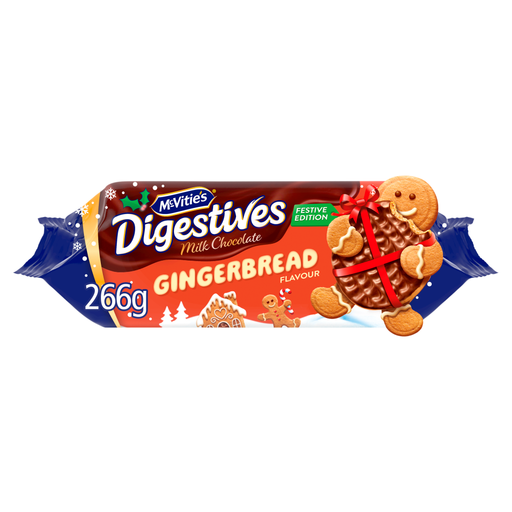 No image available
A gingerbread-flavoured chocolate digestive for someone choosing a different flavour at a stop. Use this variant's own label for carbohydrate per biscuit and ingredients, and consider how to keep the biscuits intact while carrying them.
 No image available
This caramel wafer bar is an alternative biscuit format, not a digestive. If you want separate pocket portions, confirm the wrapping on the pack and use its own per-bar carbohydrate figure when planning what to carry.
 No image available
A dark-chocolate digestive twin pack for a planned stop or for keeping a pack for another ride. Check the per-biscuit carbohydrate and ingredients on this variant, and protect any biscuits you take out on the ride.
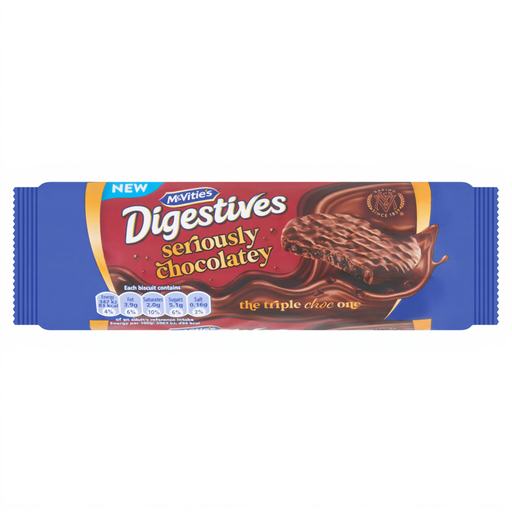 No image available
A chocolate digestive variant to consider if you prefer this product to a classic milk-chocolate digestive at a stop. Read this 250g pack for its serving size, carbohydrate and ingredients; do not apply another variant's per-biscuit figures.
No: a chocolate digestive is a food choice, not a requirement. British Cycling's cited indoor-cycling guidance discusses additional carbohydrate for rides over 90 minutes; consider the duration and intensity of your own ride when deciding what food to take.
No. Use the label's carbohydrate or available-carbohydrate figure for the stated portion; sugars are listed separately. Tesco, for example, lists 11.1g available carbohydrate per 17g biscuit for its 300g milk-chocolate digestive pack.
Carry them in a way that protects them from damage and lets you access them safely when stopped. If a separate pocket portion matters, compare the pack with a wrapped bar; Tesco describes the checked Penguin bars as individually wrapped.
Check the exact product's ingredients, allergen declaration and any precautionary statement when choosing it, then read the physical pack before eating. Recipes can change, so a familiar biscuit name or an earlier ingredient list is not enough.