Longer leisure-ride cyclists
If a biscuit is one part of your ride food, its carbohydrate per biscuit helps you count that portion alongside other food and drinks. British Cycling advises eating little and often and paying attention to hydration.


For a café stop or as part of the food you carry on a longer ride, choose a chocolate digestive by its labelled carbohydrate portion and how you will protect it in transit, rather than by chocolate type alone. Cycling UK indicates that a short ride after adequate food may need water rather than a separate snack; for longer rides, British Cycling advises planning food and hydration together.
If a biscuit is one part of your ride food, its carbohydrate per biscuit helps you count that portion alongside other food and drinks. British Cycling advises eating little and often and paying attention to hydration.
A chocolate digestive can be a snack at a planned stop. Choose the flavour you want without assuming its coating makes it specialised cycling food; whether you need to carry a snack also depends on the ride and what you have already eaten.
Individual wrapping may be more convenient than protecting an opened packet. Marks & Spencer describes its chocolate-coated digestive bars as individually wrapped; check the weight and carbohydrate for one bar if you intend to count it as a ride portion.
Start with the length of the ride and your other food and drinks, then compare the portion shown on each biscuit label with the format you can carry.
| Priority | What to check | Your needs |
|---|---|---|
| Ride food | Consider ride length and food eaten beforehand. For a longer ride, count the biscuit alongside other food and drinks; British Cycling also emphasises hydration. | For a short ride after a meal, I might take water rather than plan a biscuit. On a longer ride, I want to know how a biscuit fits into the food I am carrying. |
| Portion size | Read carbohydrate per biscuit, not just pack weight. McVitie's lists 10.4 g per biscuit for its Milk Chocolate Digestives; Sainsbury's lists 10.2 g for its 300 g milk-chocolate variety. Check the exact pack before using either figure. | I want to count the portion I will actually eat, especially if the label gives values per 100 g rather than per biscuit. |
| Carrying format | Compare a packet you can protect from crushing with individually wrapped portions. For the M&S wrapped bars, check one bar's weight before converting its per-100 g nutrition into a portion. | Separate wrapping appeals when I am carrying one snack; for a packet, I need a way to keep the biscuits intact. |
| Chocolate and ingredients | Choose milk or dark chocolate by flavour, then check the specific nutrition and ingredient label. Dark does not mean milk-free: Sainsbury's dark recipe lists butteroil from cows' milk, while Tesco's dark variety says it may contain milk. | I want the flavour I prefer without assuming the colour of the coating tells me its sugar content or whether it suits an allergy. |
Royal Devon University Healthcare NHS Foundation Trust advises fast-acting sugar for a diabetic hypo and cautions that high-fat chocolate snacks can take longer to raise blood glucose.
If you are at risk of hypos, follow your individual diabetes plan for fast-acting treatment rather than relying on chocolate digestives.
A packet's total weight does not tell you the carbohydrate in one biscuit. The M&S wrapped-bar information gives nutrition per 100 g, which is a different basis again.
Check the serving basis on the exact pack and count the portion you intend to eat alongside your other ride food and drinks.
Sainsbury's lists milk-derived butteroil in its dark-chocolate digestives, and Tesco's dark variety carries a milk precaution. Chocolate colour is not an allergen check.
Read the ingredients and precautionary statements on the pack you buy, particularly if you need to avoid an allergen.
These examples show label and format differences for particular products, not what every biscuit from each brand contains.
Its Milk Chocolate Digestives provide a conventional biscuit option with manufacturer-published per-biscuit nutrition.
Its 300 g milk- and dark-chocolate digestive packets offer two flavours with labelled per-biscuit values.
Its 300 g Milk Chocolate Digestives are another packet option with a stated portion.
Its 300 g Dark Chocolate Digestives have published values for one biscuit.
Marks & Spencer describes both conventional chocolate digestives and individually wrapped, fully chocolate-coated digestive bars.
These McVitie's options cover milk-chocolate, gingerbread-flavoured and dark-chocolate digestives for a stop or a planned ride portion. Check the exact pack's serving information if you need to count carbohydrate per biscuit.
 No image available
A conventional packet for a planned stop or portions carried in a protective container. Joybuy lists 62.5 g carbohydrate per 100 g for this 400 g product; check the pack's biscuit portion before counting individual biscuits. Check the label for allergens.
 No image available
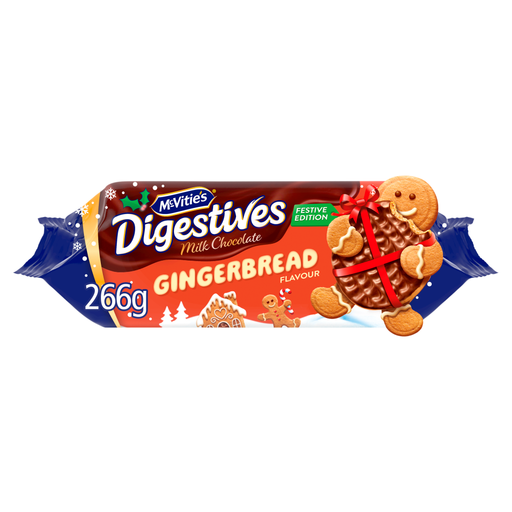
A gingerbread-flavoured variation if you want something other than a plain chocolate digestive at a stop. Check the exact pack for carbohydrate per biscuit when planning a portion, and protect biscuits from crushing while carrying them.
 No image available
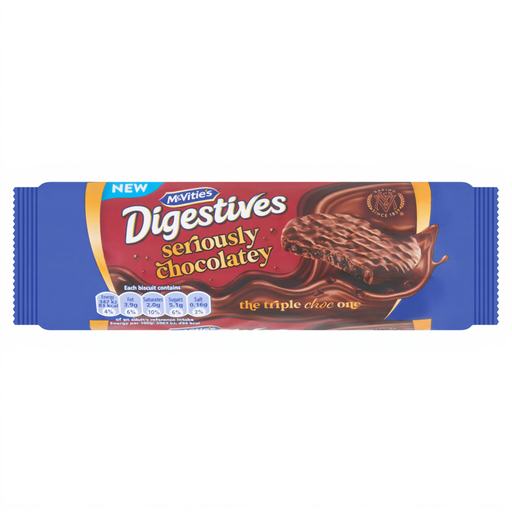
A dark-chocolate twin pack for a flavour preference, not a reason to assume different ride-fuelling effects. Check the pack's carbohydrate serving basis before counting biscuits. The product information identifies milk-derived butteroil, so read the physical label if avoiding milk.
 No image available
A 250 g chocolate digestive packet to consider for a stop. If you are planning ride portions, check carbohydrate for the amount you will eat rather than relying on the packet weight; protect biscuits when carrying an opened pack.
 No image available
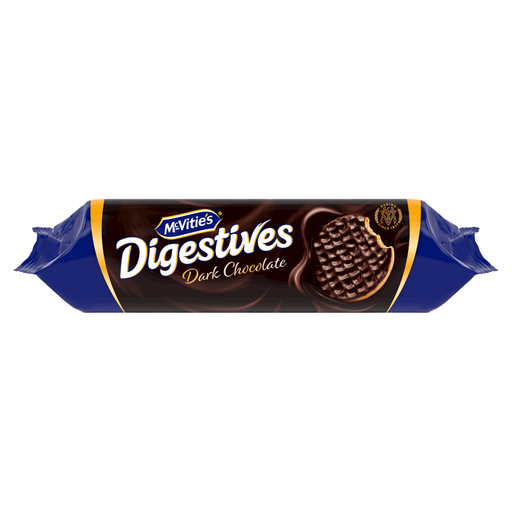
A 400 g dark-chocolate option if that is your flavour preference. Check the pack for carbohydrate per portion before using it in a ride-food plan. The product information identifies milk-derived butteroil, so dark chocolate should not be taken to mean milk-free.
Not necessarily. Cycling UK says that after adequate food, water may be enough for a short ride. Consider the length and demands of your actual ride rather than treating a biscuit as compulsory.
Use carbohydrate per biscuit from the specific pack, and count other food and drinks too. McVitie's lists 10.4 g carbohydrate per biscuit for its Milk Chocolate Digestives, but that figure is not a prescribed number of biscuits to eat or a value to apply to every variant.
Protect the biscuits from crushing and follow the pack's storage instructions. ASDA directs buyers of its Milk Chocolate Digestives to store them cool and dry, away from heat and sunlight, and in an airtight container once opened.
Do not rely on them as fast-acting treatment. Royal Devon University Healthcare NHS Foundation Trust advises fast-acting sugar for a hypo and cautions that high-fat chocolate snacks can take longer to raise blood glucose; follow your individual diabetes care advice.
No. Sainsbury's dark-chocolate digestives list milk-derived butteroil, while Tesco's dark variety says it may contain milk. Check the ingredients and precautionary statements on the particular pack if you need to avoid milk.