Hosts sharing a familiar coffee biscuit
Milk and dark coatings offer different chocolate styles. Choose a pack size with the number of guests and likely leftovers in mind.


Choose milk chocolate digestives for a sweeter chocolate style, or dark chocolate digestives if your guests prefer a more cocoa-led one. Before settling on either, check every guest’s dietary requirements against the exact pack: dark chocolate is not necessarily milk-free, and a gluten-free biscuit can still contain other allergens. Compare nutrition per 100g across products, then use per-biscuit figures and pack size to plan what to serve.
The useful starting point is the group around the coffee table: flavour, dietary requirements and the number of biscuits you expect to serve can each change the choice.
Milk and dark coatings offer different chocolate styles. Choose a pack size with the number of guests and likely leftovers in mind.
Check each requirement against the current ingredient and allergen statements. Dark chocolate does not establish that a biscuit is milk-free, while a gluten-free label does not cover every other allergen.
Per-biscuit figures help you see what one biscuit contributes. For a like-for-like comparison between products with different biscuit sizes, the NHS advises using nutrition figures per 100g.
Settle any guest requirements before choosing a chocolate style. Then compare the exact products you are considering, rather than assuming that all milk or all dark digestives have the same ingredients or nutrition.
| Priority | What to check | Your needs |
|---|---|---|
| Chocolate style | Look at the milk or dark chocolate description and any stated cocoa content. For the Tesco products listed by Tesco Groceries, dark chocolate has at least 48% cocoa solids and 4.2g sugars per 17g biscuit; its milk chocolate version lists 5.4g sugars per 17g biscuit. That comparison applies to those two products, not every milk and dark digestive. | I’d choose milk chocolate for a sweeter style, or dark chocolate if my guests prefer a more cocoa-led biscuit. |
| Dietary suitability | Read the current ingredients, highlighted allergens and any “may contain” statement for every guest requirement. Tesco Groceries lists milk and soya in its gluten-free chocolate digestives and warns that they may contain peanuts and nuts. Its dark chocolate digestives may contain milk. | Before putting one pack out for everyone, I want to know that its full allergen statement works for each guest—not just that the front of the pack says “dark” or “gluten free”. |
| Nutrition | Use per-100g sugar and saturates figures for like-for-like comparisons; the NHS notes that serving sizes can vary. Check per-biscuit figures separately when deciding how many to put out, and note the stated biscuit weight. | I want to compare the products fairly, then see what the figures mean for the number of biscuits I plan to serve. |
| Pack and storage | Check the pack weight against your likely guest numbers. Follow the current pack’s storage instructions after opening; Marks & Spencer says its milk chocolate digestives should be kept in an airtight container once opened. | A smaller gathering might leave part of a pack, so I’d check how to store the remaining biscuits before buying a larger format. |
Tesco Groceries says its dark chocolate digestives may contain milk, while Marks & Spencer lists milk fat in its dark chocolate digestives. Chocolate colour cannot settle a guest’s milk-avoidance requirement.
Read the current ingredient list and precautionary allergen wording for the exact pack before serving it.
A per-biscuit sugar or saturates figure reflects the size of that biscuit as well as its composition, so it can mislead when pack servings differ.
Compare per 100g for a like-for-like product comparison, as the NHS advises, and use per-biscuit values when planning servings.
Tesco Free From Chocolate Digestives are labelled gluten free, but Tesco Groceries lists milk and soya and warns that they may contain peanuts and nuts.
Check gluten and every other stated guest requirement separately against the full current label.
These examples show label details that can change a coffee-table choice; a brand name alone does not establish the ingredients of every product it makes.
The 266g Milk Chocolate Digestives listed by Tesco Groceries are a wheatmeal biscuit with a 30% milk-chocolate coating.
Tesco Groceries lists standard milk and dark chocolate digestives alongside a separately labelled gluten-free chocolate digestive.
Sainsbury’s lists a 300g own-label milk chocolate digestive that it describes as suitable for vegetarians.
Marks & Spencer lists milk and dark chocolate digestives with wholemeal biscuit and demerara sugar.
Sainsbury’s lists Rakusen’s 200g chocolate digestives as KLBD Parev and Vegetarian Society Approved, making the certification worth checking when a guest specifically requires it.
These McVitie’s packs offer dark chocolate, milk chocolate and gingerbread-flavoured chocolate digestive choices for coffee with friends. Check the current pack label for guest requirements, particularly when choosing between different pack sizes or variants.
 Image unavailable
A dark chocolate choice supplied as two 266g packs, useful when you want to open packs separately. Check the current ingredients and allergen statement rather than assuming dark chocolate is milk-free.
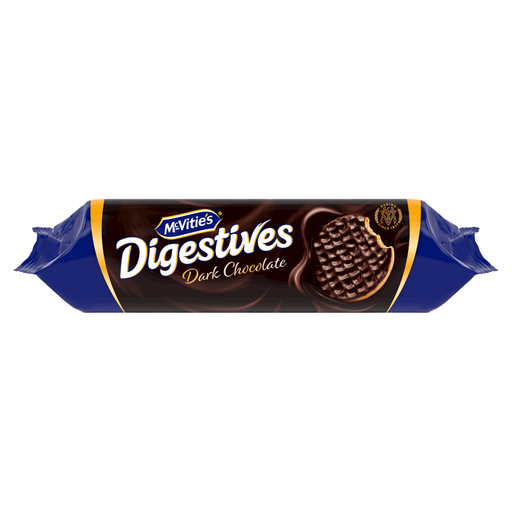 Image unavailable
A single 400g dark chocolate digestive pack for guests who want that chocolate style. Check its current milk, wheat and soya allergen information before sharing.
 Image unavailable
A 400g milk chocolate option for a group that prefers this chocolate style. Joybuy lists wheat, milk and soya as allergens for this pack; check its current label before serving.
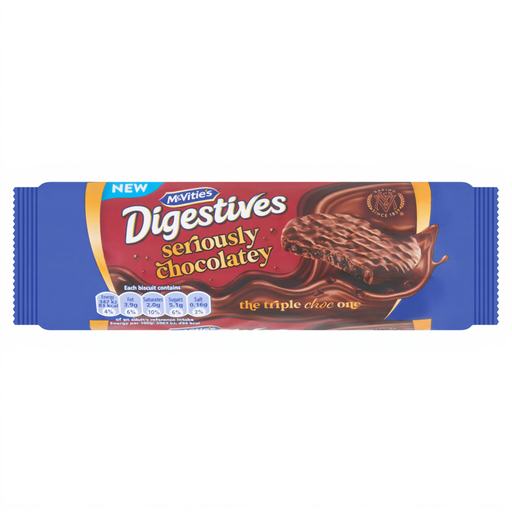 Image unavailable
A 250g chocolate digestive pack if you want a smaller format for coffee. Treat “Seriously Chocolate” as the variant name, not a measure of chocolate content; check the current ingredient and allergen information for your guests.
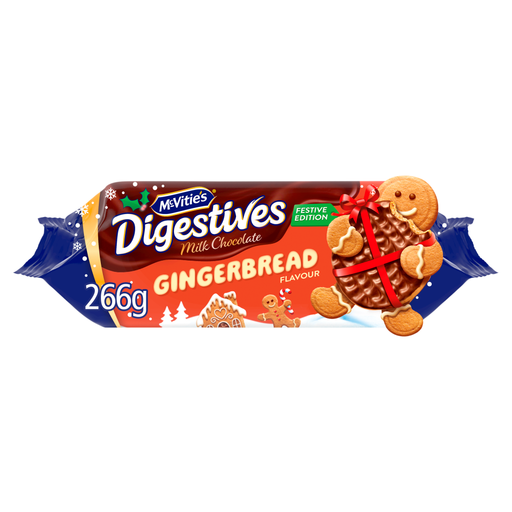 Image unavailable
A 266g gingerbread-flavoured variation for a group that wants something other than a standard chocolate digestive. Check the current chocolate description and allergen statement before putting it out for everyone.
No. Tesco Groceries says its dark chocolate digestives may contain milk, and Marks & Spencer lists milk fat in its dark chocolate digestives. Check the exact current pack before serving someone who avoids milk.
No. Tesco Free From Chocolate Digestives are labelled gluten free, but Tesco Groceries lists milk and soya and warns that they may contain peanuts and nuts. Check each guest’s requirements against the full label.
Read the current ingredients, highlighted allergens and any precautionary allergen statement against each guest’s stated requirements. The Food Standards Agency explains that wording such as “may contain” communicates potential unintended allergen presence.
Follow the instructions on the pack you bought. Marks & Spencer instructs customers to keep its milk chocolate digestives in a cool, dry place and in an airtight container once opened; check the current best-before information too.
No: the product name alone does not establish a digestive effect. For a coffee-table choice, use the ingredient, allergen and nutrition panels to compare the biscuits you are considering.