Families stocking the cupboard for half term
A sharing pack may suit several people at home. Compare the nutrition table and check the allergens rather than assuming the word “digestive” tells you what is in the biscuit.


For half-term snacks at home, a sharing pack suits biscuits kept in the cupboard for several people, while individually wrapped bars suit outings where separate portions matter. A fully coated bar is a different format from a standard chocolate-topped digestive, so compare nutrition per 100g and check the pack’s allergens rather than treating the two as interchangeable.
A sharing pack may suit several people at home. Compare the nutrition table and check the allergens rather than assuming the word “digestive” tells you what is in the biscuit.
Individually wrapped digestive bars keep biscuits separate in a bag. Decide whether that format matters more to you than choosing a standard sharing biscuit.
Food provided by a state-funded school is a different decision from a family’s half-term shopping. The Requirements for School Food Regulations 2014 restrict cakes and biscuits outside school lunch in England, as explained in Department for Education school-food guidance.
Start with the format you will use, then compare like-for-like nutrition figures and read the allergen statement on the pack.
| Priority | What to check | Your needs |
|---|---|---|
| Sugars and saturates | Compare standard biscuits using both figures per 100g. Sainsbury’s lists 25.6g sugars and 11.4g saturates per 100g for its 300g milk-chocolate digestives; Tesco lists 31.5g and 11.5g respectively for its 300g milk-chocolate digestives. | I want to compare similar sharing biscuits on the same basis, without assuming that a digestive is low in sugar. |
| Allergens | Read the ingredients and allergen statement on the exact pack. Check any additional manufacturing warnings that matter to the person eating it. | If I’m serving a child with an allergy or intolerance, I need to check the pack before offering a biscuit. |
| Pack format | Check whether the product is a sharing pack or individually wrapped, and whether the biscuit is chocolate-topped or fully coated. | Separate wrapping matters for an outing; at home, I may prefer to open one sharing pack. |
| Portion comparison | Use per-100g figures to compare products. Check per-biscuit figures separately, as biscuits can have different weights. | When deciding how many biscuits to put out, I want the figure for the biscuit I actually bought. |
A biscuit’s name does not replace its nutrition table. The Tesco and Sainsbury’s milk-chocolate digestives, for example, declare different sugars and saturates per 100g.
Compare those figures on the packs you are considering, then look at the per-biscuit information when deciding on a serving.
That figure can reflect biscuit weight as well as the recipe, making unlike sizes difficult to compare directly.
Use per-100g values for the product comparison and per-biscuit values for the portion you plan to serve.
Marks & Spencer describes its individually wrapped digestive bars as fully coated in milk chocolate, unlike its standard chocolate-topped digestives.
Choose the wrapped format when separate portions are useful, and compare its own nutrition label rather than transferring figures from the standard biscuit.
The ingredient statement on the pack is the one relevant to the biscuits being served, particularly when an allergy or intolerance is involved.
Read that statement and any manufacturing warnings each time you buy.
These brand references describe particular chocolate digestive ranges, not every product made by each brand.
McVitie’s lists milk-chocolate digestives in several pack sizes.
Tesco lists a 300g own-label milk-chocolate digestive sharing pack.
Sainsbury’s lists a 300g own-label milk-chocolate digestive sharing pack.
Marks & Spencer lists standard milk-chocolate digestives and individually wrapped, fully coated digestive bars.
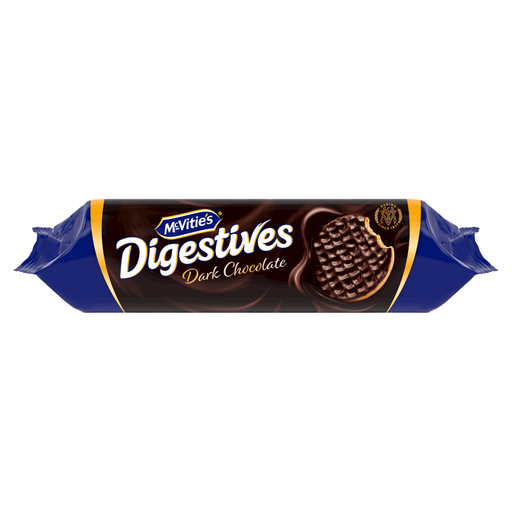
These McVitie’s packs offer milk-chocolate, dark-chocolate and gingerbread choices, plus a Seriously Chocolate variant. Compare flavour and pack size for snacks at home.
 No image available
The twin-pack format gives you two 266g packs for sharing at home. Check the allergen statement on the packs before serving.
 No image available
A 400g dark-chocolate sharing pack for the cupboard. Read the pack’s nutrition and allergen information when comparing it with the milk-chocolate version.
 No image available
This 400g sharing pack suits a preference for milk rather than dark chocolate. Check the physical pack for its current ingredients and allergen statement.
 No image available
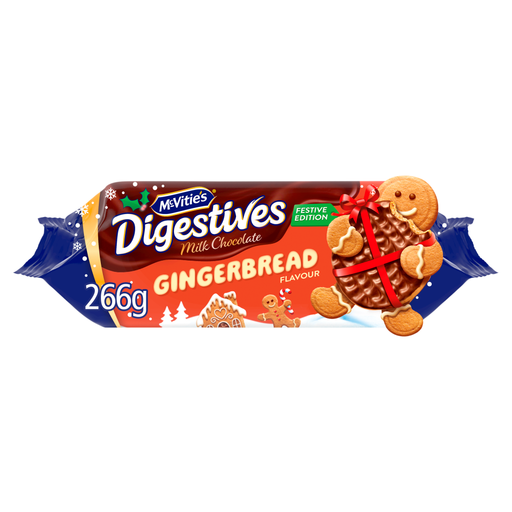
The 266g pack offers a gingerbread-flavoured alternative to a standard chocolate digestive. Check its own ingredients and nutrition table rather than using figures from another variant.
 No image available
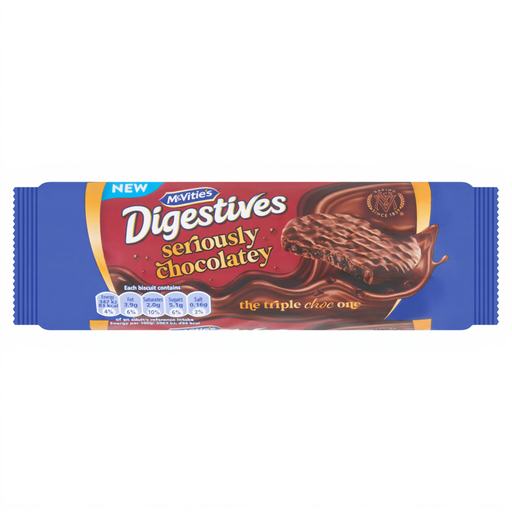
This 250g chocolate digestive variant offers another flavour choice for home snacks. Use its own per-100g nutrition figures and allergen statement when comparing packs.
No. Under the Requirements for School Food Regulations 2014, cakes and biscuits must not be provided otherwise than as part of a school lunch. Department for Education guidance describes these school-food requirements for state-funded schools in England; they do not govern a family’s snacks at home.
No. The Department of Health & Social Care’s guidance describes rules for certain promotions and placements by businesses operating in and selling to England, not a ban on household purchases. Do not assume that every chocolate digestive has the same HFSS classification from its product name alone.
Read the ingredients, highlighted allergens and manufacturing warnings on the physical pack. Milk, wheat and soya are relevant to the chocolate digestive products discussed here; Sainsbury’s also warns that its milk-chocolate digestives are not suitable for customers with an oat allergy because of manufacturing methods.
Follow the storage instructions on the pack. The Tesco, Sainsbury’s and M&S product information advises keeping these biscuits in a cool, dry place and using an airtight container after opening.