Commuters and lunch packers
A wrapped bar is convenient when you want one separated item in a bag or lunchbox. With a pack of digestives, take out the number you intend to eat before leaving.


Choose a chocolate digestive if you want to decide how many biscuits to pack; choose a wrapped biscuit bar if a separated serving is more useful on your journey. Check the portion you will actually eat: Tesco Groceries lists 83 kcal per biscuit for its sampled McVitie’s and Tesco digestives, while its sampled Penguin and Club bars list 114–130 kcal per bar, with higher sugars and saturated fat per item. The products and serving sizes differ, and the word “Digestive” does not establish a digestive-health benefit.
For a packed lunch, the useful distinction is whether you want to portion biscuits yourself or carry a separated bar.
A wrapped bar is convenient when you want one separated item in a bag or lunchbox. With a pack of digestives, take out the number you intend to eat before leaving.
Compare the serving you expect to eat, not just the pack or a single biscuit. The sampled digestive biscuits and wrapped bars have different per-item figures, so also use the per 100g panel for a like-for-like label comparison.
Read the current pack before choosing. The sampled McVitie’s and Tesco digestives, Penguin bars and Club bars list wheat or cereals containing gluten, milk and soya ingredients; declarations can differ between products and formulations.
Start with the amount you will carry, then compare its nutrition and ingredients. Front-of-pack traffic-light labelling, where present, can prompt a closer look at the full panel.
| Priority | What to check | Your needs |
|---|---|---|
| Portion and format | Check whether the item is a biscuit taken from a larger pack or a separately wrapped bar. Decide how many biscuits you will pack, or compare the nutrition for a whole bar. | I want a serving that fits in my lunch without carrying the whole pack. A wrapped bar separates one item; digestives let me choose the number. |
| Nutrition label | Compare sugars, saturated fat and energy both per 100g and for the portion you plan to eat. Tesco Groceries lists 83 kcal, 4.8g sugars and 2.1g saturates for one sampled McVitie’s milk-chocolate digestive; its sampled Penguin bar lists 130 kcal, 10.2g sugars and 3.8g saturates per bar. These are differently sized items. | I want to compare my actual lunch portion, rather than assume one bar equals one biscuit. In the Food Standards Agency and Ipsos Northern Ireland’s 2024 tracker, 49% of the 611 people interviewed from 16 September to 23 November said they actively used traffic-light labelling when shopping for food. That measures label use in Northern Ireland, not chocolate-biscuit preferences. |
| Ingredients and allergens | Read the current ingredient list and any “may contain” statement. Check the particular variant for wheat or other cereals containing gluten, milk and soya, rather than relying on a product-line name. | If an ingredient or allergen matters to me, I need the declaration on the pack I am buying, including precautionary wording. |
The biscuit’s name does not establish a digestive-health effect. Its sugars and saturated fat still need to be read from the nutrition panel.
Treat “Digestive” as the biscuit style. Compare the current label per 100g and for the portion you intend to pack.
Tesco Groceries lists 130 kcal, 10.2g sugars and 3.8g saturates for its sampled Penguin bar, against 83 kcal, 4.8g sugars and 2.1g saturates for one sampled McVitie’s digestive. Their serving sizes and formats differ.
Compare one bar with the number of biscuits you would actually take. Choose a wrapper for carrying convenience, not as a shortcut for judging the nutrition.
The sampled biscuit and bar labels include wheat, milk and soya ingredients. Tesco Groceries also lists a “may contain nuts and peanuts” statement for its sampled Fox’s Half Coated Milk Chocolate Cookie.
If an allergy or intolerance is relevant, check the current physical pack, including its precautionary allergen wording, before eating.
These examples show different biscuit formats and label details; the figures apply to the named products, not every biscuit from each brand.
The sampled range spans milk-chocolate digestives and Penguin and Club biscuit bars, allowing a comparison between biscuits portioned from a pack and bars supplied as separate servings.
Tesco’s sampled own-label milk-chocolate digestive offers another traditional biscuit for a per-biscuit label comparison.
The sampled Half Coated Milk Chocolate Cookie is a cookie-style alternative, rather than a digestive or narrow biscuit bar.
These options include chocolate digestives to portion for lunch, a chocolate biscuit bar to consider for carrying, and an oat biscuit that is not a digestive. Compare each product’s own pack rather than applying figures from another size or variant.
 No image available
A milk-chocolate digestive to portion before putting it in a packed lunch. The Joybuy listing identifies wheat, milk and soya allergens; check the pack for the nutrition of the serving you take.
 No image available
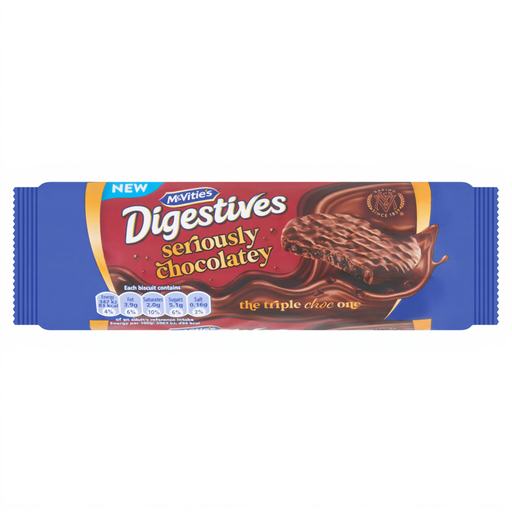
Another chocolate digestive format for a lunch portion chosen from the pack. Check this variant’s current per 100g and serving figures rather than using the figures for McVitie’s Milk Chocolate Digestives.
 No image available
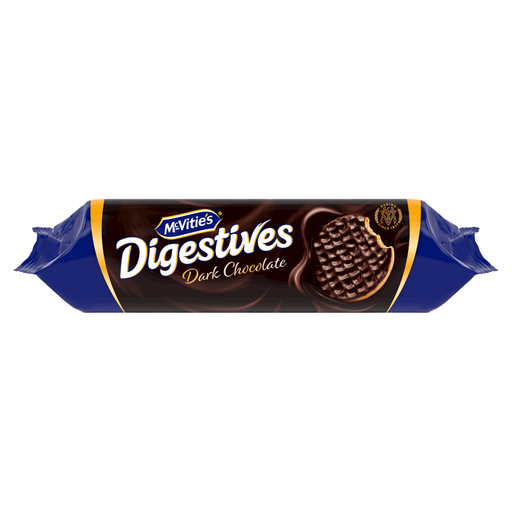
A dark-chocolate digestive for shoppers who prefer that variant and can portion biscuits before travelling. Use this pack’s own nutrition and ingredient label: milk-chocolate digestive figures do not establish the values for the dark-chocolate version.
 No image available
An oat-biscuit option, not a chocolate digestive. “Gluten Free” is part of this product’s name; anyone checking ingredient or allergen suitability should read the current pack rather than assuming it matches a digestive biscuit.
 No image available
A biscuit-bar alternative to portioning digestives from a pack. Check this 14-pack’s wrapping, per-bar nutrition and allergen label before choosing it for a lunchbox; figures for the sampled seven-pack should not be assumed to describe this variant.
No digestive-health benefit follows from the name alone. Treat it as the biscuit type and use the current ingredients and nutrition panel to decide whether the product fits what you want to pack.
A separately wrapped bar provides one already separated item; digestives let you select how many biscuits to take. Tesco Groceries lists 83 kcal per biscuit for its sampled McVitie’s and Tesco digestives, compared with 130 kcal for its sampled Penguin bar and 114 kcal for its sampled Club Orange bar. Check the exact product and portion you plan to eat.
Check the current pack for allergens relevant to you, including any “may contain” statement. The sampled McVitie’s and Tesco digestives and Penguin and Club bars list wheat or cereals containing gluten, milk and soya ingredients, but the declaration for the particular variant you buy is the one to read.
Use it to narrow your choices, then read the physical pack before eating. Tesco Groceries and Sainsbury’s both direct shoppers to the product label for up-to-date allergy information, which matters when recipes or declarations change.