Students planning a sweet break
If you are choosing between a digestive, a biscuit bar and a cookie, the labelled portion helps you compare what you might eat during one break. A biscuit need not be the snack you rely on between meals.


A chocolate digestive can be a planned sweet revision break if its ingredients suit your dietary requirements, but the word “digestive” does not mean it aids digestion. Compare the labelled portion for sugars, saturated fat and fibre; if you want a snack that contributes different nutrients, consider a non-biscuit option. Food provided by a state-funded school in England needs a separate check against school-food rules.
If you are choosing between a digestive, a biscuit bar and a cookie, the labelled portion helps you compare what you might eat during one break. A biscuit need not be the snack you rely on between meals.
Wheat, milk, soya and precautionary allergen statements vary between the checked products. If you have a relevant allergy, intolerance or coeliac disease, check the current pack rather than relying on the word “digestive” or the type of chocolate.
Food provided by a state-funded school in England falls within school-food requirements described by the Department for Education. The Requirements for School Food Regulations 2014 define confectionery to include products wholly or partly coated with chocolate; that definition is not a UK-wide HFSS classification for every biscuit.
Start with ingredients you need to avoid, then compare the portion you would eat and decide what you want from the break.
| Priority | What to check | Your needs |
|---|---|---|
| Ingredients and allergens | Read the current ingredients and allergen statement for wheat or gluten, milk, soya and any relevant may-contain warning. The NHS says people with coeliac disease must avoid gluten; standard biscuits should not be assumed gluten-free. | Wheat or milk may rule out an otherwise appealing biscuit for me. Dark chocolate alone does not settle whether a product meets my dietary requirements. |
| Portion and nutrition | Compare sugars, saturated fat and fibre for the labelled biscuit, cookie or bar, and check how many you plan to eat. Sainsbury’s lists 3.1g sugars per chocolate-chip digestive; McVitie’s lists 10.2g per Penguin Original bar. Those are different-sized products, not like-for-like weights. | For a short revision break, I want to know what my actual portion contains, rather than judging it by the packet or by whether it is individually wrapped. |
| Type of break | Decide whether you want a chocolate biscuit treat or a snack contributing other nutrients. The British Dietetic Association notes that snacks can contribute nutrients, while some add fat, sugar and salt. | Sometimes I want a familiar biscuit; at other times, I want the break to offer something beyond a sweet taste. |
| School setting | For food provided by a state-funded school in England, check the applicable school-food requirements. The Requirements for School Food Regulations 2014 include chocolate-coated products in their definition of confectionery. | If I am providing food for a school revision session, I need to check the rules for that setting rather than assume the same rules govern a snack eaten at home. |
The checked chocolate digestives list wheat. The NHS says people with coeliac disease must avoid gluten, and the biscuit’s name does not establish that it is suitable.
If you need a gluten-free biscuit, check that the current product is expressly labelled gluten-free rather than substituting a standard digestive.
Listed sugars differ between individual products and serving formats: Sainsbury’s chocolate-chip digestive has 3.1g per biscuit, while McVitie’s Club Mint has 8.9g per bar. A bar and a biscuit are not necessarily the same weight.
Read the serving size alongside sugars, saturated fat and fibre, then consider how many biscuits or bars you would eat.
Tesco states that its checked Dark Chocolate Digestive may contain milk; Fox’s states that its checked Chocolatey Milk Chocolate Cookie may contain nuts and peanuts.
When an allergy or intolerance matters, use the current pack’s full ingredients and allergen statement to assess the particular product.
The Department for Education describes school-food requirements for food provided in state-funded schools in England. The 2014 Regulations’ definition of confectionery includes chocolate-coated products; it does not establish an HFSS classification for every chocolate digestive across the UK.
Check the school-food requirements when providing food in that setting. For a break at home, assess the product’s ingredients and portion for the person eating it.
These references describe particular checked products, not every biscuit made by each brand.
The checked range includes Milk Chocolate Digestives and the individually sized Penguin Original and Club Mint bars.
Its checked chocolate-chip digestive is an option for comparing chips with a full chocolate coating.
The checked Dark Chocolate Digestive provides a per-biscuit panel for a dark-chocolate option.
The checked Chocolatey Milk Chocolate Cookie offers a cookie format rather than a digestive-style biscuit.
These options include chocolate digestive varieties for a planned revision break and a chocolate wafer bar for a different, individually portioned format. Check each current pack for the ingredients and nutrition information that matter to you.
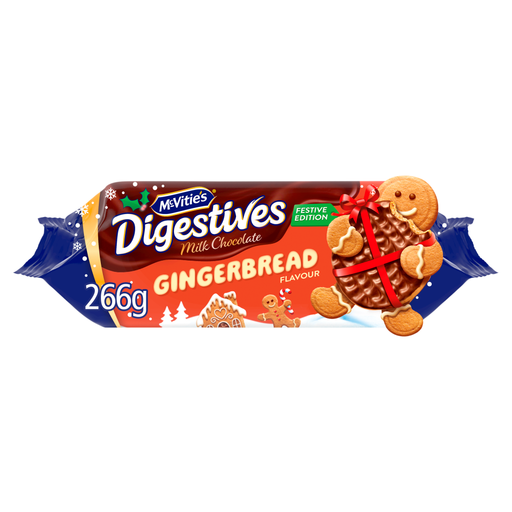 No image available
A gingerbread-flavoured chocolate digestive for a biscuit break. Check the current pack’s portion, ingredients and allergen statement before choosing it for a dietary requirement.
 No image available
A milk-chocolate digestive in a 400g pack for a biscuit-style break. Use this pack’s own serving and allergen information when deciding what to eat.
 No image available
A dark-chocolate digestive in a twin-pack format. If you compare it with a single biscuit or bar, check this variant’s own serving size and nutrition label; dark chocolate alone does not settle allergen suitability.
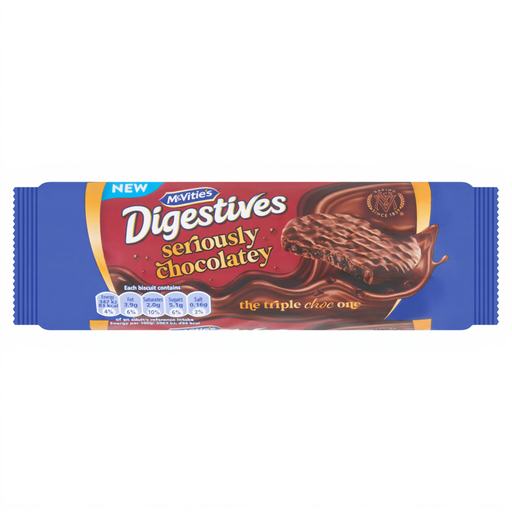 No image available
A chocolate digestive variant in a 250g pack. Check its current serving information before comparing sugars or saturated fat with another biscuit, and read the full allergen statement.
 No image available
A chocolate wafer bar rather than a digestive, for a different type of biscuit break. Compare its labelled bar serving with any digestive serving you are considering, and check the current allergen statement.
The checked McVitie’s, Tesco and Sainsbury’s digestives list wheat, so do not treat them as gluten-free. The NHS says people with coeliac disease must avoid gluten and that biscuits should not be assumed suitable unless labelled gluten-free; check the current product label.
Not necessarily: Tesco states that its checked Dark Chocolate Digestive may contain milk. If milk or lactose matters to you, check the particular pack’s ingredients and allergen statement rather than relying on “dark chocolate”; the NHS notes that processed foods, including biscuits, can contain lactose.
Food provided by a state-funded school in England is subject to school-food requirements described by the Department for Education. The Requirements for School Food Regulations 2014 define confectionery to include products wholly or partly coated with chocolate, so check the applicable requirements before providing them. This does not establish a UK-wide HFSS classification for every chocolate digestive or automatically govern a snack eaten at home.
The Food (Promotion and Placement) (England) Regulations 2021 address certain promotions and placement of specified less-healthy foods in England. Their scope is different from the school-food requirements and does not, by itself, classify every named chocolate digestive or answer whether its ingredients suit your revision break.