Organisers setting out a shared plate
Compare the biscuit or serving count on each pack with the number of people you plan to serve. Pack weights alone do not tell you how many biscuits will be available.


For a shared plate of familiar digestives, start with milk chocolate and plan quantities using the stated biscuit or serving count, not pack weight alone. Add dark chocolate if colleagues want another option, or choose Penguin or Club bars when separate handouts matter more than serving digestives. Check the actual packs for allergens before serving.
Compare the biscuit or serving count on each pack with the number of people you plan to serve. Pack weights alone do not tell you how many biscuits will be available.
Keep the actual packs available so colleagues can check ingredients and precautionary allergen statements. Do not assume a dark coating or a different biscuit format meets someone’s requirements.
Consider biscuit bars when counting out separate items matters more than putting full-size digestives on a plate. Penguin and Club are different biscuit types, not digestive variants.
Decide how the biscuits will be served, then check the exact pack for quantities and ingredients.
| Priority | What to check | Your needs |
|---|---|---|
| Serving format | Choose between full-size digestives, mini digestives and separate biscuit bars. McVitie’s lists mini chocolate digestives in 80g and 5 × 19g formats; check the selected pack rather than assuming every format is individually wrapped. | I’m putting biscuits on a shared plate, or I need separate items to hand out. Penguin Original and Club Orange are bars rather than digestives, according to McVitie’s. |
| Quantity | Check the exact pack’s biscuit or serving count as well as its weight. Tesco lists about 16 biscuits for McVitie’s 266g milk chocolate digestives; Sainsbury’s lists approximately 18 servings for its 300g milk chocolate digestives. | There should be enough for the planned group without assuming each person will take the same number. |
| Ingredients | Read the purchased pack’s ingredient list and precautionary allergen statements. Tesco’s dark chocolate digestives carry a may-contain-milk warning; Sainsbury’s dark version lists cows’ milk butteroil. | If a colleague has a stated food requirement, I need information for the biscuits actually served—not an assumption based on the word ‘dark’. |
| Chocolate choice | Check whether the pack contains milk or dark chocolate digestives. The referenced Tesco versions use different chocolate coatings while retaining the digestive format. | A milk and dark choice would be useful on the shared plate, provided both packs suit the attendees’ stated requirements. |
| Storage | Follow the instructions on the purchased pack after opening. The referenced Tesco and Sainsbury’s listings call for cool, dry storage and an airtight container. | I may have biscuits left after the meeting and want to store the opened pack as directed. |
Tesco’s referenced dark digestives may contain milk, while Sainsbury’s dark digestives list cows’ milk butteroil.
For a milk-related requirement, check the ingredients and precautionary statements on the exact pack rather than choosing by its chocolate description.
Tesco lists about 16 biscuits in the referenced McVitie’s 266g pack; Sainsbury’s lists approximately 18 servings in its 300g milk chocolate pack. Weight and stated portions answer different planning questions.
Use the count on the packs you choose alongside your meeting’s serving plan.
McVitie’s describes Penguin Original as a biscuit-and-cream sandwich and Club Orange as a flavoured biscuit bar; Fox’s describes its Chocolatey Milk Chocolate Rounds as coated shortcake.
If the refreshments specifically call for digestives, check the biscuit type before substituting a bar or shortcake round.
Its referenced range includes milk chocolate digestives and mini chocolate digestives. Penguin and Club are separate biscuit-bar lines.
The referenced own-label range includes 300g milk and dark chocolate digestive packs.
The referenced own-label milk and dark chocolate digestives are each listed in 300g packs.
The referenced Chocolatey Milk Chocolate Rounds are coated shortcake biscuits, not digestives.
These McVitie’s options cover dark chocolate digestives and two other chocolate-digestive variants for a shared meeting plate. Compare their pack formats before deciding how many to order.
 No image available
The two-pack format lets you decide how many packs to open for a shared plate. Check the biscuit count and allergen information on each pack before serving.
 No image available
This dark chocolate digestive is an option for a shared plate. Check its stated biscuit count for quantity planning and its pack label for allergens.
 No image available
This milk chocolate digestive fits a shared biscuit plate, but the listing says ‘Case SKU’: confirm the quantity supplied before ordering. Check the purchased pack for its biscuit count and ingredients.
 No image available
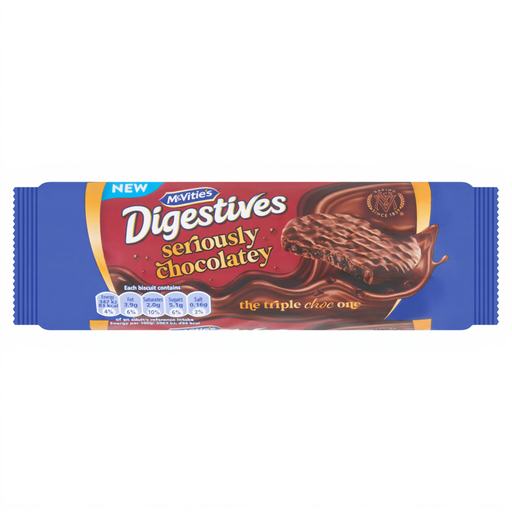
This chocolate-digestive variant offers another choice for the shared plate. Compare its stated servings and ingredients with your meeting plan.
Start with the number of people you intend to serve and the biscuit or serving count on the exact pack. Tesco lists about 16 biscuits for the referenced McVitie’s 266g pack, while Sainsbury’s lists approximately 18 servings for its 300g milk chocolate pack; neither figure determines how many biscuits each person will take.
No such assumption is safe for the referenced products: Tesco’s dark chocolate digestives may contain milk, and Sainsbury’s dark chocolate digestives list cows’ milk butteroil. Check the exact pack against the attendee’s stated requirement.
Follow the instructions on the purchased pack. The referenced Tesco and Sainsbury’s listings call for cool, dry storage and an airtight container after opening.
Keep the original packs available for ingredient and precautionary allergen checks. If food is supplied or repacked as part of a food business, labelling requirements depend on how it is packaged and supplied: the Food Standards Agency’s guidance covers England, Northern Ireland and Wales, and Food Standards Scotland provides Scottish guidance.