Students stocking a shared kitchen
Consider how much cupboard space you have and whether the pack is likely to be finished after opening. The checked Tesco and McVitie's product pages advise cool, dry storage and an airtight container after opening.


For a first cupboard shop, choose a chocolate digestive by flavour, pack size and the needs of anyone who will eat it. A gluten- and wheat-free variety matters when those ingredients must be avoided, but it may still contain milk or soya; check the current packet before sharing.
Consider how much cupboard space you have and whether the pack is likely to be finished after opening. The checked Tesco and McVitie's product pages advise cool, dry storage and an airtight container after opening.
Choose the chocolate style you prefer, then compare the current nutrition panels if total sugars per biscuit matter to you. Tesco lists 5.4g for its 300g milk-chocolate digestives; Sainsbury's lists 3.5g for its 300g dark-chocolate digestives. Those are values for different products, not a rule about all milk and dark varieties.
Read the ingredients and precautionary statements for everyone who may eat from a shared pack. Tesco describes its Free From Chocolate Digestives as gluten and wheat free, but says they contain milk and soya and may contain peanuts and nuts.
Start with the flavour and pack format you want, then check the current label for dietary requirements, nutrition and storage instructions.
| Priority | What to check | Your needs |
|---|---|---|
| Pack and storage | Check the weight, cupboard space and instructions for storing the biscuits after opening. Use an airtight container where the packet advises one. | I want a pack that fits my cupboard and is likely to be eaten while it is stored as directed. |
| Chocolate and nutrition | Check whether the coating is milk or dark chocolate. Compare total sugars on the same labelled basis, such as per biscuit or per 100g; a per-biscuit figure also depends on biscuit size. | Dark chocolate appeals to me, but I would check the particular product's label rather than assume it has less sugar. |
| Ingredients and allergens | Read the current ingredients and any 'may contain' statement. A gluten- and wheat-free description does not establish that a biscuit is free from milk, soya or nuts. | If I am sharing a pack, everyone who may eat it needs to be able to check the label for their own requirements. |
| Portions | Use the stated biscuit or serving size when reading the nutrition panel. Total sugars on a packet and free sugars in NHS guidance are different measures. | I want to know what the label's figures refer to when choosing a snack for my move-in shop. |
Tesco's Free From Chocolate Digestives are described as gluten and wheat free, yet contain milk and soya and may contain peanuts and nuts.
For anyone with an allergy or intolerance, check the full ingredients and precautionary statement on the current packet before offering them a biscuit.
An earlier packet cannot confirm the ingredients of the one you are about to share, particularly if you have changed variety or pack size.
Keep the current packet available so flatmates can read its ingredients and allergen information.
The checked Tesco and M&S product pages advise cool, dry storage and an airtight container after opening; ASDA also advises keeping its biscuits away from direct heat and sunlight.
If the wrapper cannot be resealed, use an airtight container and retain the packet's ingredient and allergen information.
These examples illustrate label and variety differences; each detail applies to the named product, not every biscuit made by the brand.
Milk- and dark-chocolate digestive varieties include different pack formats.
The checked range includes standard chocolate digestives and a Free From chocolate variety.
Its checked 300g dark-chocolate digestives offer a dark-chocolate choice.
Its checked milk-chocolate digestives come in a 300g pack.
Its checked milk-chocolate digestives have a wholemeal biscuit base.
These McVitie's packs cover dark-chocolate, milk-chocolate and gingerbread-flavoured choices for a student cupboard. Check each current product label if the biscuits will be shared.
 No image available
A two-pack format if you prefer dark chocolate. Check the current pack for wheat, milk and soya before sharing, and follow its storage instructions after opening.
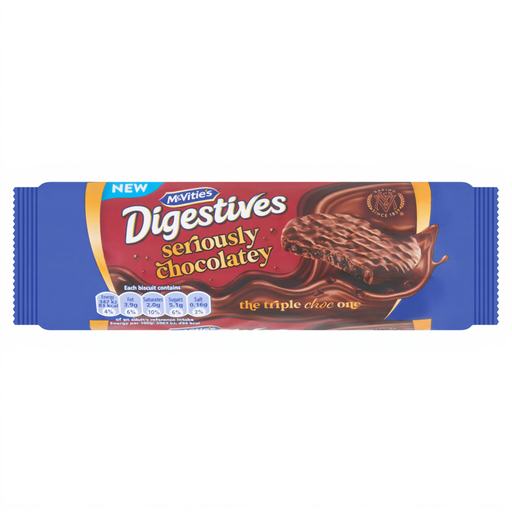 No image available
A 250g chocolate-digestive pack for a smaller cupboard shop. If anyone sharing it has an allergy, check the current packet's ingredients and precautionary statements, including those concerning nuts and eggs.
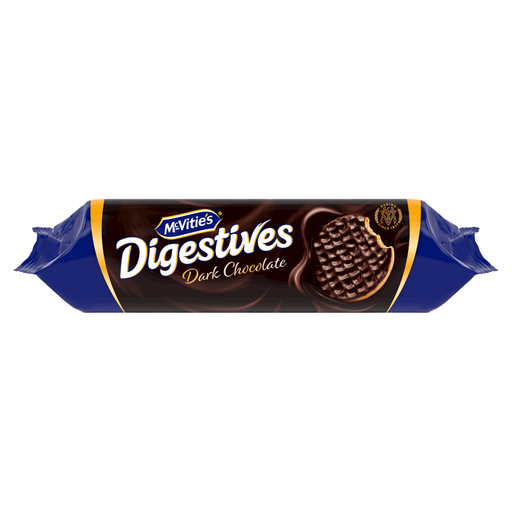 No image available
A single 400g pack for someone choosing dark chocolate. Check the current allergen label before placing it in a shared cupboard, and store it as directed after opening.
 No image available
A 400g milk-chocolate pack for a first cupboard shop. Joybuy identifies milk, soya and wheat as allergens for this product; check its current packet before sharing.
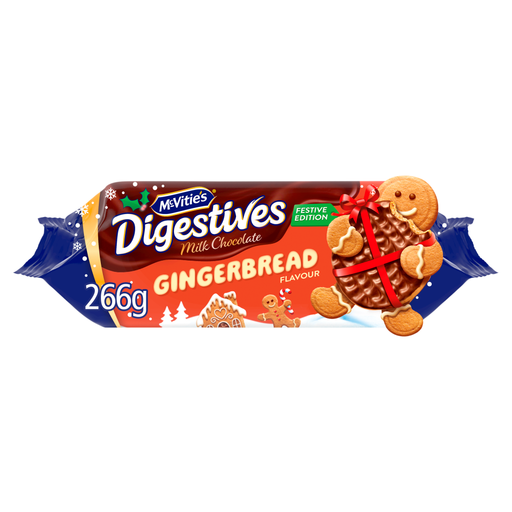 No image available
A 266g pack for someone who specifically wants gingerbread flavour. Check that the flavour suits anyone sharing it, and read the current allergen label before offering it to flatmates.
The checked standard Tesco, Sainsbury's, ASDA and McVitie's examples contain wheat. Tesco describes its Free From Chocolate Digestives as gluten and wheat free, but they contain milk and soya and may contain peanuts and nuts. Check the current packet against the eater's requirements.
The checked Tesco, ASDA and M&S product pages give cool, dry storage instructions rather than refrigeration instructions. Follow the current packet, and use an airtight container after opening where directed.
Use the current packet's ingredients and precautionary statements before sharing. Check again when you change products or pack sizes rather than relying on a label from an earlier purchase.
No general conclusion follows from the coating alone. Sainsbury's lists 3.5g total sugars per biscuit for its checked dark-chocolate product, while Tesco lists 5.4g for its checked milk-chocolate product. Compare the particular packets on the same per-biscuit or per-100g basis.
The nutrition panel reports total sugars for its stated quantity, such as one biscuit or 100g. That figure is not a direct measure of free sugars: the NHS discusses biscuits and chocolate among foods containing free sugars, so keep the two terms distinct when reading guidance and labels.