Hosts filling a shared biscuit tin
A familiar milk-chocolate digestive may fit the plan better than a seasonal flavour. Think about the number of guests and whether one pack will be enough.


Choose a milk-chocolate digestive for a conventional Christmas biscuit tin, or a dark-chocolate version when guests prefer dark chocolate. Pack size matters if you are stocking up, but check the current ingredients and allergen label before serving either style to guests with dietary requirements.
A familiar milk-chocolate digestive may fit the plan better than a seasonal flavour. Think about the number of guests and whether one pack will be enough.
If guests have a clear chocolate preference, choose the corresponding variant rather than assuming one coating will suit everyone. Check the pack size as well as the flavour.
Check the exact pack for declared allergens, precautionary statements and any dietary or religious labelling. A standard chocolate digestive should not be assumed suitable from its name alone.
Start with guests’ chocolate preferences and dietary requirements, then choose a pack size that fits the gathering.
| Priority | What to check | Your needs |
|---|---|---|
| Chocolate type | Check whether the exact pack is milk- or dark-chocolate coated. Tesco Groceries describes its milk-chocolate digestive as half coated; the listed Tesco and McVitie’s milk variants each state 30% milk chocolate. | I’m putting out a familiar milk-chocolate biscuit, or I know my guests would rather have dark chocolate. |
| Pack size | Compare the quantity on the packs you are considering. The Joybuy selections below include a 2 x 266g dark-chocolate twin pack and individual 400g, 400g and 250g packs. | Will one pack cover the gathering, or would separate packs make more sense for different chocolate preferences? |
| Ingredients and allergens | Read the current ingredients, highlighted allergens and any may-contain statement on the exact pack. The Tesco Groceries listings for the standard McVitie’s and Tesco milk-chocolate digestives include wheat, milk and soya. | Someone I’m serving needs me to check specific ingredients before the biscuits go into a shared tin. |
| Gluten-free labelling | Look for an explicit gluten-free label when that is required; do not rely on the word “digestive”. The Food Standards Agency says foods labelled gluten-free must contain no more than 20 mg/kg gluten as sold. | If a guest needs a gluten-free biscuit, I need a product specifically labelled for that requirement. |
| Kosher labelling | Check the certification and the precise product variant. Tesco Groceries labels Rakusen’s Dark Chocolate Digestives kosher and pareve, while also listing a possible presence of egg, milk and tree nuts. | For a guest who requires kosher food, I need to confirm that the particular pack meets their requirements; I still need to check its allergen information separately. |
The standard McVitie’s and Tesco milk-chocolate digestives listed by Tesco Groceries contain wheat and milk. The Rakusen’s dark-chocolate listing also carries a may-contain statement for egg, milk and tree nuts.
Ask guests about their requirements, then check the ingredients, allergen emphasis and precautionary statements on the current pack. Choose a specifically labelled gluten-free product where that is required.
Pladis announced a Chocolate Digestives Anniversary Tin and Gingerbread Flavour Milk Chocolate Digestives for its 2025 seasonal range. That announcement does not establish which festive products will be offered for Christmas 2026.
If a seasonal tin or flavour matters to your plans, confirm the particular product and its current label when you shop. A classic digestive is a separate choice.
These references concern particular chocolate-digestive products and their labels, not every biscuit made by each brand.
Its listed milk- and dark-chocolate digestives give hosts two chocolate types within a familiar digestive range.
Its listed 300g milk-chocolate digestives provide an own-label version of the conventional half-coated biscuit.
Its listed dark-chocolate digestive is relevant when a guest specifically requires kosher labelling.
These McVitie’s packs offer milk- and dark-chocolate digestive options for a Christmas biscuit tin. Choose the variant and pack quantity that fit your guests, and check the current label for dietary requirements.
 No image available
The twin-pack format suits a Christmas shop where guests prefer dark-chocolate digestives and you want two packs of the same variant.
Check the current label for wheat, milk, soya and any other allergen information before serving.
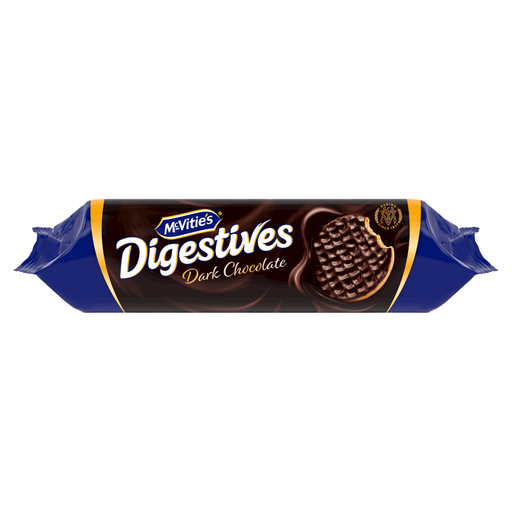 No image available
This 400g dark-chocolate pack is an alternative to the twin pack when one larger pack fits your plans.
Read the current ingredients and allergen statements if guests have dietary requirements.
 No image available
This 400g milk-chocolate pack fits a biscuit tin intended for guests who prefer the conventional milk-chocolate variant.
Check the exact pack’s ingredients and allergen information before sharing it.
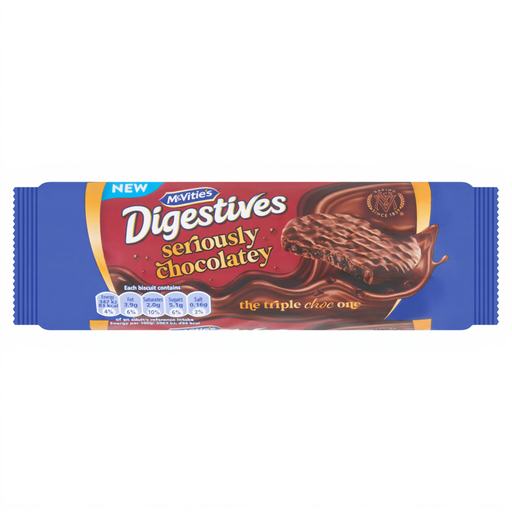 No image available
This named chocolate-digestive variant comes in a 250g pack, so compare its pack quantity with the larger options if you are buying for a group.
Check the current ingredients and any may-contain statement before serving it to guests with allergies.
A standard milk-chocolate digestive is a conventional choice if guests like milk chocolate. The McVitie’s and Tesco versions listed by Tesco Groceries both contain wheat, milk and soya, so ask about dietary requirements rather than assuming either biscuit suits everyone.
It depends on the exact products. Tesco Groceries lists 26.6g sugars per 100g for McVitie’s Dark Chocolate Digestives 433g and 28.5g per 100g for McVitie’s Milk Chocolate Digestives 266g. Those figures describe the two listed packs, not every dark- and milk-chocolate digestive; compare the labels if the difference matters to you.
Do not assume so: the standard McVitie’s and Tesco milk-chocolate digestives listed by Tesco Groceries contain wheat. If a guest requires a gluten-free biscuit, look for one specifically labelled gluten-free and check its current pack.
Yes, particularly when you are buying for someone with a food allergy or intolerance. Tesco advises reading the product label rather than relying solely on its website, and Food Standards Agency research on online food shopping describes participants double-checking orders and labels to reduce risk.