Households stocking the biscuit cupboard
Compare pack weights and per-biscuit information when deciding how many chocolate digestives to add to a weekly shop. A twin pack or case needs a closer look at the quantity than a single pack.


For a weekly shop, choose chocolate digestives by the pack size your household will use, the chocolate style you prefer and the nutrition information for your usual portion. A familiar milk-chocolate biscuit, a supermarket own-label pack and a more chocolate-led option serve different preferences; check the actual pack for ingredients and allergens, particularly after a substitution.
Compare pack weights and per-biscuit information when deciding how many chocolate digestives to add to a weekly shop. A twin pack or case needs a closer look at the quantity than a single pack.
If the coating and texture drive the choice, read the product description rather than assuming every milk-chocolate digestive has the same style. Marks & Spencer describes its version as having a thick chocolate layer and demerara sugar.
The milk-chocolate products examined list milk, wheat and soya. Check each physical pack, especially when switching products or accepting a substitution; Sainsbury's also identifies an oat-allergy restriction for its own-label biscuit.
Start with the amount you will use during the week, then compare the coating, portion information and ingredient label of the packs you are considering.
| Priority | What to check | Your needs |
|---|---|---|
| Pack quantity | Check the weight of a single pack and the number of packs in a bundle. Confirm the total quantity of any case listing before ordering. | A single pack may cover our tea breaks; for a shared cupboard, I may want a larger pack or a twin pack. |
| Chocolate style | Check whether the coating is milk or dark chocolate. Read the description if the thickness or added crunch matters to you. | I prefer a particular chocolate style, rather than choosing a biscuit solely because it is called a digestive. |
| Portion information | Compare sugars and saturates on the same basis, such as per biscuit or per 100g. The Food Standards Agency explains that traffic-light labels show whether fat, saturates, sugars and salt are high, medium or low. | For the biscuits we usually serve, I want to understand what the nutrition panel says. Sainsbury's lists 4.1g sugars and 1.8g saturates per biscuit for its 300g milk-chocolate digestives. |
| Ingredients and allergens | Read the ingredients and allergen information on the pack you receive, including any substituted product. Check product-specific manufacturing warnings as well as named ingredients. | Someone in our household needs ingredient checks, so I cannot assume a different chocolate digestive has the same allergen information. |
The products considered here include single packs of different weights, a twin pack and a case listing. The format changes how much arrives for the cupboard.
Read the weight and pack count together, and confirm the quantity of a case before ordering.
The name does not tell you the sugars or saturates in the chocolate-coated biscuit you intend to serve.
Use the product's nutrition panel and compare figures on the same per-biscuit or per-100g basis. The Food Standards Agency's traffic-light categories can help you read the label.
A change of product can change which ingredient or manufacturing warnings apply. Sainsbury's, for example, identifies an oat-allergy restriction for its milk-chocolate digestives.
Check the label on the physical pack before eating, even if you have bought a similar biscuit before.
A branded milk-chocolate digestive appears in the examined 266g retailer listings. Tesco describes that biscuit as containing 45% wheat and wholemeal.
Its examined own-label milk-chocolate digestives come in a 300g pack.
ASDA Groceries lists an own-label 300g milk-chocolate digestive pack.
Marks & Spencer describes its milk-chocolate digestives as wholemeal biscuits with a thick chocolate layer and demerara sugar.
These Joybuy options are McVitie's chocolate digestives in single-pack, twin-pack and case formats. The dark-chocolate versions offer a different coating from the milk-chocolate biscuits discussed above; check pack quantities and labels for the specific item you choose.
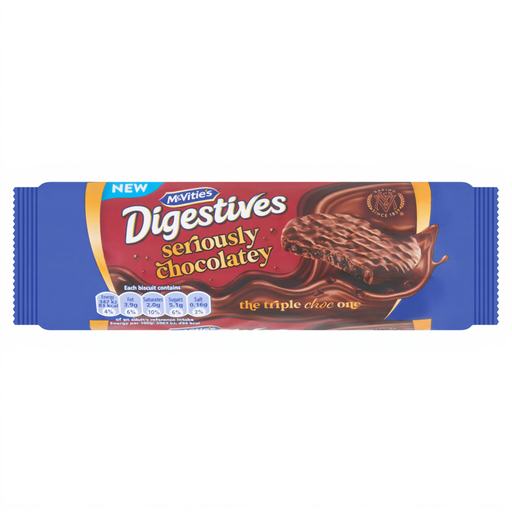 No image available
A 250g option for shoppers seeking the Seriously Chocolate variant. Listed allergens include wheat, milk and soya; the product information also notes that it may contain nuts and eggs. Check the pack before serving.
 No image available
This 400g milk-chocolate pack is an option for a household choosing one larger pack for the week. Listed allergens include milk, soya and wheat; check the physical pack.
 No image available
Two 266g dark-chocolate packs suit a shop where a twin-pack format is useful. This is a dark-chocolate variant, not the milk-chocolate biscuit used in the retailer examples above. Listed allergens include milk, soya and wheat; check both the listing and the packs.
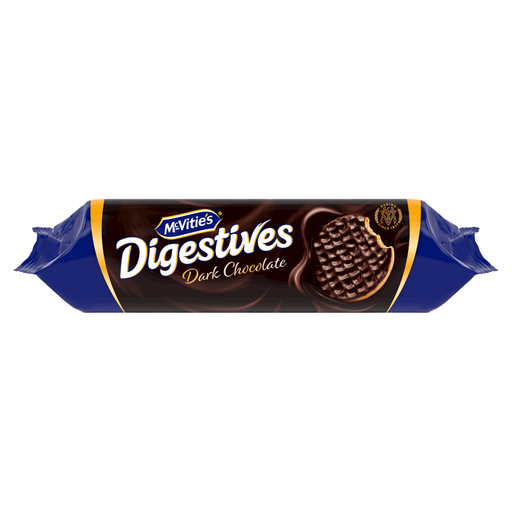 No image available
A single 400g pack for shoppers who prefer the dark-chocolate variant. Its listed allergens include wheat, milk and soya; check the physical pack before serving.
 No image available
This is a case listing for the 400g milk-chocolate variant. Confirm how many packs the case contains before choosing it for a weekly shop. Listed allergens include milk, soya and wheat; check the packs received.
Check pack weight and format, then compare nutrition on the same per-biscuit or per-100g basis. If coating style matters, confirm whether the biscuit has milk or dark chocolate. The Food Standards Agency says traffic-light labels show whether fat, saturates, sugars and salt are high, medium or low.
The name alone cannot tell you its sugars or saturates; read the label for the particular biscuit and portion. For example, Sainsbury's lists 4.1g sugars and 1.8g saturates per biscuit for its 300g milk-chocolate digestives.
Check the ingredients and allergen information on the pack you receive. The examined milk-chocolate digestives list milk, wheat or gluten, and soya; Sainsbury's also states that its own-label product is unsuitable for customers with an oat allergy because of manufacturing methods. UK pre-packed-food labelling guidance requires an ingredients list that includes allergens.