
24/7 Customer Support

Free returns

Same-day & Next-day Delivery

Quality Guaranteed

Unlock Your Welcome Offers: FREE Delivery | Up to 80% OFF | Free 30-day JoyPlus trial
Download the APP
Choosing between hot chocolate powder, drinking chocolate, cocoa powder and chocolate snacks can be less straightforward than the packaging suggests. A large tub is not always better value, and phrases such as “premium”, “low sugar” or “energy” can distract from the ingredients that affect taste, dietary suitability and portion cost.
This guide from the Joybuy Product Recommendation Officer focuses on the details that matter when comparing chocolate drinks and cocoa products for UK households.
Cocoa powder is generally intended for baking, smoothies or mixing into drinks with your own sweetener and milk. Drinking chocolate usually contains sugar and may include milk powder, maltodextrin, thickeners or sweeteners for easier preparation.
For example, the g&B Organic Cocoa contains 98% organic cocoa powder and potassium carbonates, with only 0.8g of sugar per 100g according to its listed nutrition information. By contrast, Cadbury Drinking Chocolate lists sugar as its first ingredient and provides 73g of sugar per 100g.
Neither type is automatically suitable for every use. Choose based on whether you want control over sweetness or a ready-to-mix hot chocolate.
A low-sugar hot chocolate may still contain sweeteners, milk ingredients or carbohydrate from other sources. Cadbury Highlights states that the prepared drink contains less than 2.5g of sugars per 100ml, but its ingredients include sweeteners such as sucralose and acesulfame K.
Always compare the prepared serving, not only the powder per 100g. Milk, serving size and the number of spoonfuls used can significantly change the final drink.
Chocolate products can contain or may contain milk, soya, gluten, nuts, barley or phenylalanine. A product described as vegetarian is not necessarily vegan, while a product labelled gluten-free may still be unsuitable for someone with another intolerance.
Check the current packaging before purchase, particularly when buying for children, guests or anyone with allergies. Formulations and precautionary allergen statements can change.
The ingredient order shows what is present in the greatest quantity by weight. A product led by sugar will provide a sweeter, lighter drink, while one led by cocoa powder or cocoa mass is likely to have a more pronounced flavour.
For dark chocolate, the cocoa solids percentage is a useful comparison point, but it does not describe sweetness alone. Lindt Excellence 90% Cocoa Supreme Dark contains cocoa mass, cocoa butter, low-fat cocoa powder and sugar. Morrisons The Best 85% Cocoa Ecuador Dark Chocolate lists 85% minimum cocoa solids and 13.8g of sugar per 100g.
Use the UK nutrition panel to compare energy, sugars, saturates and salt per serving. A product may appear modest per cup but become more substantial if the recommended serving is generous or prepared with whole milk.
For reference, the listed Options Belgian Chocolate provides 40 kcal per serving when 11g of powder is mixed with water. Cadbury Drinking Chocolate provides 168 kcal for the stated prepared serving, which includes hot milk. These figures are not directly interchangeable because the preparation methods differ.
Look for specific information rather than relying on front-of-pack impressions:
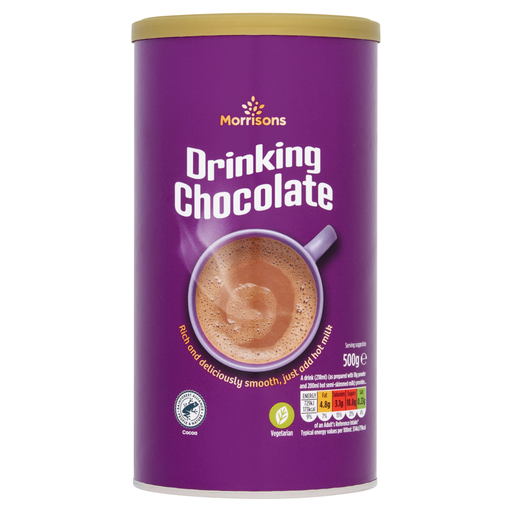
Why This Fits Their Persona: A 500g tub is practical for regular household use, family mugs and occasional sharing without moving into specialist cacao products.
The label clearly lists sugar and cocoa powder, helping shoppers distinguish a sweetened drinking chocolate from unsweetened cocoa powder.
500g pack size; intended to be mixed with hot milk; suitable for straightforward everyday preparation.
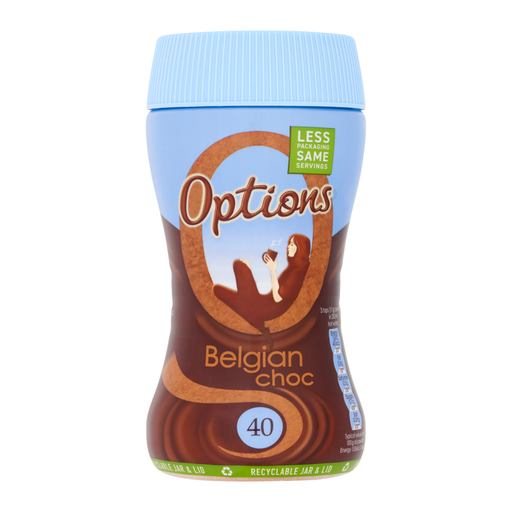
Why This Fits Their Persona: Suitable for shoppers who want an easy Belgian hot chocolate-style drink with a smooth profile and measured individual servings.
Its ingredient and allergen information identifies milk and aspartame, so buyers can check suitability before choosing it for a household.
Rainforest Alliance certified cocoa is listed; 40 kcal per stated serving prepared with water.
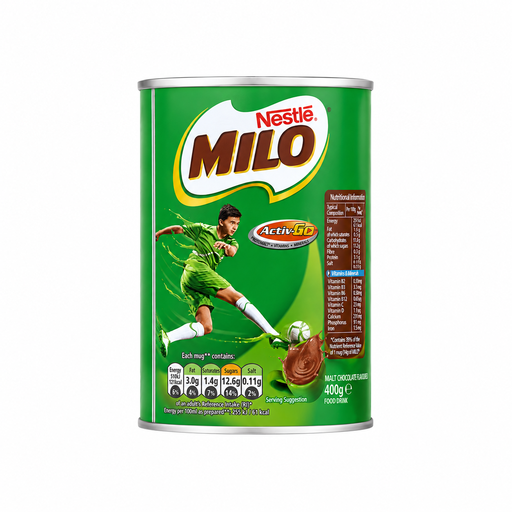
Why This Fits Their Persona: A chocolate malt beverage for households that want a breakfast drink or post-activity option that can be served hot or cold.
The product information identifies sugar, malt, milk and cocoa rather than presenting it as a plain cocoa powder. This helps prevent unsuitable substitutions.
Contains malt barley, milk solids and listed vitamins and minerals; can be prepared with hot or cold milk.
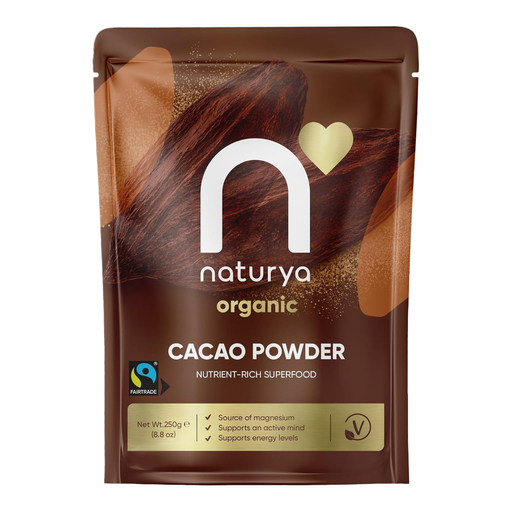
Why This Fits Their Persona: Designed for shoppers who want unsweetened organic cacao for porridge, smoothies, baking or homemade vegetarian and vegan chocolate drinks.
It is listed as 100% organic cacao powder with no added sugar, so sweetness can be adjusted separately with fruit, a chosen milk or another ingredient.
15g serving information is provided; listed as organic, vegan-friendly and gluten-free.
For baking, consider cocoa powder or cacao nibs rather than a sweetened drink mix. Naturya Organic Cacao Nibs contain 100% organic cacao nibs and provide a crunchy addition to porridge, yoghurt, trail mixes and chocolate snacks. For baking decorations, Morrisons Dark Chocolate Chips are listed as suitable for vegetarians and contain at least 50% cocoa solids.
If you prefer a stronger chocolate taste in a small portion, Lindt Excellence 85% Cocoa Dark and Lindt Excellence 90% Cocoa Supreme Dark offer higher-cocoa bars. Check their nut, milk and soya precautionary statements before serving to guests.
We have compiled a complete, real-time list of products that fully satisfy these strict selection criteria and UK safety regulations.
Yes, but unsweetened cocoa powder needs to be combined with a sweetener and milk or a dairy-free alternative. Mix the powder with a small amount of liquid first to form a paste, then add the remaining warm liquid to reduce clumping.
Compare the prepared serving and check whether sweeteners are used. Cadbury Highlights is marketed as low sugar when prepared according to its stated method, while unsweetened organic cacao powder gives you the most control over added sugar.
Keep opened products tightly sealed in a cool, dry place away from heat, sunlight and moisture. Use a clean, dry spoon and follow the best-before information on the packaging. Always check the label for the latest ingredients, allergen advice and storage instructions.