Parents choosing occasional treats
For parents and carers who want to identify the amount in one bar while keeping chocolate distinct from an everyday after-school snack.


For an occasional after-school chocolate treat, choose a multipack by the size and nutrition of the bar you intend to offer, then check the current wrapper for ingredients and allergens. A smaller bar can make the portion easier to identify, but it does not turn chocolate into an everyday snack; NHS Healthier Families recommends fruit and vegetables for routine snacking.
For parents and carers who want to identify the amount in one bar while keeping chocolate distinct from an everyday after-school snack.
For households comparing pack counts and bar sizes for planned treats. If a bar is going into a lunchbox or club snack, check that setting’s current policy separately from plans for a snack at home.
For buyers who need to read the current pack’s ingredients, declared allergens and precautionary warnings before choosing a particular flavour or format.
Start with the bar you would actually offer, rather than the total pack weight: mini bars, standard bars and twin-finger packs describe different portions.
| Priority | What to check | Your needs |
|---|---|---|
| Occasional or everyday | Decide whether this is a planned treat or a snack for routine after-school hunger. NHS Healthier Families recommends fruit and vegetables for everyday snacking instead of sweets and chocolate snacks. | For everyday snacks, I want another option; a chocolate bar would be an occasional treat. |
| Portion and nutrition | Compare the bar weight, the stated serving and sugars per intended portion on the current label. Check whether a twin bar’s nutrition is given for one finger or both. | I want to know how much is in the portion I plan to offer, rather than judging it by the number of bars in the pack. |
| Ingredients and allergens | Read the ingredients, highlighted allergens and any ‘may contain’ statement for the exact product and flavour. Recheck the pack even if you have bought the brand before. | If an ingredient or cross-contact warning matters in my household, I need to assess this particular wrapper before buying. |
| Where it will be eaten | Distinguish a treat eaten at home from food taken into a school or club. Ask the relevant setting about its current lunchbox and allergy policies. | A pack for home might not answer whether I can put the same bar in a lunchbox or provide it at a club. |
Manufacturer listings show substantially different unit sizes: Cadbury Dairy Milk Little Bars are 18g each, while a Galaxy Smooth Milk bar in its four-pack is 42g. The wrapper count alone does not tell you the amount in one serving.
Read the weight and nutrition for the portion you intend to offer. With a twin-finger bar, establish whether the label’s serving is one finger or the whole bar.
Snickers lists peanuts and a possible presence of other nuts. Twix product information includes precautionary warnings for several ingredients. Ingredients and warnings matter for the specific product, not just the brand.
Check the current wrapper against the child’s requirements and follow any relevant household or setting-specific allergy plan.
These manufacturer product examples illustrate format differences; they do not describe every bar or flavour sold under each brand.
Cadbury describes its Dairy Milk Little Bars ten-pack as ten 18g mini bars.
Galaxy’s Smooth Milk four-pack contains four 42g bars, a standard-bar format rather than mini bars.
Mars lists its Caramel multipack as three 40g bars.
The Snickers Peanut multipack contains twelve 34.5g bars.
Twix describes its four-pack as four twin bars, each made up of two 20g fingers.
Nestlé lists a KitKat 2 Finger Milk bar at 20.7g.
These packs include smaller stated bars and a twin-finger format for planned occasional treats. Compare their individual serving sizes, and check the current packaging if separate wrapping or a particular allergen statement is essential.
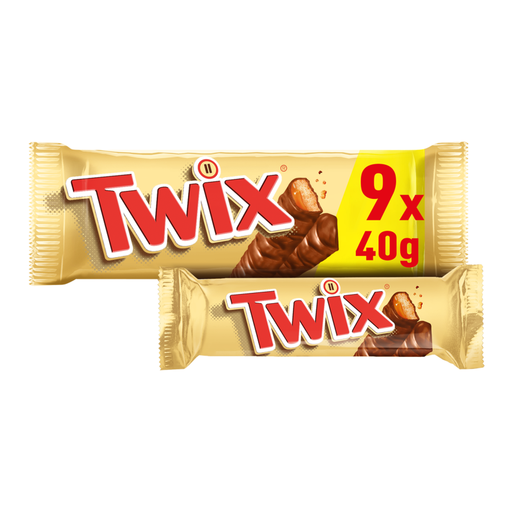 No image available
The twin-bar format is worth checking if you intend to offer one finger rather than both. Confirm the nutrition for that portion and check the current pack for allergens and precautionary warnings.
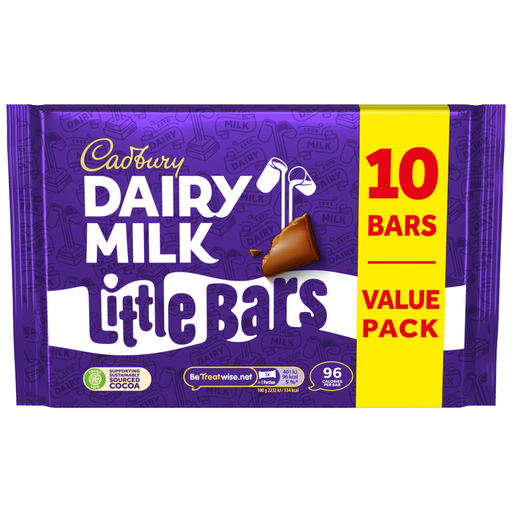 No image available
Each bar is stated as 18g, giving you a defined mini-bar portion for an occasional treat. Check the current pack for allergens and whether the bars are separately wrapped if that matters for storage or distribution.
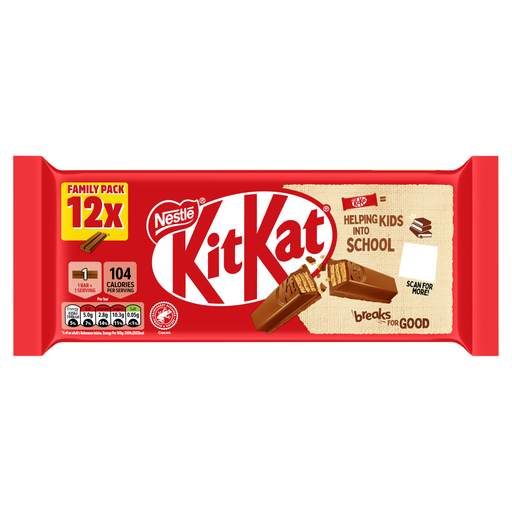 No image available
The stated 20.7g bar size helps you plan an individual portion. Read the current wrapper for exact nutrition figures and allergens, and check the packaging if separate wrapping is required.
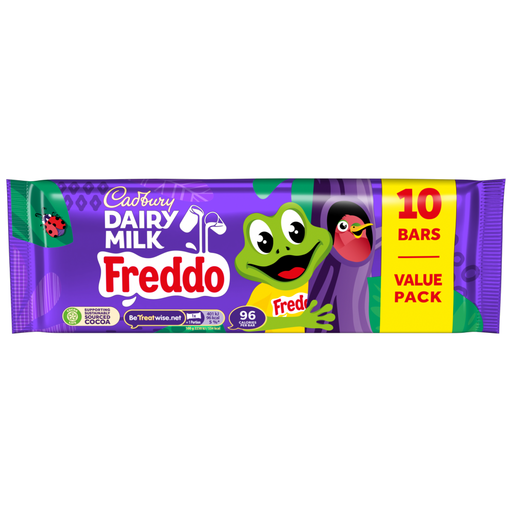 No image available
The ten-pack identifies 18g per bar, so compare one bar with the portion you intend to offer. Check the current label for allergens and the packaging for separate wrapping if needed.
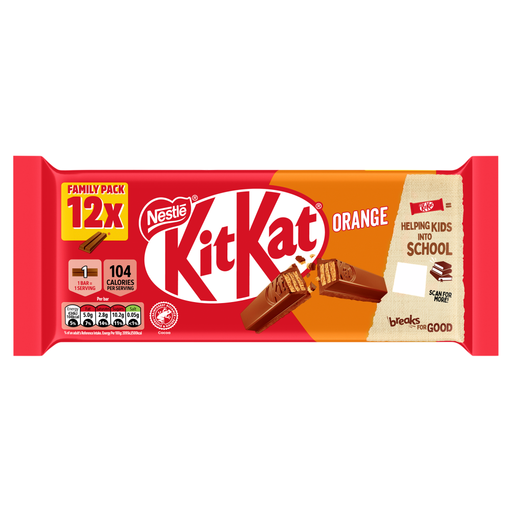 No image available
This orange-flavour pack states twelve 20.7g bars. Check the current wrapper for nutrition per bar and allergens, and confirm the packaging if you need each bar separately wrapped.
Treat chocolate as an occasional option rather than the routine snack. NHS Healthier Families recommends fruit and vegetables for everyday snacking and suggests swapping sweets and chocolate snacks for those options.
Compare the weight and nutrition for the individual portion you would offer, then look at the number of portions in the pack. Galaxy lists 23g sugars for a 42g Smooth Milk bar, while Nestlé lists 10.2g sugars for a 20.7g KitKat 2 Finger Milk bar; those are different-sized servings, not figures for equivalent portions. Use the current labels when deciding between specific packs.
The current wrapper identifies the ingredients, allergens, precautionary warnings and nutrition for the product you are buying. Check the exact flavour and pack against the child’s requirements rather than relying on a previous purchase of the brand.