Parents packing allergy-aware lunchboxes
If you take bars out of a multipack before packing them, keep the current outer wrapper accessible. The individual wrappers may not carry all the information needed to check a bar before it is eaten.


Choose a chocolate-bar multipack by the eater’s specific allergens and the current outer-pack label, not by the brand, pack size or appearance of an individual bar. A product labelled free from an allergen is an option only when the claim names the allergen that matters and the rest of the label is suitable; conventional bars vary in their ingredients and precautionary warnings. Keep the outer wrapper available when bars are separated for lunchboxes, as an inner wrapper may not carry the full allergen information.
If you take bars out of a multipack before packing them, keep the current outer wrapper accessible. The individual wrappers may not carry all the information needed to check a bar before it is eaten.
Compare the exact bar’s ingredients and precautionary statements with the allergens the eater needs to avoid. A familiar brand or a free-from claim naming a different allergen does not settle that decision.
A mixed pack can contain bars with different recipes. Check each included product type before offering it to someone with an allergy rather than treating the whole pack as having one allergen profile.
Start with the allergen that needs to be avoided, then check the exact pack and how its bars will be stored or shared.
Consider it when: The claim names an allergen the eater must avoid and the current full label is suitable for their other requirements.
Keep in mind: A claim about one allergen does not cover every other ingredient or precautionary statement.
Consider it when: The exact product’s current ingredients and relevant warnings are compatible with the eater’s allergy requirements.
Keep in mind: Filled, biscuit and nut-containing bars can differ substantially, even when sold in similar-looking packs.
| Priority | What to check | Your needs |
|---|---|---|
| Current allergen label | Read the ingredients and allergen statements on the exact outer pack. Recheck them with each purchase: Anaphylaxis UK advises that ingredients and labels can change between batches. | I need to know whether this particular pack contains an allergen the eater must avoid, even if I have bought it before. |
| Precautionary warnings | Look for relevant “may contain” statements as well as declared ingredients. The Food Standards Agency describes precautionary allergen labelling as information about possible unintentional allergen presence. | A warning matters to me if it names an allergen covered by the eater’s allergy-management advice. |
| Separated bars | Check whether each inner wrapper carries the information needed away from the multipack. Keep the current outer wrapper with the bars if it provides the fuller allergen details. | When I put one bar in a lunchbox or shared snack drawer, its allergen information needs to remain available before anyone eats it. |
| Bar types in the pack | Identify every recipe in a mixed pack. For biscuit, wafer, filled or nut-containing bars, check the ingredients and warnings for each product type rather than relying on the pack name. | If several people share a multipack, I need to check each kind of bar against the restrictions of the person who will eat it. |
An individual bar’s wrapper may not show the full allergen details available on the multipack, making a later check difficult.
Keep the current outer wrapper, or a clear image of its ingredients and allergen panel, until every bar has been used. If the necessary information cannot be checked, do not give that bar to someone shopping around a serious allergy.
Tesco Groceries lists milk and soya for Galaxy Smooth 4 x 42g, while its Snickers 4 x 41.7g listing also declares peanuts and eggs. Its Twix 4 x 40g listing declares wheat alongside milk and soya.
Read the ingredients and allergen information for the exact pack you intend to buy, rather than transferring a conclusion from another bar.
A precautionary statement concerns possible unintentional allergen presence, not an ingredient deliberately added to the recipe. It can still matter to the person eating the bar.
Assess a relevant warning using that person’s allergy-management advice from their clinician or allergy specialist; do not substitute a general rule about the brand.
Cadbury’s mixed 12-bar pack includes Wispa, Crunchie and Boost, according to Cadbury. One check based on a single included bar cannot establish the details for all three.
Check each product type before distributing a mixed pack, or choose a single-product multipack whose current label you can assess.
These examples show why the exact variant matters; a listing for one multipack does not establish the allergen profile of every product from its brand.
Cadbury describes a mixed 12-bar pack containing Wispa, Crunchie and Boost.
Tesco Groceries lists Galaxy Smooth Milk Chocolate as a 4 x 42g multipack.
Tesco Groceries lists the Snickers 4 x 41.7g multipack as containing eggs, milk, peanuts and soya.
The Tesco Groceries listing for Twix 4 x 40g describes a biscuit-and-caramel bar and declares milk, soya and wheat.
KitKat 2 Finger is a wafer-biscuit multipack format. The Tesco Groceries ingredient listing for the 8-pack includes wheat flour and milk ingredients.
These are conventional wafer and biscuit chocolate-bar options to assess against the eater’s allergens. Check the current pack before using either in an allergy-aware lunchbox.
 No image available
For lunchbox use, check the current outer wrapper before separating the bars. Product information lists milk, soya, wheat and hazelnuts, with a warning about other nuts; compare it with the eater’s allergens. Confirm the pack count on the item you receive before relying on a particular number of portions.
 No image available
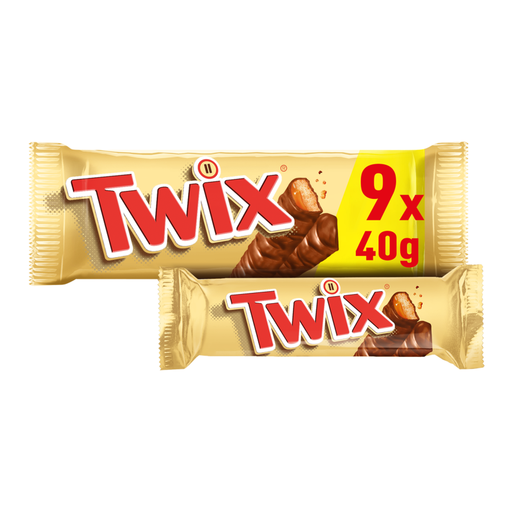
The twin-bar portions can be separated for packed snacks, but keep the current outer-pack allergen information available. Product information for this 9 x 40g pack lists milk, soya and wheat, with may-contain warnings for cereals containing gluten and nuts; check those details against the eater’s requirements.
Not without checking what it shows. An inner wrapper may not carry the full allergen information on the outer pack, so keep that pack available until the bars are used. If you cannot check the information needed for someone with a serious allergy, do not rely on the separated bar.
Yes. Anaphylaxis UK advises checking food labels every time you buy because ingredients and labels can change between batches. Check the exact outer pack rather than relying on a previous purchase.
No. Check which allergen the claim names, then read the full current ingredients and relevant precautionary statements against the eater’s own requirements. A claim about one allergen does not answer questions about others.
Not if its label declares milk. The Galaxy Smooth, Snickers and Twix multipacks listed by Tesco Groceries declare milk, while its KitKat 2 Finger ingredient listing includes milk ingredients. Check the exact current pack rather than applying those examples to every variant.
No. Wrapping describes the portion, not its ingredients. The checked Tesco Groceries listings for Twix and KitKat include wheat flour; for someone who needs to avoid gluten, assess the specific product’s current label against their dietary requirements.