Christmas hosts dividing up treats
Compare the number of bars with the number of people you expect to serve. Check each bar’s weight and whether it is individually wrapped if treats will go into a bowl, be handed out or be stored separately.


For a Christmas food shop, choose the number and size of portions to suit the people you plan to serve: smaller bars suit handing out treats, while a pack of fewer, larger bars may suit a household setting aside individual treats. If some bars are intended for lunchboxes, check the school’s rules and the exact pack’s allergens first; NHS lunchbox guidance recommends swapping chocolate for fruit-based alternatives in routine packed lunches.
The intended recipients matter as much as the bar count, particularly when treats will be shared beyond your household.
Compare the number of bars with the number of people you expect to serve. Check each bar’s weight and whether it is individually wrapped if treats will go into a bowl, be handed out or be stored separately.
Check the school’s food policy before choosing a compact bar, and make sure the child can eat its ingredients. NHS lunchbox guidance recommends fruit-based swaps for chocolate in routine packed lunches.
Read the ingredients, declared allergens and precautionary statements on the exact pack. The product information from Mars, Galaxy, Snickers, Twix and KitKat shows different allergen profiles, so a familiar brand name is not enough to establish suitability.
Start with the occasion and recipients, then compare portion format and the information on each pack. A higher bar count does not, by itself, tell you how large each treat will be.
| Priority | What to check | Your needs |
|---|---|---|
| Portion format | Compare bar count, weight per bar and total pack weight. Cadbury lists 10 Little Bars of 18g each; Galaxy lists seven Ripple bars of 30g each. | I’m handing treats to several people, so I need enough portions of a size that suits the occasion. |
| Individual wrapping | Confirm on the specific pack whether bars are individually wrapped. Mars describes its Fun Size bars as individually wrapped, while the ASDA listing says the same of its four-bar Twix Caramel multipack. | The bars will be given out or kept separately, rather than opened together at home. |
| Lunchbox rules | Check the school’s policy on chocolate and nuts. Consider the NHS advice to swap chocolate, cakes, cereal bars and biscuits for fruit-based alternatives in routine lunchboxes. | If a bar is for a school lunchbox, I need to know it is permitted and suitable for the child before choosing its size. |
| Ingredients and allergens | Read the current pack’s ingredient list, allergen declaration and any ‘may contain’ statement. Snickers lists peanuts; the ASDA Twix Caramel listing declares milk, wheat and soya and says it may contain nuts. | I’m buying for guests or children whose ingredient requirements may differ from mine. |
| Nutrition per portion | Check the serving size alongside the nutrition figures. Galaxy lists 17g sugars per 30g Ripple bar; Snickers lists 20g sugars per 40g Peanut bar. Those are different-sized portions, not a like-for-like weight comparison. | I want to understand what one whole bar represents before deciding how many to serve or set aside. |
Portion size does not override a school’s food policy. NHS guidance recommends fruit-based alternatives to chocolate for routine packed lunches.
Check the school’s written rules first. If chocolate is permitted, decide whether it fits the particular occasion rather than making the multipack a default lunchbox choice.
Products sold under familiar chocolate brands have different ingredients and precautionary statements. Snickers Peanut contains peanuts, for example, while Galaxy Ripple lists milk and soya.
Before sharing, check the current label of the exact product against each recipient’s requirements, including any ‘may contain’ wording.
Ingredients and allergy advice on a retailer listing may change when a product changes. The pack received is the one the recipient will eat.
Use listings to narrow your choices, then read the packaging before consuming or handing out the bars.
These examples show why it helps to compare specific multipacks rather than make assumptions about an entire brand.
Cadbury Dairy Milk Little Bars come in a 10-pack of 18g milk-chocolate bars.
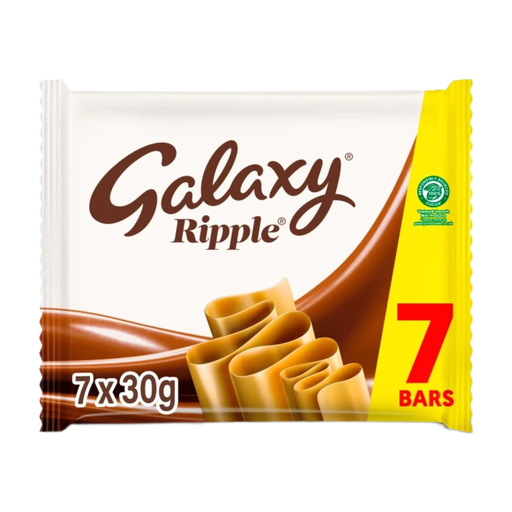
Galaxy Ripple is sold as seven 30g bars.
Mars describes its Fun Size chocolate bars as individually wrapped, with an 18g portion.
Snickers Peanut is sold as a multipack of four 40g bars.
The ASDA listing for Twix Caramel describes four individually wrapped 40g bars.
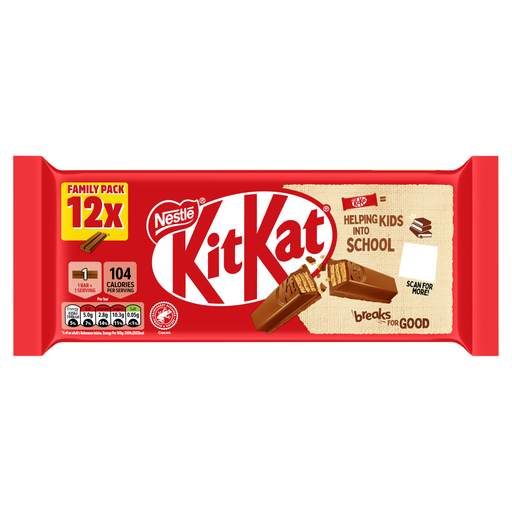
KitKat 2 Finger Milk is listed as a 12-pack of 20.7g chocolate-biscuit bars.
These Joybuy options include smaller wafer bars and larger chocolate-bar formats for sharing or setting aside individual treats. Compare each pack with your intended recipients, particularly if a bar might go into a lunchbox.
 No image available
Seven portions give a household a defined number of treats to share or set aside. Galaxy lists each Ripple bar as 30g and declares milk and soya; check the current pack if buying for someone with an allergy.
 No image available
Twelve 20.7g chocolate-biscuit bars provide a smaller-bar format for dividing treats. The product listing declares milk and wheat. For a lunchbox, check school rules and the current pack label first.
 No image available
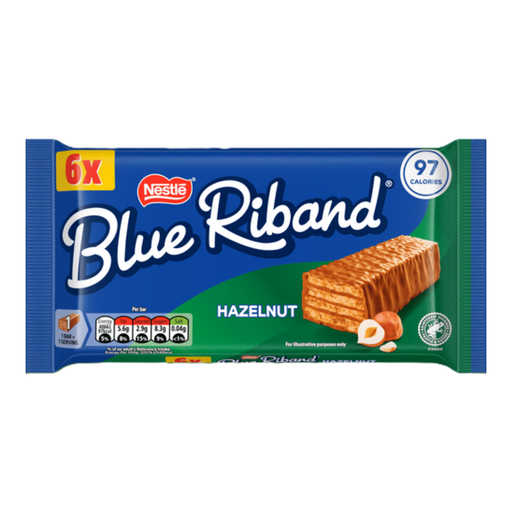
Six 17.5g bars offer a small stated portion for dividing treats. Check the current ingredient and allergen label for every recipient, especially where nuts must be avoided.
 No image available
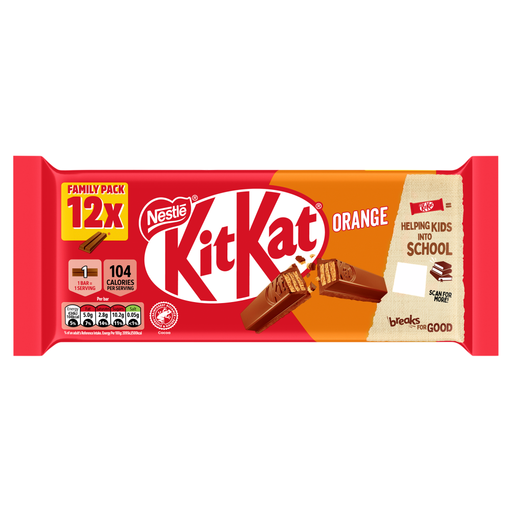
This orange variant has twelve 20.7g bars for dividing into individual treats. Check its own pack label for ingredients and allergens rather than relying on details for another KitKat flavour.
 No image available
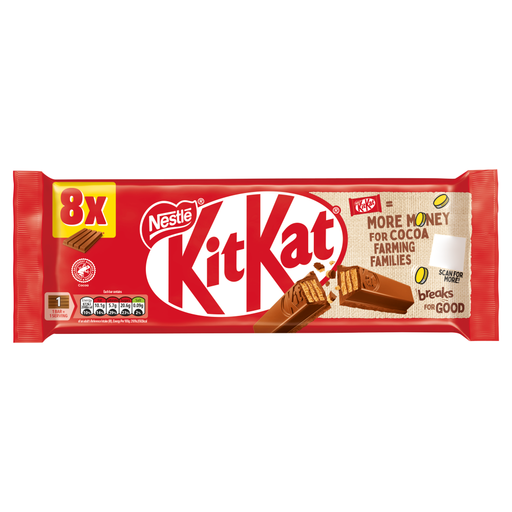
The eight-pack provides four-finger bars for setting aside individual treats. Its stated total pack weight is 332g; check the packaging if the weight or nutrition of one bar matters to your choice, and read its allergen label before sharing.
Only consider it if the school permits chocolate and the child can eat the exact product. NHS lunchbox guidance recommends swapping chocolate, cakes, cereal bars and biscuits for fruit-based alternatives in routine packed lunches.
Check the current pack’s ingredients, declared allergens and precautionary statements against your guests’ requirements before dividing up the bars. For example, Snickers Peanut contains peanuts, while the ASDA listing for Twix Caramel declares milk, wheat and soya and says it may contain nuts.
Compare the bar count, weight per bar and total pack weight together. Cadbury’s 18g Little Bars, Galaxy’s 30g Ripple bars and Snickers’ 40g Peanut bars show why the count alone does not describe the portion size.
No. Allergen information is specific to the product and its current formulation, so read the label of the exact multipack and variant, including any ‘may contain’ statement.