Students planning breaks at home
Separately wrapped bars let you set aside one item for a break without dividing a sharing block. Cadbury lists its Dairy Milk Little Bars at 18g each; KitKat lists a 20.7g 2 Finger Milk bar.


For a planned revision break at home, start with the size of each separately wrapped bar: an 18g mini bar or 20.7g two-finger bar makes it straightforward to set aside one item, while a 42g bar suits a deliberately larger serving. Check the current wrapper for allergens before sharing. If the snack is for school, distinguish a parent-provided packed lunch from food provided by a state-funded school in England and check the rules that apply.
The useful format depends on where the bar will be eaten and whether it will be shared.
Separately wrapped bars let you set aside one item for a break without dividing a sharing block. Cadbury lists its Dairy Milk Little Bars at 18g each; KitKat lists a 20.7g 2 Finger Milk bar.
Check the individual school’s packed-lunch policy and the current wrapper before packing chocolate. Department for Education guidance on school-food requirements concerns food and drink provided in state-funded schools in England; a lunch brought from home is a different setting.
Choose by the exact product’s ingredient and allergen statements rather than by brand alone. KitKat 2 Finger Milk lists milk and wheat, while Snickers Crisp Fruit & Nut states that it contains nuts.
Settle the intended serving and place of use, then check the exact bar and its wrapper before sharing.
| Priority | What to check | Your needs |
|---|---|---|
| Bar size | Compare grams per bar, separate wrappers and the number of bars. Cadbury lists 18g Dairy Milk Little Bars; KitKat lists 20.7g 2 Finger Milk bars; Galaxy lists 42g Smooth Milk bars. | I want to put aside one bar for each planned break, rather than divide a larger chocolate bar. |
| Ingredients | Read the current ingredient and allergen statements for the exact variant. KitKat 2 Finger Milk lists milk and wheat; Snickers Crisp Fruit & Nut states that it contains nuts. | Someone sharing these snacks needs to avoid an ingredient, so I need to check each product rather than assume the bars are interchangeable. |
| School setting | Distinguish a snack eaten at home, a parent-provided packed lunch and food provided by a school. Department for Education guidance applies the School Food Regulations to food provided in state-funded schools in England; legislation.gov.uk classifies chocolate as confectionery. | If a bar is going into a packed lunch, I need to check that school’s policy. For school-provided food in England, a small wrapper does not change chocolate’s classification. |
| Pack format | Check the stated bar count and individual weight, not just the outer pack’s total weight. Confirm the count on the pack when a listing gives conflicting information. | There need to be enough separate bars for the breaks or lunchboxes I have in mind. |
A smaller portion is still chocolate. Legislation.gov.uk defines chocolate as confectionery under the School Food Regulations, while Department for Education guidance identifies the requirements for food provided in state-funded schools in England.
Keep at-home revision snacks separate from school-provided food decisions. For a lunch brought from home, check the individual school’s packed-lunch policy.
Recipes differ: KitKat 2 Finger Milk lists milk and wheat, and Snickers Crisp Fruit & Nut states that it contains nuts.
Read the current wrapper of each exact product before sharing, particularly when a recipient needs to avoid an ingredient.
A pack’s total weight does not tell you how many separate snacks it contains or how large each bar is.
Compare the bar count and grams per bar, then check the physical pack if its listing gives inconsistent counts.
Product descriptions are useful for narrowing down formats, but the pack in hand is the one that will be eaten or shared.
Check its ingredient, allergen and nutrition information before use, especially when an allergy or a school policy affects the choice.
These examples show why the exact product and bar size matter more than a brand name alone.
Cadbury lists Dairy Milk Little Bars as a 10-pack of 18g milk-chocolate bars.
KitKat lists a 20.7g 2 Finger Milk chocolate-wafer bar; a Joybuy listing describes a 12-bar multipack.
Galaxy lists Smooth Milk in a four-bar pack with 42g per bar.
Mars describes its Fun Size chocolate bars as individually wrapped, with an 18g serving.
Snickers lists Crisp Fruit & Nut as a 4 × 32g multipack for buyers specifically seeking that recipe.
These multipacks offer small, separate chocolate or chocolate-wafer bars for planned revision breaks at home. For a parent-provided lunchbox, check the school’s policy as well as the wrapper.
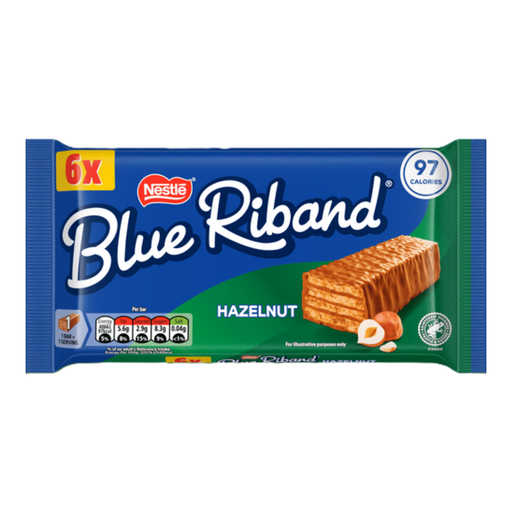 No image available
Six individually wrapped 17.5g bars allow one bar to be set aside for each planned break. The product information identifies wheat, milk, soya and hazelnuts and says it may contain peanuts and other nuts; check the current wrapper before sharing.
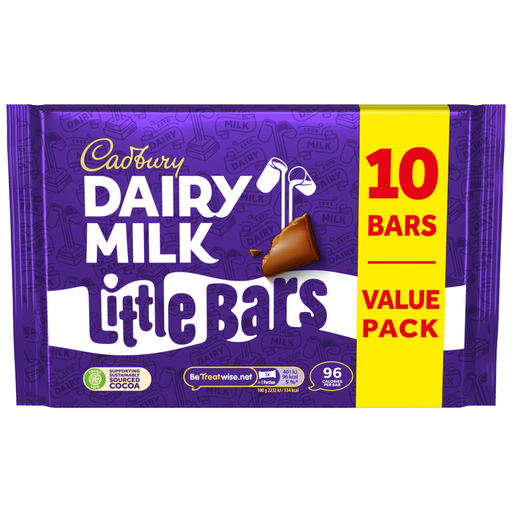 No image available
Ten small bars provide separate items for planned breaks; Cadbury identifies its Little Bars as 18g each. The product information identifies milk and possible nut and wheat presence, so check the current wrapper before sharing.
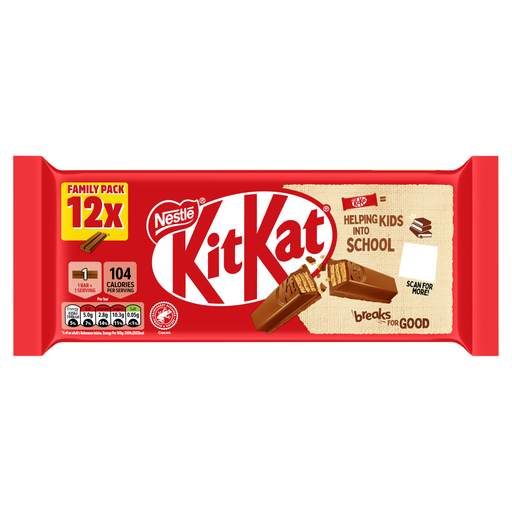 No image available
This pack lists twelve individually wrapped chocolate-wafer bars at 20.7g each, for separate planned snacks. It contains milk and wheat; check the current wrapper before sharing.
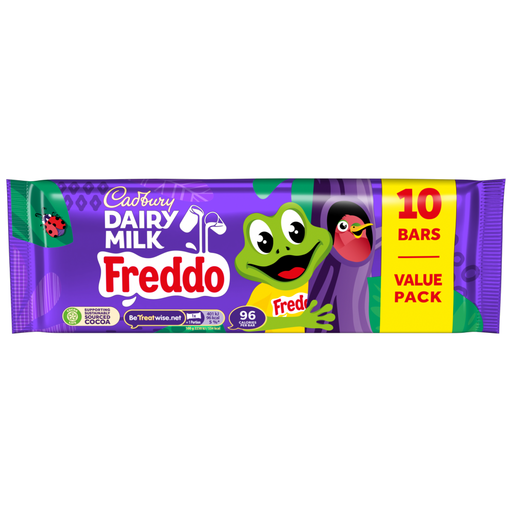 No image available
The listing describes ten individually wrapped bars and an 18g serving, allowing separate snacks to be planned. It identifies milk and possible nut presence; read the current wrapper before sharing.
 No image available
Twelve individually wrapped 18g wafer bars provide separate items for planned breaks. The product information identifies wheat, milk and soya and says the bars may contain nuts; check the current wrapper before sharing.
No: a smaller bar is still chocolate. Legislation.gov.uk defines chocolate as confectionery under the School Food Regulations, and Department for Education guidance identifies those requirements as applying to food and drink provided in state-funded schools in England. Check the requirements for that school-food setting rather than treating an 18g bar as an exception.
Check the individual school’s packed-lunch policy before sending it. The cited Department for Education guidance addresses food and drink provided in state-funded schools in England; it does not, by itself, establish the rule for every lunch brought from home.
Check the current wrapper for the exact product and recipient’s needs. KitKat 2 Finger Milk lists milk and wheat, while Snickers Crisp Fruit & Nut states that it contains nuts; those examples should not be treated as an allergen list for other bars.
Do not apply the England-specific school-food guidance automatically to Scotland, Wales or Northern Ireland. Check the relevant nation’s requirements and the individual school’s policy for the intended use.
Compare the number of separate bars and grams per bar against the breaks you are planning. An 18g mini bar, a 20.7g two-finger bar and a 42g regular bar represent different individual servings even when their outer packs look similar; confirm the count on the physical pack.