Parents serving several children at home
Decide whether each child needs a separate packaged item for an activity or whether everyone will eat together from a supervised shared bowl. Those situations call for different ways of dividing a pack.


Choose separately packaged bars or snack bags when children need individual items to take away; a loose-piece pouch or breakable bar is more suited to eating together at home. Check the current label for every variety’s allergens and how you plan to divide the pack. Food provided during the school day in England is a different setting: Department for Education guidance restricts chocolate throughout the school day.
Decide whether each child needs a separate packaged item for an activity or whether everyone will eat together from a supervised shared bowl. Those situations call for different ways of dividing a pack.
Count the separate items or check the stated portions against the size of the group. With an assortment, read the allergen information for every variety before offering it to guests.
Do not apply advice for a private holiday snack to food provided during the school day. The Department for Education’s school-food guidance for England identifies chocolate and chocolate-coated products as restricted throughout that day.
Start with where the chocolate will be eaten and whether it needs to be handed out. Then check the number of items or stated portions and the exact pack’s ingredients.
| Priority | What to check | Your needs |
|---|---|---|
| Serving format | Look for separately packaged items if snacks will be handed out. For eating together, compare a loose-piece pouch with a bar that can be broken apart. | Will each child take an item to an activity, or will we sit together and share from a bowl? |
| Pack size | Count items rather than relying on the word “sharing”. Sainsbury’s lists 20 fun-size items in its Mars mixed pack; ASDA states approximately 12 portions for the 223g Cadbury Treatsize selection. A stated portion is not necessarily one separately packaged item. | I need enough to serve the group, without assuming that a portion count tells me how many individual packs I can hand out. |
| Ingredients | Read the current label for each variety, including allergen and may-contain information. Mars lists peanuts in its 40g Snickers bar; KitKat’s UK FAQ says KitKats are not generally gluten-free. | If anyone must avoid an ingredient, I need to check the whole assortment rather than assume every piece has the same recipe. |
| Food setting | Separate private home snacks from food provided during the school day. Department for Education guidance restricts chocolate throughout the school day in England; check the applicable rules for school settings elsewhere. | Is this for a holiday activity at home, or am I arranging food to be provided at school? |
A loose-piece pouch can be served from one bowl, but it does not divide the chocolate into individual items. Sainsbury’s lists 20 fun-size items in its Mars assortment, whereas ASDA gives an approximate portion count for the Cadbury Treatsize selection.
For an outing or activity where items will be handed out, count the packaged pieces. For a snack eaten together, decide how the bowl or breakable bar will be shared.
An assorted bag can contain different recipes. The Mars fun-size assortment includes Snickers, and Mars lists peanuts in its Snickers ingredients; KitKat says its products are not generally gluten-free.
Check the current pack and every included variety against each recipient’s requirements, including any may-contain statement. Where strict avoidance is needed, removing one item from a mixed bag is not a substitute for checking the pack’s suitability.
The Department for Education’s guidance for England restricts chocolate across the school day. Separate England retail guidance concerns promotions and placement of qualifying high-fat, sugar or salt products, not a blanket prohibition on household purchases.
Use the applicable school-food rules when arranging food provided during the school day. For a private holiday snack at home, make the choice using the serving format and current product label.
These examples illustrate different ways chocolate can be shared; they do not establish that every product from a brand has the same ingredients or serving format.
Cadbury offers treat-size assortments and loose-piece sharing bags, including Buttons.
Mixed fun-size packs bring several Mars-family varieties into one assortment.
Galaxy presents Minstrels and Counters as loose-piece sharing pouches rather than mini-bar assortments.
Snickers is one variety in the Mars fun-size assortment and a peanut, caramel and nougat bar format.
Twix adds a biscuit-and-caramel variety to the Mars fun-size assortment.
KitKat’s 99g Milk Chocolate Sharing Bar is a breakable wafer-based option for eating together.
These products include packs with stated divisions for handing out and pouches for sharing together at home. Check each current label before serving, particularly when a child has an allergy or dietary requirement.
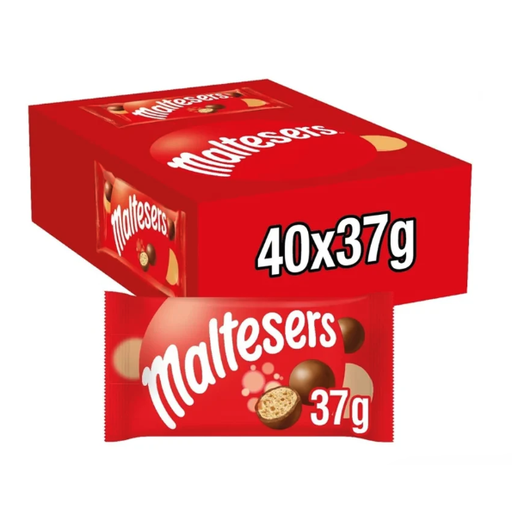 No image available
The 40 separate 37g bags give you a stated item count for handing out over group activities; check whether that quantity fits your plans. Read the current label for milk, barley, soya and wheat before serving.
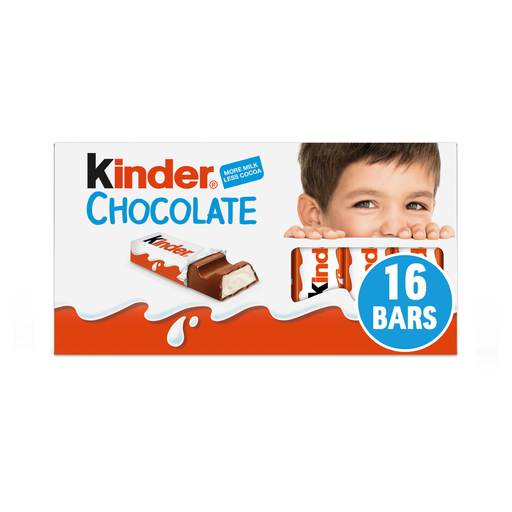 No image available
This 200g bag is an option for a home sharing occasion. If you need one piece per child, check the number and wrapping of the pieces on the pack; also check its current milk and soya allergen information.
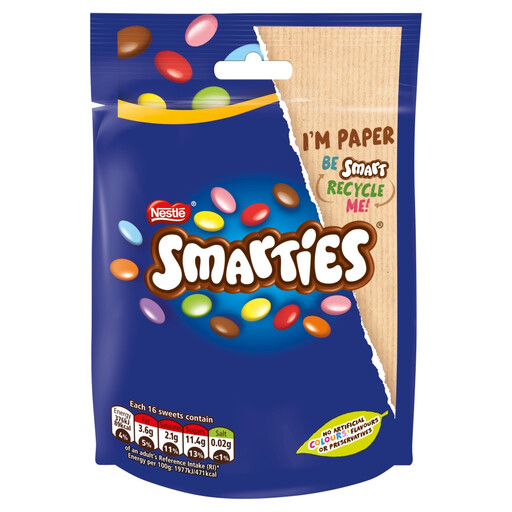 No image available
The 105g bag contains small chocolate pieces for sharing together rather than a stated number of separate packs. Check the current label for milk, wheat and barley; its product information also warns that small sweets may be a choking hazard for children under four.
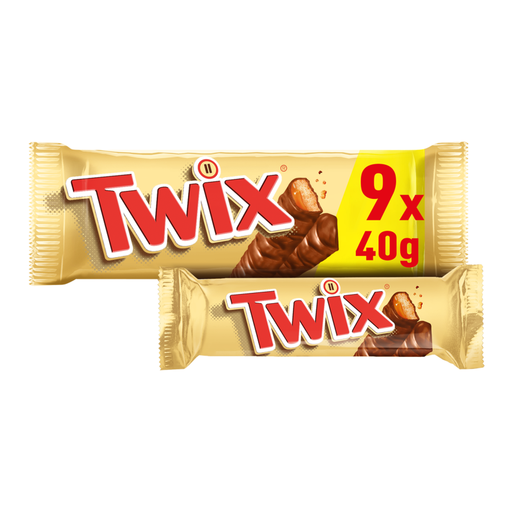 No image available
Nine 40g twin packs provide a stated number of packaged bar portions for handing out. Twix has biscuit and caramel components; check the current label for wheat, milk and soya, and for any may-contain statement relevant to the group.
 No image available
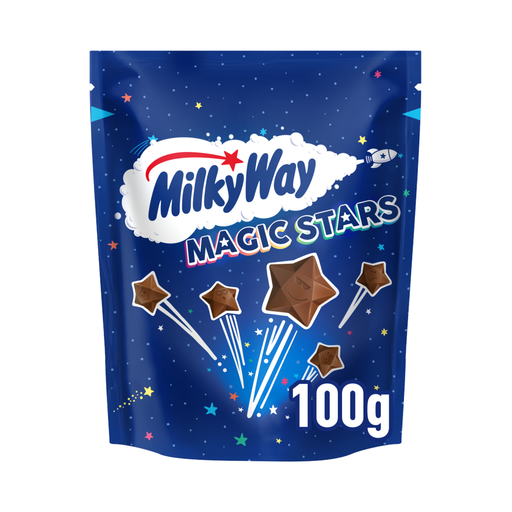
The 100g pouch of star-shaped pieces suits a snack shared together at home; decide how to serve it rather than assuming a set number of portions. Check the current label for milk and soya and for possible peanut, almond and hazelnut cross-contact.
The Department for Education’s school-food standards practical guide identifies confectionery, chocolate and chocolate-coated products as restricted throughout the school day in England. That school setting is distinct from a parent buying chocolate for a private holiday snack at home.
No general household-purchase prohibition follows from the England rules described by the Department of Health and Social Care. Its guidance concerns promotions and placement of qualifying high-fat, sugar or salt products by covered retailers, including online equivalents; a chocolate product’s individual classification should not be assumed from its category alone.
Read the current ingredient, allergen and may-contain information for the pack and each included variety before serving it. The Food Standards Agency explains that specified allergens must be declared when present as ingredients; different chocolates in one assortment can still have different recipes.
No. Mars lists peanuts in the ingredients of its 40g Snickers bar and says it may contain other nuts. Check the exact assortment and choose a suitable alternative for someone who must avoid peanuts or tree nuts.
No. KitKat’s UK FAQ says KitKats are not generally gluten-free, and its Milk Chocolate Sharing Bar has a wafer component. Check the current packaging of the exact variant if gluten avoidance is required.