Families with different preferences
An assorted miniature pouch offers several chocolate styles in one pack. Check its current ingredient and allergen information for everyone who will share it.


For a summer holiday group with mixed tastes, consider assorted miniatures; for separate hand-outs, choose individually wrapped bars. A pouch of loose pieces suits sharing from one bag, while a sharing bar suits people dividing it at the time. Whichever format you choose, check the exact pack’s portions, ingredients, allergens, best-before date and storage instructions before travelling.
Choose the format around how your group will share the chocolate, not just the size of the pack.
An assorted miniature pouch offers several chocolate styles in one pack. Check its current ingredient and allergen information for everyone who will share it.
Individually wrapped bars are easier to distribute without passing around an open pouch. Check the unit count and whether the particular pack has the wrapping you need.
A pouch of pieces or a breakable bar works when everyone can share at the same time, such as at a picnic or holiday accommodation.
Start with the way you will share the chocolate, then compare portions and check the exact pack before it goes into your holiday bag.
| Priority | What to check | Your needs |
|---|---|---|
| Sharing format | Check whether the pack contains assorted miniatures, individually wrapped bars, loose pieces or a bar to divide. Check the wrapping of the exact variant if you need sealed hand-outs. | Different tastes matter in our group, so I want a choice of miniatures. For separate hand-outs, I would choose a pack with individually wrapped units instead. |
| Portions | Compare the declared portion count and portion weight, rather than judging by the pack’s appearance. Mars Wrigley UK lists three portions for its 112g Galaxy Counters pouch; its TWIX Twin Finger 4pk lists eight 20g portions. | How many people will share this pack, and will we divide it at once or hand out portions over the trip? |
| Ingredients and allergens | Read the ingredient list and allergen statement on the exact physical pack. Check the flavour and variant rather than relying on another product from the same brand. | Someone in our group needs to avoid an ingredient, so the current label matters more than the brand name or an online description. |
| Date and storage | Check the best-before date and follow the storage instructions printed on the pack. The Food Standards Agency distinguishes best-before dates, which concern quality, from use-by dates, which concern food safety. | We are packing ahead of a summer trip, so I need to check the date and storage directions on the chocolate we actually take. |
A communal pouch has to be shared from one bag, while a sharing bar is divided when people eat it. Neither serves the same purpose as individually wrapped units.
Decide before buying whether you need mixed varieties, separate hand-outs or a snack for everyone to share at once.
Ingredients and allergen statements vary by product and variant. An online listing or a familiar wrapper is not a substitute for the pack you will share.
Read the exact pack’s ingredient and allergen information before purchase, especially if someone needs to avoid a particular ingredient.
Manufacturers declare portions on different bases. Mars Wrigley UK lists three portions for the 112g Galaxy Counters pouch and eight 20g portions for the TWIX Twin Finger 4pk.
Compare the stated portions with the number of people sharing, and decide whether each person will have a unit or take some from a communal pack.
These examples illustrate different sharing formats; the ingredients and portions of one product do not describe every pack from its brand.
Cadbury’s Heroes Pouch 270g is an assorted miniature format for offering more than one chocolate style.
Galaxy Counters and Minstrels illustrate loose-piece pouches rather than individually wrapped bars.
Mars Wrigley UK describes its MARS Fun Size Bars multipack as individually wrapped for sharing.
KitKat’s Milk Chocolate Sharing Bar is a 99g bar presented by the manufacturer for sharing.
The TWIX Twin Finger 4pk is a caramel-and-biscuit multipack with eight stated 20g portions, according to Mars Wrigley UK.
These multipacks and pouches cover two holiday-sharing approaches: planning separate portions and serving chocolate pieces from a communal bag. Check the pack details for the way your group intends to share.
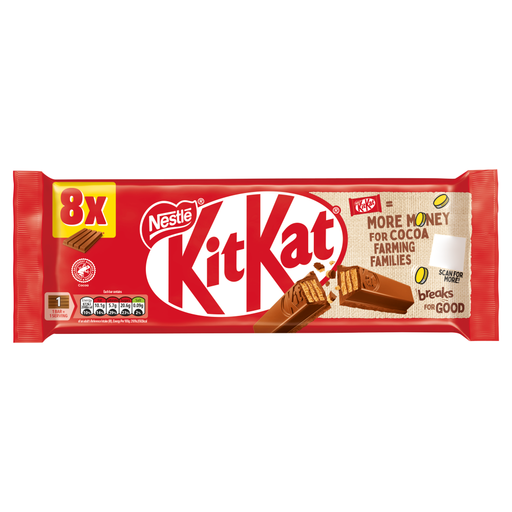 No image available
Eight 4 Finger bars provide a stated unit count for planning hand-outs. Check the exact pack’s ingredients, allergens, best-before date and storage instructions before taking it away.
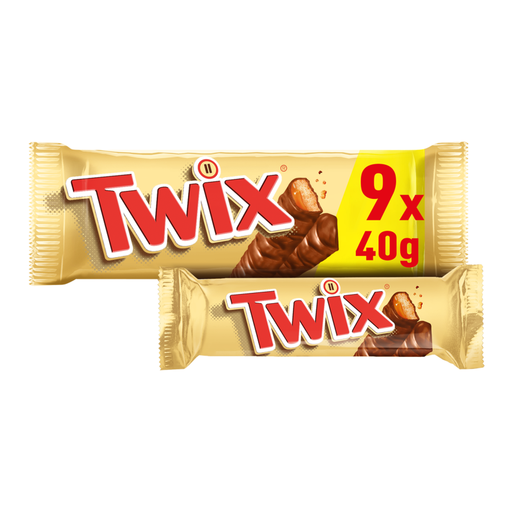 No image available
Nine 40g twin packs give you a unit count for planning. If you need sealed individual hand-outs, check how the twin packs are wrapped; also read the exact pack’s allergens, date and storage instructions.
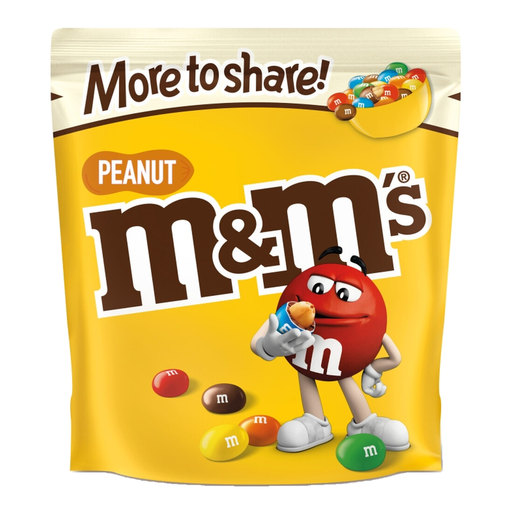 No image available
This 200g pouch of peanut-containing chocolate pieces is a communal-bag option, not a set of separate bars. Check its current ingredient and allergen statement, stated portions, date and storage instructions before sharing.
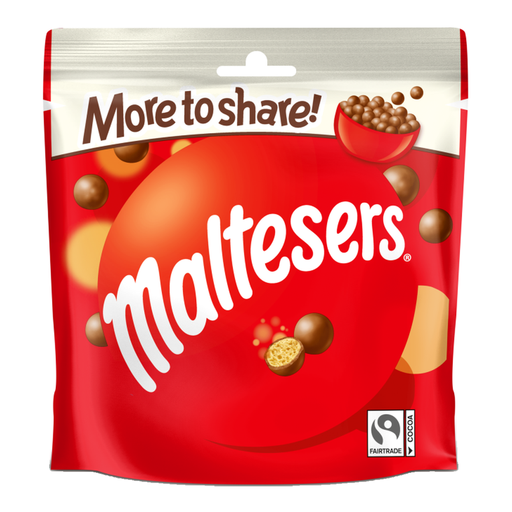 No image available
The 158g pouch offers chocolate pieces for sharing from one bag. For portion planning and dietary needs, check the exact pack’s serving information, ingredients, allergens, best-before date and storage instructions.
Choose an assorted pouch for different tastes, individually wrapped bars for hand-outs, loose pieces for communal serving or a bar for a group dividing it at once. Check the stated portions and exact pack label before buying.
Check the exact physical pack’s ingredient and allergen information instead. Mars Wrigley UK says it can stand by the information on the back of the pack; a different flavour or an older listing may not describe the pack in your hand.
Do not assume they are: KitKat’s UK FAQ states that KitKats are not gluten free. Check the label of the precise sharing bar if someone needs to avoid gluten.
Check the date on the pack you are taking and follow its storage instructions. The Food Standards Agency explains that a best-before date concerns quality, whereas a use-by date concerns food safety.