
24/7 全天候客户支持

免费退货

当日/次日达

品质保障

开启新人专享福利: 全场免邮 | 低至 2 折 | 免费试用 30 天 JoyPlus 会员
下载 Joybuy
Buying art sketchbooks and drawing pads can look simple until you compare paper weights, bindings, formats and media compatibility. A pad that works well for pencil studies may buckle under watercolour, while a compact sketchbook may be convenient but too small for detailed illustration.
For UK students, hobby artists, illustrators, teachers and creative households, the sensible approach is to match the paper and format to the way you will actually work.
Paper weight is important, but it is not the only factor. A 300gsm watercolour paper is generally more suitable for wet washes than a lightweight drawing sheet. However, paper texture, sizing and the way the pad is secured also affect how paint behaves.
A 160gsm or 190gsm sheet may be suitable for pencils, ink, markers or light washes, but excessive water can still cause curling. Do not assume that any paper described as “mixed media” will handle heavy acrylic or saturated watercolour without preparation.
A project book may contain hundreds of pages, yet those pages may be lined and intended for written notes rather than artwork. For example, an A5 project book can be useful for planning an illustration, recording ideas or organising a craft project, but it is not a substitute for an unlined artist paper pad.
Check whether the listing specifies sheets or pages, and look at the page layout before buying. A pad with 40 sheets provides 40 drawing surfaces, whereas a 250-page project book is designed primarily for writing.
A spiral-bound art pad can lie flat and may allow pages to be removed cleanly, which is useful at a desk or in a classroom. A hardbound sketchbook offers a more book-like format for a drawing journal, but it may not open completely flat.
Consider where you will use it. An A4 sketch pad gives more room for composition and presentation work, while an A5 sketchbook or compact travel journal is easier to carry on public transport, to lessons or on walks.
Use the following as a practical guide:
Always follow the product description rather than relying on GSM alone. If you use alcohol markers, solvent-based pens or very wet paint, place a spare sheet underneath and test first.
An A4 sketch pad measures approximately 210mm × 297mm and gives enough space for school projects, botanical studies, illustration drafts and presentation layouts. A5 measures approximately 148mm × 210mm, making it easier to store in a bag.
Landscape formats can suit wide scenes and design planning, while portrait formats are convenient for character studies, notes and everyday drawing. A small drawing journal is useful for quick observations, but a larger pad is more comfortable for detailed work.
A spiral-bound art pad can fold back or lie flat, reducing pressure on the spine while you work. Gummed pads allow individual pages to be removed for scanning, framing or sharing. Hardbound books protect completed pages but are less convenient if you need loose artwork.
For long-term storage, look for acid-free sketch paper. This is designed to reduce deterioration associated with acidic materials, although finished artwork should still be kept away from damp, direct sunlight and excessive heat.
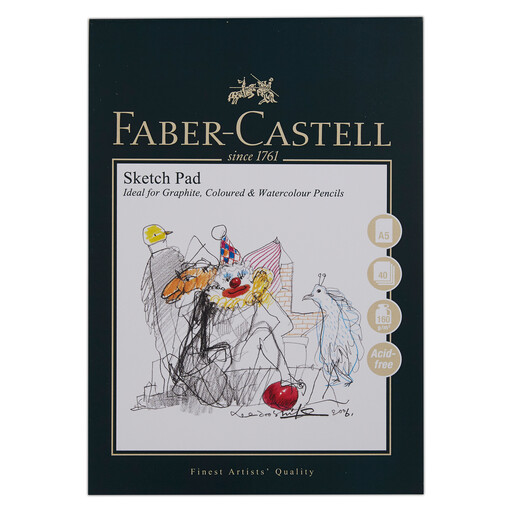
Why This Fits Their Persona: The A5 size is easy to carry to school, college, work or a local art class, while 40 sheets provide room for regular practice.
It clearly specifies 160gsm, acid-free paper and a gummed binding, rather than relying on a vague “premium” description.
Compatible with graphite, coloured pencils, charcoal and watercolour pencils; pages can be removed from the top binding.
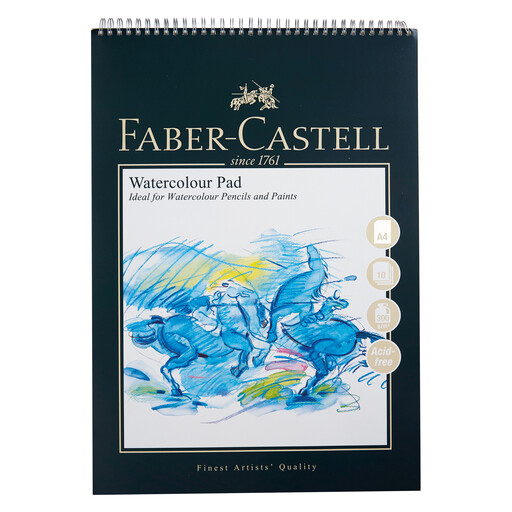
Why This Fits Their Persona: The A4 format and heavyweight sheets suit artists who need a larger surface for washes, illustrations and finished studies.
The paper weight, sheet count, A4 size and wiro binding are stated clearly, making it easier to compare with thinner watercolour pads.
300gsm acid-free paper; spiral binding allows the pad to lie flat and supports watercolour, gouache, acrylic, ink and pencils.
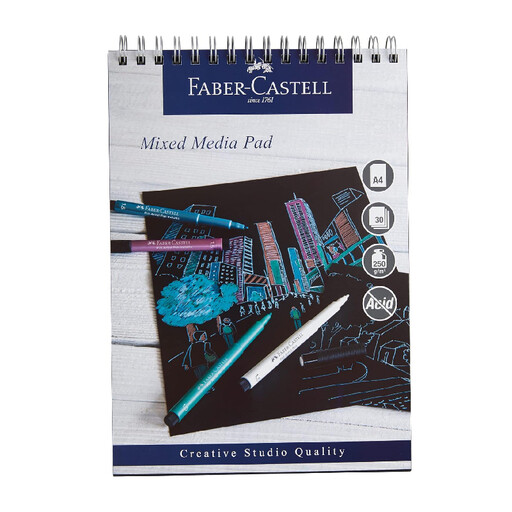
Why This Fits Their Persona: A4 sheets and a 250gsm surface suit illustrators, crafters and artists combining several dry and wet techniques.
Its black paper makes the surface purpose clear, helping buyers avoid paying for a standard white pad when they need strong colour contrast.
250gsm acid-free paper; suitable for acrylic, watercolour, pastel, charcoal, graphite, coloured pencils and ink.

Why This Fits Their Persona: A tablet with a supplied stylus suits illustrators and office-based creatives who want digital drawing, note-taking and portable project work.
The listing specifies the display, stylus support, storage and pressure sensitivity instead of presenting it as an unspecified art tablet.
12.7-inch 2K display; supplied stylus; 4096-level pressure sensitivity; 256GB storage and Android 15.
We have compiled a complete, real-time list of products that fully satisfy these strict selection criteria and UK safety regulations.
Choose A4 for larger compositions, coursework, botanical studies and presentation work. Choose A5 for portability, quick sketches, commuting and compact desks. Many artists use both: A5 for ideas and A4 for developed artwork.
For light washes, 190gsm may be adequate if you accept some curling. For more substantial washes, look for 300gsm watercolour paper and secure the sheet to a board. A 250gsm mixed media pad can suit moderate wet-and-dry projects, but test the surface before committing to a finished piece.
Allow wet media to dry fully, then store sheets flat or in a portfolio away from moisture and direct sunlight. Acid-free paper can help with long-term paper stability, but careful storage remains important. For sketchbooks, avoid overfilling pockets or bending the spine, particularly when carrying them in a school or work bag.