
24/7 Customer Support

Free returns

Same-day & Next-day Delivery

Quality Guaranteed

Unlock Your Welcome Offers: FREE Delivery | Up to 80% OFF | Free 30-day JoyPlus trial
Download the APP
Choosing cashew nuts should be straightforward, but product labels can make similar-looking packs difficult to compare. A small bag of seasoned nuts may contain considerably more salt or sugar than a plain option, while a large pack may offer better value but lose freshness if it is not sealed properly.
The most useful approach is to compare the ingredient list, nutrition panel, pack size and intended use rather than relying on phrases such as “gourmet”, “premium” or “natural”.
“Cashew snack” does not always mean a pack contains only cashews. Seasoned mixes may include sugar, oil, spices, peanuts or other ingredients. For example, a nut mix labelled with chilli and lime may contain both cashews and peanuts, while sweet and salty cashews can include sugar, seasoning and oil.
Check the ingredient list and quantitative ingredient declaration. A product listing cashews as the first ingredient generally contains more of them than a recipe where they appear further down the list, but the exact percentage still matters.
Nutrition information is usually shown per 100g, while a pack may contain several servings. Morrisons Cashew Nuts 250g lists 623 kcal, 48.4g fat, 19.4g protein and 0.04g salt per 100g. Its stated 25g portion provides 156 kcal.
By contrast, Mr Filbert’s Chicago Style Sweet & Salty Cashews contain 20g sugars and 1.1g salt per 100g, reflecting the added sugar and savoury seasoning. Neither figure should be viewed in isolation: the right choice depends on whether you want plain cashews for cooking or a more highly seasoned snack for occasional sharing.
A 500g pack of cashew nuts can suit families, regular snackers and home cooks, but larger quantities need careful storage. Once opened, nuts can gradually lose their crunch and absorb surrounding odours. Look for a resealable closure where available, and store the pack in a cool, dry place away from direct sunlight.
If you only eat nuts occasionally, a 100g or 120g pack may reduce waste. For frequent use in baking, salads, yoghurt or stir-fries, a larger pack can be more practical.
Plain cashews offer the greatest flexibility for cashew nuts for snacking and cooking. They can be chopped into cakes, blended into sauces or added to porridge without changing the recipe’s flavour significantly.
Salted cashews are ready to eat and suit lunchboxes, drinks and sharing bowls, but compare the salt values between products. Roasted cashews usually have a firmer bite and deeper toasted flavour, while lightly processed or natural versions may be preferable when you want to control seasoning during cooking.
Seasoned choices are more specific. Chilli and lime cashews bring heat and acidity to a snack platter, whereas sweet and salty cashews provide a sweeter, more indulgent profile.
Purple skin cashews retain a visible outer skin on the kernel. This gives them a distinctive appearance and can contribute to a slightly more rustic eating experience. Products such as Be&Cheery and Three Squirrels list purple-skin cashews with salt, making them suitable for direct snacking and informal sharing.
Check whether the pack describes the nuts as ready to eat, roasted or lightly salted. “Purple skin” describes appearance and preparation; it does not by itself indicate a particular nutritional advantage.
For occasional use, 100g to 140g packs are convenient and easy to finish while fresh. A 250g pack offers a middle ground for households, while 500g cashew nuts are more suitable for regular consumption, baking or entertaining.
Always review:
Under UK food labelling practice, nuts must be clearly identified as allergens. People with a nut or peanut allergy should read the full label, including cross-contact warnings such as “may contain”.
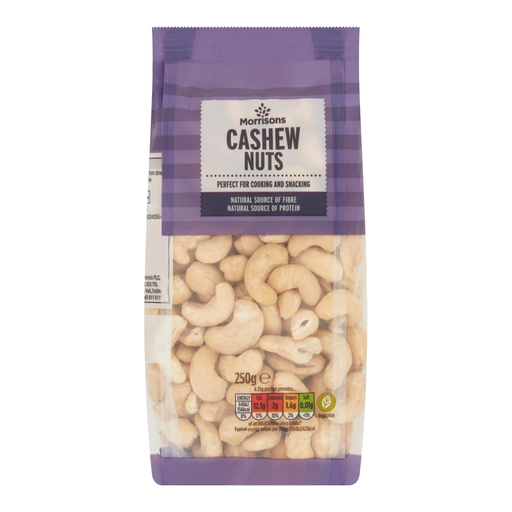
Why This Fits Their Persona: A practical 250g pack for shoppers who want plain cashews for everyday snacking, cooking or baking without committing to a large bag.
The product is positioned for cooking and snacking, with a low listed salt value of 0.04g per 100g and no flavoured seasoning described.
250g net quantity; listed as a natural source of fibre and protein; suitable for vegetarians.
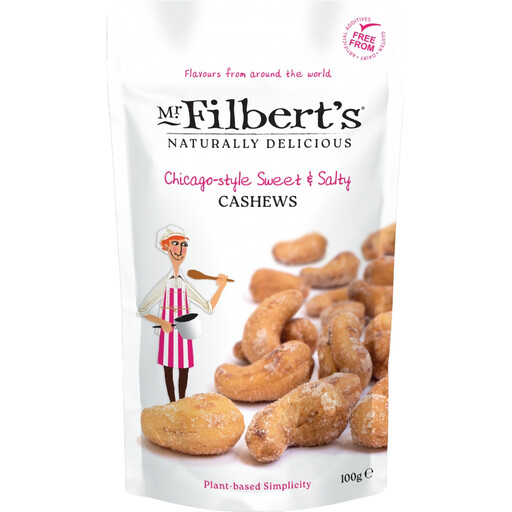
Why This Fits Their Persona: A small gourmet cashews pack for entertaining, charcuterie boards, gifting or anyone who prefers a developed sweet-and-savoury flavour.
The recipe clearly states 85% cashews and identifies sugar, sea salt, spices and sunflower oil rather than hiding the seasoning profile.
100g portion; listed ingredients include paprika, garlic, onion and black pepper; resealable storage guidance is provided.
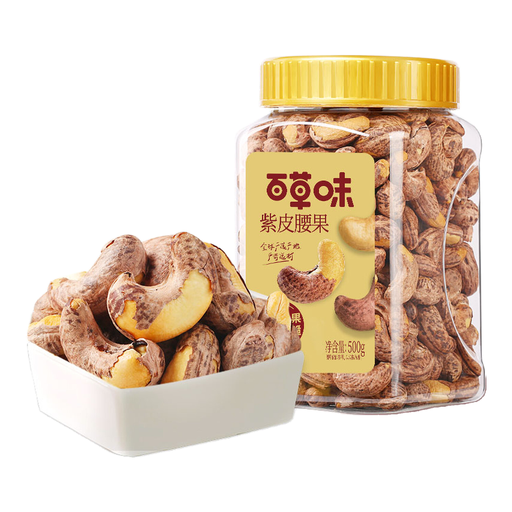
Why This Fits Their Persona: The 500g quantity suits households that regularly serve cashews, bake with them or keep a large snack bowl available for sharing.
The listing specifies cashew kernels and salt, with the purple skin clearly identified instead of relying only on vague flavour language.
500g net quantity; ready to eat; suitable for daily snacking or baking; listed at 1.2g salt per 100g.
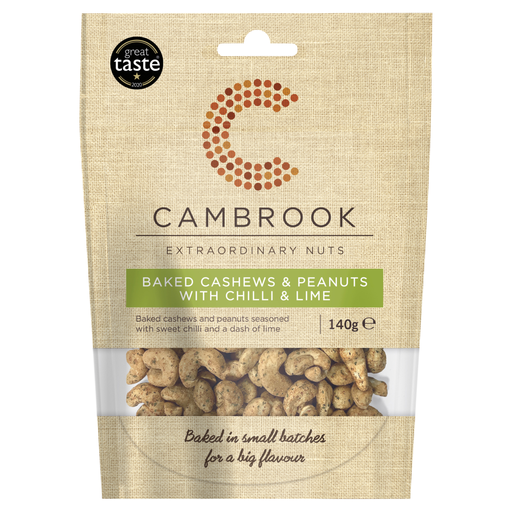
Why This Fits Their Persona: A shareable 140g option for people who enjoy roasted-style crunch with citrus seasoning and gradual chilli warmth.
The ingredient panel states 61% cashews, 33% peanuts and 0.7% lime, so shoppers can see that this is a mixed-nut product.
140g pack; baked preparation described; nutrition lists 4.4g fibre and 17.8g protein per 100g.
We have compiled a complete, real-time list of products that fully satisfy these strict selection criteria and UK safety regulations.
Keep unopened packs in a cool, dry cupboard away from direct sunlight and heat. After opening, reseal the packaging firmly. If the nuts develop an unusual smell, taste stale or show visible mould, discard them.
For a controlled snack, portion cashews into a small bowl rather than eating directly from a large bag. Plain cashews can be chopped over yoghurt or salads, stirred into curry or used in baking. Seasoned products are generally more suitable for eating as supplied, where their salt, sugar and spice balance is already set.
They can form part of a varied diet, but portion size matters because nuts are energy-dense. Use the pack’s stated serving information and compare salt, sugar and saturates when choosing between plain and seasoned products.
Plain or lightly salted cashews are the most versatile. They can be toasted, chopped or blended without strongly changing a recipe. Purple skin cashews can also work in cooking, although their appearance and flavour may be more noticeable.
The exact period depends on the packaging and storage instructions. Reseal the pack, keep it in a cool, dry cupboard and follow the best-before guidance. Smaller packs may be more suitable if you use cashews infrequently.