
24/7 Customer Support

Free returns

Same-day & Next-day Delivery

Quality Guaranteed

Unlock Your Welcome Offers: FREE Delivery | Up to 80% OFF | Free 30-day JoyPlus trial
Download the APP
A computer mouse can look like a simple purchase, yet the wrong model may create daily frustrations: a cable that catches on the desk, clicks that disturb a shared office, a shape that feels uncomfortable after an hour or wireless connectivity that does not suit your devices.
Marketing often focuses on high DPI figures, colourful lighting and long battery claims. These features can be useful, but they should not distract from the specifications that affect daily use. This guide explains what to check before buying, then matches a selection of computer mice to different UK users and routines.
DPI describes cursor sensitivity, not overall accuracy or quality. A high-DPI adjustable mouse can be useful for large screens or fast-paced games, but office work may feel more controlled at a lower setting. Also check whether the mouse offers a physical DPI button, software adjustment or only a few fixed levels.
A Bluetooth mouse is convenient for laptops and tablets because it may not require a USB receiver. A 2.4GHz wireless mouse usually uses a dedicated receiver and can offer a straightforward connection for desktops. Some models support both, while a tri-mode mouse can also operate through USB-C.
Check your computer’s available ports, Bluetooth support and whether the receiver can be stored inside the mouse. For gaming, wired or 2.4GHz connections are generally easier to assess for responsiveness than Bluetooth.
A slim, symmetrical mouse may be convenient for travel, while a vertical mouse uses a more upright handshake-style grip. Neither shape suits every hand. Consider the mouse’s length, width, weight and button placement, as well as whether you use a palm, claw or fingertip grip.
A product described as ergonomic is not automatically comfortable for everyone. A detachable wrist rest, thumb support or soft-touch coating may help, but hand size and desk position remain important.
Choose a wired mouse if you want USB power with no batteries or charging routine. A wireless mouse is more flexible for laptops and tidy desks, but check the battery type and expected runtime. Rechargeable models reduce disposable battery use, although they need periodic charging.
For shared workspaces, a silent mouse can reduce button noise. Quiet switches may feel different from standard clicks, so check the product description for whether the left and right buttons, rather than only the scroll wheel, are designed for quieter operation.
For documents, browsing and study, adjustable settings around 800–1,600 DPI may be sufficient. Gaming mice commonly provide a wider range, but the sensor, shape and software support matter more than the maximum number alone.
A polling rate of 1,000Hz reports the mouse position frequently and is a useful specification for gaming. Higher rates may be relevant to competitive players with compatible hardware, but they can increase processing demands and are not essential for ordinary office tasks.
A programmable mouse allows buttons to be remapped for shortcuts, macros or application controls. Count the buttons you can reach comfortably: extra controls are useful for MMO gaming and editing, but unnecessary buttons can make a compact office mouse feel cluttered.
Confirm support for Windows, macOS or ChromeOS before ordering. Some side buttons or configuration software may have limited Mac functionality even when basic cursor control works.
For long sessions, compare weight and dimensions. A lightweight gaming mouse can make rapid movements easier, while a heavier ergonomic mouse may feel more planted. If you share a computer or switch hands, look for an ambidextrous mouse with a symmetrical profile.
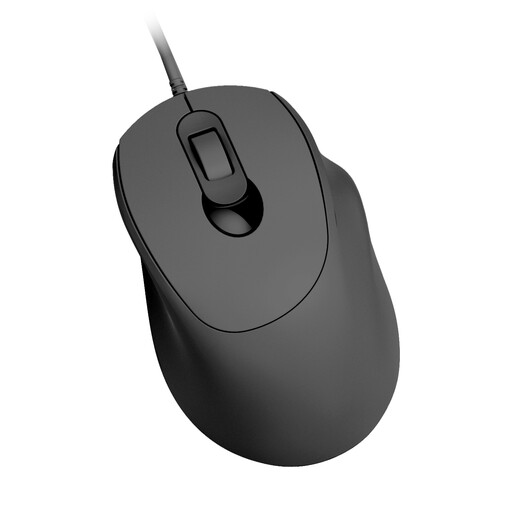
Why This Fits Their Persona: A practical choice for students, home offices and anyone wanting simple USB setup without battery management. Its Windows and Mac compatibility supports everyday browsing, documents and light gaming.
The wired, plug-and-play design avoids wireless pairing and charging issues, while silent clicks address noise in libraries or shared rooms.
USB connection; three listed DPI levels of 1000, 1200 and 1600; four-button layout.
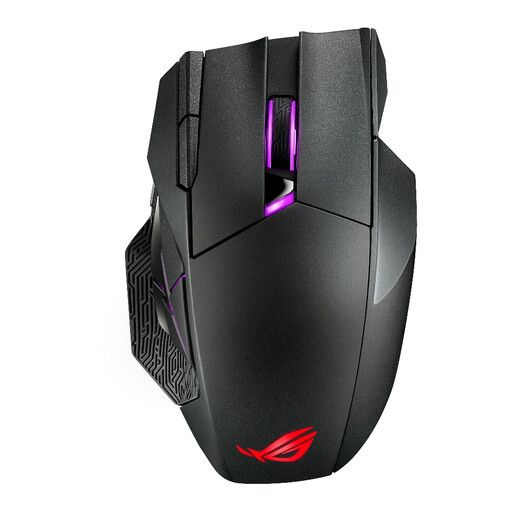
Why This Fits Their Persona: Suited to MMO players and desktop gamers who want extensive controls, wireless flexibility and a charging dock for a permanent setup.
Its dual-mode 2.4GHz and USB-C operation provides a wired fallback, rather than relying on one wireless method. The listed 12 programmable buttons make the feature set relevant to MMO controls.
19,000 DPI optical sensor; 1,000Hz polling rate; stated battery life of up to 67 hours with RGB switched off.

Why This Fits Their Persona: Designed for long office sessions, remote work and users who prefer a vertical ergonomic mouse with a detachable wrist rest and rechargeable power.
The upright form and wrist rest give more physical support than a flat compact mouse. Bluetooth and a 2.4GHz dongle provide two connection routes.
Six buttons, five configurable through HP Accessory Center; adjustable tracking up to 4000 DPI; USB-C rechargeable battery.
Use a stable, non-reflective surface or a suitable mouse mat. Glass and highly reflective desks can cause tracking inconsistencies with some optical sensors. Keep the device dry and clean it with a soft, lint-free cloth rather than applying liquid directly.
For wireless models, store the receiver safely when travelling and check whether the product requires a USB-A adapter for your laptop. If using a mouse and keyboard combo, confirm the layout; some sets use a US keyboard layout, which differs from the UK layout.
We have compiled a complete, real-time list of products that fully satisfy these strict selection criteria and UK safety regulations.
A Bluetooth mouse reduces cable clutter and may connect directly to a laptop. A 2.4GHz model can be useful when Bluetooth is unavailable or when you prefer a dedicated receiver. A wired mouse avoids charging but occupies a USB port.
Lifespan depends on switch durability, daily usage, handling and cleaning. Check the manufacturer’s stated click rating where provided, but treat it as a specification rather than a guaranteed service period. A mouse with replaceable batteries or a rechargeable cell may require less ongoing maintenance depending on your routine.
Yes. Adjustable DPI, extra buttons and programmable controls can help with shortcuts and navigation. However, gaming models may be heavier, larger or more visually styled than an office mouse. Choose based on hand comfort, noise level and desk requirements rather than lighting alone.