
24/7 Customer Support

Free returns

Same-day & Next-day Delivery

Quality Guaranteed

Unlock Your Welcome Offers: FREE Delivery | Up to 80% OFF | Free 30-day JoyPlus trial
Download the APP
Choosing dog food in the UK is not simply a matter of picking the most attractive packaging. Labels such as “natural”, “grain-free” and “premium” can sound persuasive, but they do not automatically show whether a recipe suits your dog’s age, body condition, activity level or digestion.
The right choice should provide appropriate nutrition, clear feeding guidance and ingredients your dog can tolerate. This guide explains the details worth checking before buying, along with practical recommendations for different households.
“Natural dog food” may describe the ingredient style, but it does not by itself confirm that the food is nutritionally complete. Look for a clear statement such as “complete pet food” for the relevant life stage. A complementary food, topper or mixer should not replace a complete daily diet unless your vet advises otherwise.
Similarly, “grain-free dog food” is not automatically necessary for every dog. It may suit owners avoiding cereals or dogs with a known ingredient intolerance, but the overall recipe still needs to provide suitable protein, fat, vitamins and minerals.
Wet dog food often contains around 70–82% moisture, while dry dog food commonly contains roughly 8–10%. Comparing the protein figures on the front of each pack can therefore be misleading. A wet food showing 9% protein is not necessarily lower in protein than a kibble showing 24%; the water content affects the calculation.
Check the analytical constituents, calories where listed and feeding guide together. This gives a more useful view of portion size and daily energy intake.
Sensitive dog food and hypoallergenic dog food recipes may exclude particular ingredients, but individual dogs can still react to a protein or additive. Check the full composition, including oils and animal derivatives. For persistent itching, vomiting, diarrhoea or other symptoms, seek veterinary advice rather than repeatedly changing food without guidance.
Adult dog food is generally intended for mature dogs, while senior dog food may have a different calorie, fat or fibre profile. Small breed dog food often uses smaller kibble, which can be easier for smaller mouths to manage. Working dog food is designed for dogs with higher activity demands, but portion sizes still need to be adjusted to the individual dog.
Do not rely only on breed labels. A sedentary adult Labrador and a highly active collie may require very different daily quantities.
For everyday feeding, select a product labelled as a complete pet food for the correct species and life stage. Check:
“Complete and balanced dog food” is a useful search term, but the packaging should still be checked carefully. Feeding guides are starting points, not fixed prescriptions. Monitor body condition and adjust portions gradually.
The first listed ingredients generally make up a substantial part of the recipe, so identify the main protein source. Common options include chicken dog food, salmon dog food and lamb dog food. If your dog has previously reacted to chicken, for example, check whether chicken fat, chicken meal or poultry derivatives also appear.
Consider pack size and storage too. A 12kg dry food bag can offer convenience for a larger dog, but it needs to be sealed in a cool, dry place. Wet food provides portioned meals and additional moisture, but opened cans or pouches normally require refrigeration and prompt use according to the label.
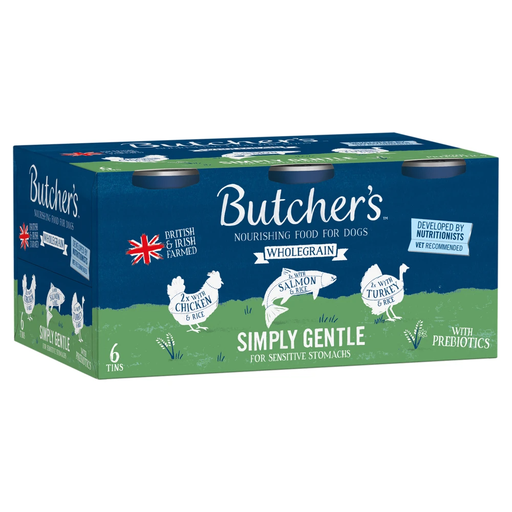
Why This Fits Their Persona: This six-can wet food variety is a practical starting point for adult dogs, particularly when you want portioned meals without committing to a large dry-food bag.
The listing identifies it as 100% complete and balanced for adult dogs and states that it contains no artificial flavours, colours or preservatives. The pack also clearly lists protein varieties and analytical values.
Includes prebiotic MOS and FOS; each 390g can contains 81.7 kcal per 100g and comes in chicken, salmon and turkey varieties.
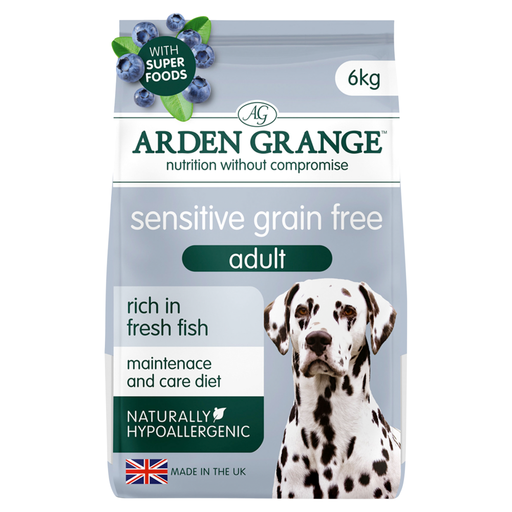
Why This Fits Their Persona: A suitable option for owners comparing a larger dry-food pack with a fish-based, grain-free recipe for adult dogs with dietary sensitivities.
The composition specifies fresh ocean white fish, white fish meal, sweet potato and potato, allowing you to check the main ingredients rather than relying only on front-of-pack claims.
The listed recipe is grain and cereal free, with 25% crude protein, 14% fat and added prebiotic FOS and MOS.
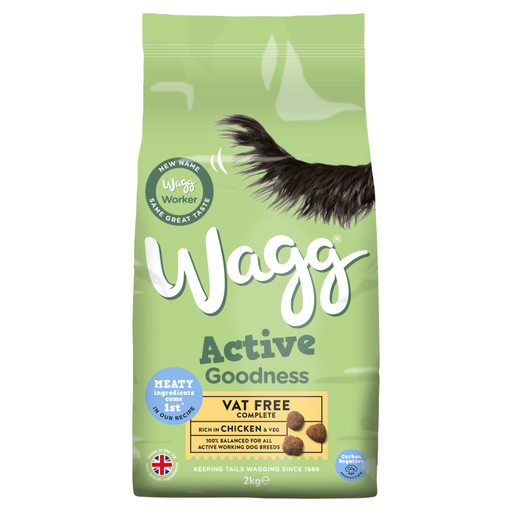
Why This Fits Their Persona: Its stated suitability for active working dogs makes it relevant to owners managing regular outdoor exercise, training or working routines.
The product provides a defined feeding guide for different weight ranges and identifies itself as complete food for active working dogs aged eight weeks and above.
Contains 22% crude protein, 8% fat and 338 kcal per 100g, with whole grains, vegetables, omega 3 and omega 6 sources.
We have compiled a complete, real-time list of products that fully satisfy these strict selection criteria and UK safety regulations.
Introduce new dog food gradually over several days by mixing increasing amounts with the previous recipe. This can make it easier to identify whether digestive upset is linked to the change. Follow the pack’s feeding guide, weigh portions where possible and reassess if your dog’s weight, exercise or life stage changes.
Always provide fresh drinking water. Keep dry food sealed and use wet food within the storage period printed on the packaging. Treats, leftovers and toppers contribute to daily calories, so include them when assessing portion sizes.
Neither format is automatically suitable for every dog. Wet dog food has high moisture content and can be convenient for portion control, while dry dog food is easier to store and measure. Choose a complete recipe that your dog accepts and that fits your budget, storage space and feeding routine.
Use the manufacturer’s guide as a starting point based on body weight and activity. Then monitor body condition, weight and appetite. Dogs with weight concerns may need weight control dog food and a feeding plan discussed with a vet.
A senior or sensitive recipe may not match every adult dog’s needs. Check the intended life stage and nutritional statement on the pack. For diagnosed allergies, ongoing digestive problems or significant dietary changes, consult your veterinary practice before switching food.