
24/7 Customer Support

Free returns

Same-day & Next-day Delivery

Quality Guaranteed

Unlock Your Welcome Offers: FREE Delivery | Up to 80% OFF | Free 30-day JoyPlus trial
Download the APP
A food processor can speed up chopping, slicing, blending and meal preparation, but choosing the wrong model often creates more work rather than less. A small bowl may be unsuitable for family portions, while a powerful electric food processor can take up valuable cupboard space and leave several parts to wash.
The main challenge is separating useful specifications from appealing but vague marketing language. Before buying, consider how much food you prepare, which attachments you genuinely need and how easy the appliance will be to store and clean.
A higher wattage does not automatically mean better results for every task. A food processor also depends on blade design, bowl shape, speed control and the recommended operating time. For instance, a 300W mini food chopper may be suitable for herbs, onions and dips, while tougher ingredients or larger batches may require a stronger motor and a larger bowl.
Look for practical details such as pulse control, maximum capacity and whether the instructions specify limits for hard or thick ingredients.
A food processor and blender combination can replace several appliances, but only if the included accessories match your cooking habits. Slicing and shredding discs are useful for vegetables, cheese and salads, while a dough tool may be relevant for frequent baking.
If you mainly chop onions and herbs, a compact food processor or mini food chopper may be more convenient than a large multifunctional appliance. Conversely, families and meal-prep users may benefit from a larger bowl and several attachments.
Food residue can collect around blade housings, feed chutes and narrow lids. Check whether removable parts are dishwasher-safe, but read the instructions carefully: some components, particularly motor bases and certain lids, must be hand washed.
Dimensions matter too. A food processor that fits on the worktop may still be awkward to store in a cupboard. Check the appliance height, bowl size and whether accessories can be nested together.
Capacity is usually listed in litres or millilitres, but usable capacity may be lower than the headline figure. A 350ml bowl is suitable for small quantities, sauces and chopped herbs. Around 800ml to 1.4L can suit everyday cooking and smaller family portions, while bowls of 1.8L or more are more practical for batch preparation.
For liquid recipes, check the stated liquid capacity rather than assuming the bowl can be filled to the top. Overfilling can cause spills and place additional strain on the motor.
An electric food processor should have controls that match the ingredients you prepare. Two speeds and pulse control can help switch between coarse chopping and finer textures. Automatic programmes may be convenient for blending, chopping or puréeing, but manual control remains useful when you want to stop at a particular texture.
Always follow the supplied instructions. Do not process hot liquids unless the manufacturer specifically permits it, and unplug the appliance before changing blades or discs.
Stainless steel blades are commonly used for chopping and grinding. A food processor with slicing and shredding discs can reduce preparation time for vegetables, cheese and salads. A separate meat grinder function may be useful for mince and fillings, but check the recommended food types and batch limits.
For safety, look for a lid-locking or safety interlock system, stable feet and a food pusher for feed-chute models. Blades are sharp and should be handled carefully, particularly during washing.
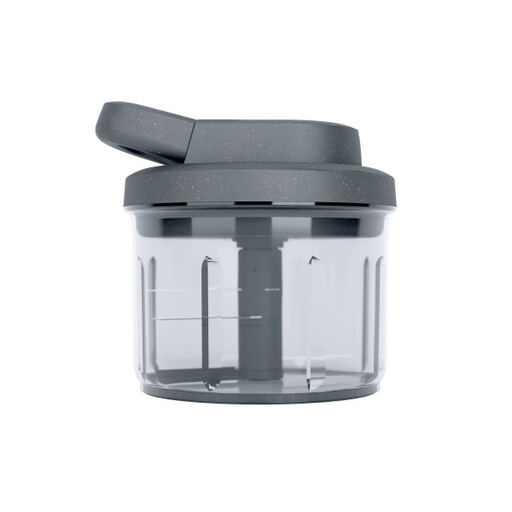
Why This Fits Their Persona: This manual option suits shoppers who want straightforward preparation without a plug or motor. Its 800ml bowl is practical for everyday chopping, mixing and small-batch blending in UK kitchens.
The pull-cord gives direct texture control, while the built-in sweeper arm helps guide food back towards the blades. The bowl and blade unit are dishwasher-safe; the lid should be hand washed.
Manual operation; three stainless steel blades; non-slip base; 800ml capacity.
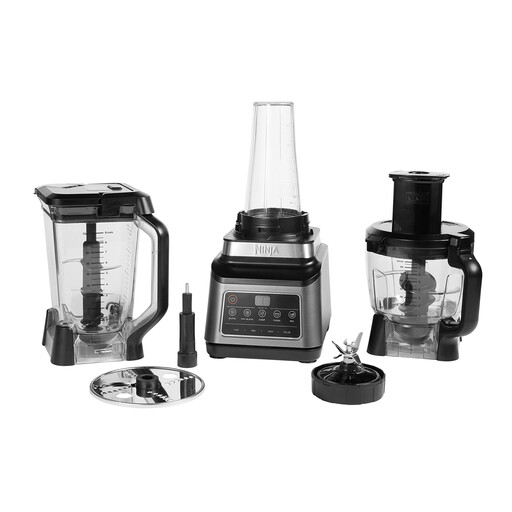
Why This Fits Their Persona: This is suited to households wanting one appliance for food preparation, multi-serve blending and individual drinks, particularly where cupboard space is limited.
The 1.8L processor bowl, 2.1L jug and 700ml cup provide clearly different capacities rather than relying on one oversized container. Dishwasher-safe parts simplify cleaning.
1200W motor; five automatic programmes; chopping blade, slicing/grating disc and dough tool included.
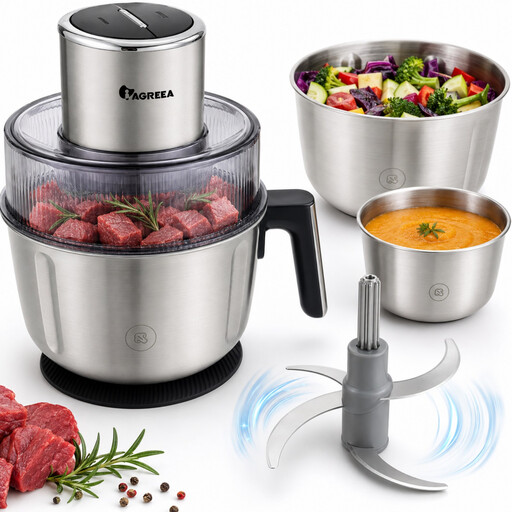
Why This Fits Their Persona: A practical choice for cooks preparing vegetables, mince, fillings, purées or cooked ingredients in larger quantities. The nesting bowls are useful when storage space is restricted.
Three separate stainless steel bowls identify suitable uses and reduce the need to mix raw meat and other ingredients in the same container. Pulse operation is limited to 30 seconds per cycle.
2.5L, 2.2L and 1.8L nesting bowls; two-speed pulse control; 304 stainless steel bowls.
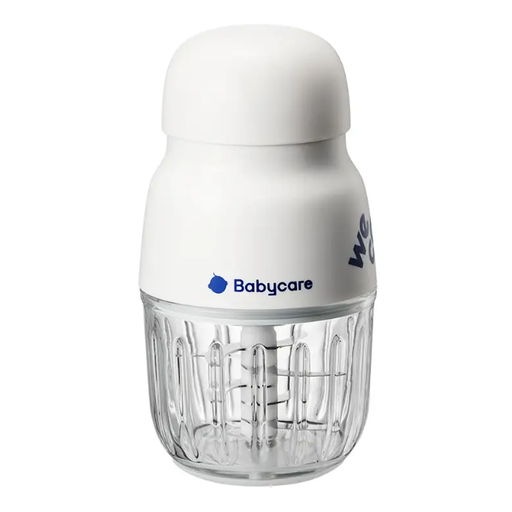
Why This Fits Their Persona: Its smaller 10 fl oz capacity is designed around individual portions and compact storage, making it suitable for parents preparing purées and cooked food in small quantities.
The one-button design avoids complicated settings, while the stated capacity discourages preparing oversized batches. Follow all food safety and age-appropriate feeding guidance separately.
26000 RPM specification; high-borosilicate glass bowl; stainless steel; compact corded design.
We have compiled a complete, real-time list of products that fully satisfy these strict selection criteria and UK safety regulations.
A manual food processor has no electricity cost, while an electric model typically runs for short periods during chopping or blending. Actual running cost depends on the appliance’s wattage and usage time. Keeping batches within the recommended capacity can also help avoid unnecessary repeated cycles.
Some multifunctional models can blend smoothies, sauces and purées, but results depend on the attachment, liquid level and recipe. A food processor with a dedicated jug or personal cup offers more flexibility than a bowl-only model. Always check whether hot liquids are permitted.
Lifespan depends on frequency of use, ingredient types, cleaning and storage. Avoid bones and unsuitable hard ingredients, do not exceed maximum fill marks and allow the motor to cool where instructions require it. Check the supplied warranty and keep the manual for operating and care guidance.