
24/7 Customer Support

Free returns

Same-day & Next-day Delivery

Quality Guaranteed

Unlock Your Welcome Offers: FREE Delivery | Up to 80% OFF | Free 30-day JoyPlus trial
Download the APP
A footstool can make a sofa, desk or dressing area more comfortable, but choosing the wrong one often leads to wasted money. A design may look appealing online yet prove too low for your seating, too soft to support your legs or awkward to move around a compact UK home.
Before buying, look beyond colour and promotional wording. The useful questions are: does it match your seating height, can the materials handle daily use and does it offer practical value beyond looking attractive?
A round pouffe or faux fur footstool may look generous in product photography, but its measurements can be smaller than expected. Check the overall width, depth and height, then compare them with your sofa seat and available floor space.
For a sofa footrest, the top should sit at a comfortable level rather than forcing your knees upwards. A model that is too tall may feel restrictive, while one that is too low may not provide meaningful leg support.
Very soft fillings can feel comfortable initially but may compress with regular use. If you want an ergonomic footrest for working at home, check whether it has a stable base or structured foam rather than relying on vague terms such as “cloud-like” or “luxury comfort”.
A footstool intended for occasional feet-up use can be softer. For regular seating, dressing-table use or under-desk support, a firmer construction is usually easier to position consistently.
Textured upholstery can collect dust, pet hair and everyday marks. Check whether the cover is removable, whether the surface can be cleaned according to the care instructions and whether the base includes non-slip protection.
If the footstool may also be used as seating, look for a clearly stated maximum weight capacity. Do not assume that every pouffe, storage ottoman or cushioned stool is designed for sitting.
Measure from the floor to the top of your sofa cushion. A footrest that is approximately level with, or slightly lower than, the seat may provide a more natural resting position, but personal comfort and sofa firmness also matter.
For compact rooms, consider a round pouffe stool or a cube-shaped design. For a hallway or the end of a bed, a longer storage bench can provide seating without taking up multiple pieces of furniture.
Useful dimensions to compare include:
A structured foam base can help a pouffe retain its shape, while foam chunks or synthetic down may create a softer upper layer. For an ergonomic footrest, look for a combination that offers both stable support and cushioning.
Storage ottomans often use MDF panels beneath padded upholstery. These can provide a firmer surface, but buyers should follow the manufacturer’s instructions about how the lid must be positioned before sitting on it.
Velvet, faux fur and woven upholstery create different maintenance requirements. A removable, machine-washable cover can be useful in homes with children or pets, but always follow the stated washing instructions.
For upholstered furniture, check the listing or supplier information for relevant UK fire-safety and product-safety details, particularly where the item is intended for regular seating. A non-slip base can also reduce movement on laminate, wood or tiled flooring, although it does not replace sensible placement or supervision.
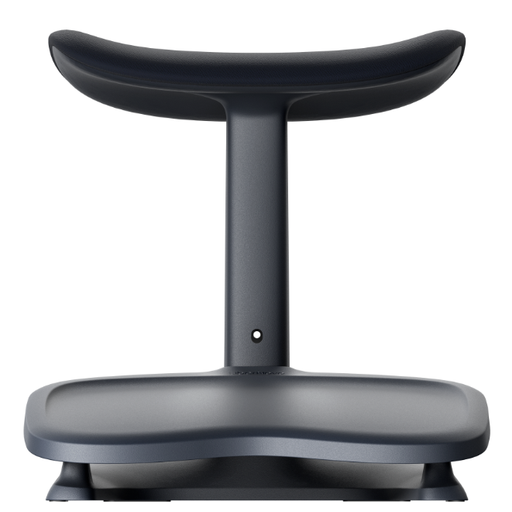
Why This Fits Their Persona: A compact option for shoppers seeking straightforward under-desk or sofa support without adding a large furniture piece to a smaller UK room.
Its dual-layer construction is presented as a defined feature, making it easier to distinguish from products described only with general comfort language.
Dual-layer design; midnight black finish that can coordinate with darker sofas and office furniture.
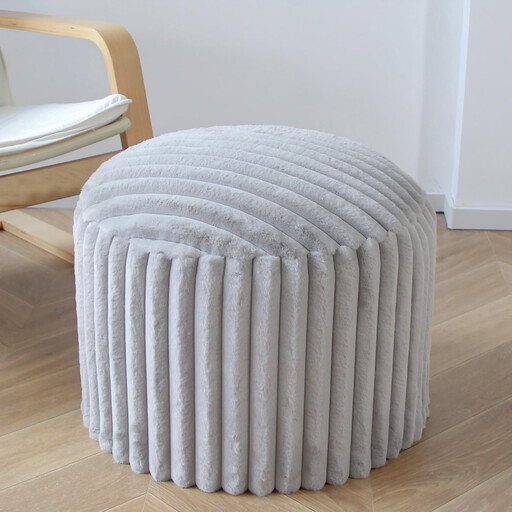
Why This Fits Their Persona: Suits shoppers who want a softer decorative accent for a living room, bedroom or dressing area, with the flexibility to provide occasional extra seating.
The listing specifies a high-density foam base, foam-chunk upper layer, removable cover and non-slip bottom rather than relying on appearance alone.
Faux fur cover; stated dimensions of 38 x 50 x 50 cm; removable and machine-washable cover according to the listing.
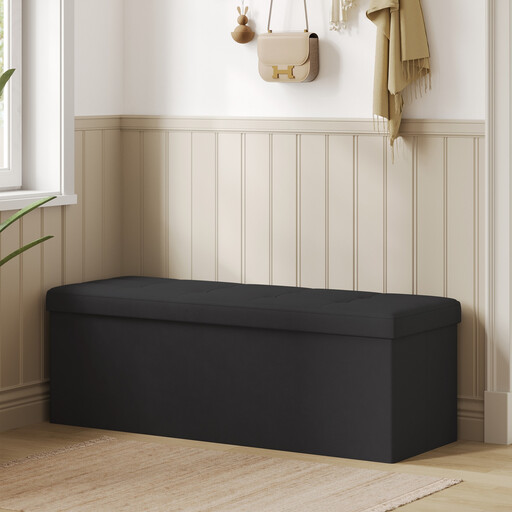
Why This Fits Their Persona: A practical choice for households needing a bedroom ottoman, hallway seat or living-room footrest with concealed storage for blankets and everyday items.
The listing provides a stated 300 kg maximum capacity and 131-litre volume, while also specifying that the lid must be fully covered before sitting.
Foldable construction; 38 x 110 x 38 cm dimensions; velvet upholstery; two additional storage boxes.
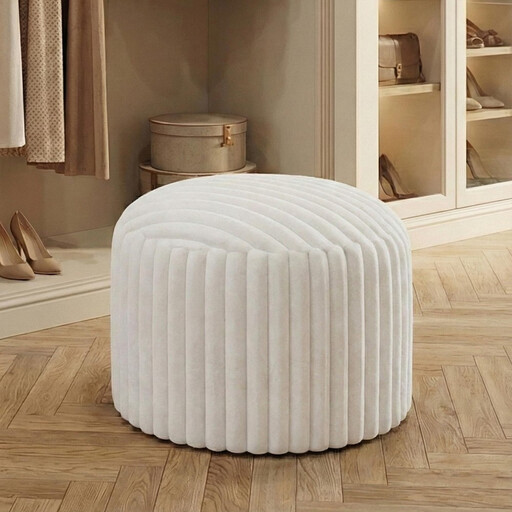
Why This Fits Their Persona: Works as a light, movable accent in a bright living room, bedroom or dressing space where softness and easy repositioning are priorities.
The stated foam base and non-slip bottom address the common problem of a decorative pouffe that shifts or lacks structure during use.
Faux fur upholstery; foam-chunk filling; stated 38 x 50 cm size; no installation required.
We have compiled a complete, real-time list of products that fully satisfy these strict selection criteria and UK safety regulations.
There is no single suitable height for every sofa. Compare the footstool with your sofa cushion and aim for a position that lets your legs rest naturally without lifting your knees sharply. For desk use, ensure it fits beneath the desk and does not force your chair too far back.
Lifespan depends on frequency of use, filling, frame construction, cleaning and whether people sit on it. A structured storage ottoman may suit repeated seating more closely than a soft bean bag footstool, but always follow the stated load and usage guidance.
A standard footstool, pouffe or storage ottoman does not require electricity and has no ongoing energy cost. The main maintenance costs are occasional cleaning and, where relevant, replacement covers or repairs.