
24/7 Customer Support

Free returns

Same-day & Next-day Delivery

Quality Guaranteed

Unlock Your Welcome Offers: FREE Delivery | Up to 80% OFF | Free 30-day JoyPlus trial
Download the APP
Small kitchen appliances can save time, reduce preparation work and make everyday routines more convenient. However, choosing between an electric coffee grinder, personal blender, food chopper or electric meat grinder is not simply a matter of selecting the highest wattage or the longest feature list.
As the Joybuy Product Recommendation Officer, my role is to separate useful specifications from persuasive marketing language. The right appliance depends on your ingredients, batch size, storage space, cleaning routine and available sockets. These are the details that often matter more than appearance or headline claims.
A high wattage figure does not automatically mean smoother blending or more consistent grinding. Motor design, blade shape, burr construction, speed control and the amount of food being processed all affect results.
For example, a 300W smoothie maker may be suitable for soft fruit and protein shakes, while a stronger ice-crushing blender is more appropriate for frozen ingredients and harder foods. A coffee grinder also needs a suitable burr system and adjustment range, not just a powerful motor.
A jug marked at 1.5L or 1.75L may not be suitable for processing that amount of hot or expanding food. Some appliances have different maximum capacities for hot and cold ingredients. The Xiaomi Blender Pro, for instance, lists a 1.75L cold-drink capacity and a 1.4L hot-drink capacity.
For personal appliances, 500ml to 700ml may suit one person, but families may need a jug blender or a larger food processor. Always check the maximum fill line rather than relying only on the advertised bowl or cup size.
Many products have detachable dishwasher-safe parts, but the motor base, power cable and electrical controls must not be immersed. Check precisely which components can go into the dishwasher.
A dishwasher-safe kitchen appliance can reduce daily effort, but blades still need careful handling. Removable parts should be fully dry before storage, and food residue should not be allowed to harden around seals or blade assemblies.
Power should be matched to the intended task:
For instance, the HiBREW G3 has a 34-setting adjustment scale, a 48mm conical burr, a 210g bean container and a stated 100g powder tank. Its instructions also specify a limit of no more than 10 continuous grinding cycles before cooling.
Stainless steel blades are commonly used for chopping and blending, but construction still varies. A conical burr coffee grinder is designed to break beans into grounds across a selectable range, making adjustment particularly relevant for espresso, filter coffee and French press preparation.
For food preparation, stainless steel bowls can be practical where users regularly chop meat or vegetables. The IAGREEA chopper includes three nesting 304 stainless steel bowls, while the Kenwood MG510 uses a die-cast metal body and stainless steel mincer head.
Food-contact materials should be clearly identified, and detachable cups should be checked for features such as BPA-free or Tritan construction where relevant.
Before ordering, check:

Why This Fits Their Persona: A compact option for UK commuters, students and fitness users who want individual smoothies without a full-size jug blender.
Its two 0.6L Tritan bottles make the usable serving size clear, while removable blades and dishwasher-safe parts address the hidden cleaning issue.
300W motor, one-button control, pulse function and two carry bottles in a compact design.

Why This Fits Their Persona: Suits coffee enthusiasts who switch between espresso, filter coffee and French press and want repeatable dosing controls.
The 60 grind settings and LCD display provide measurable control instead of relying on a generic “multi-purpose” claim.
Conical burr system, 0.2-second grind-time adjustment and direct grinding into a portafilter or container.
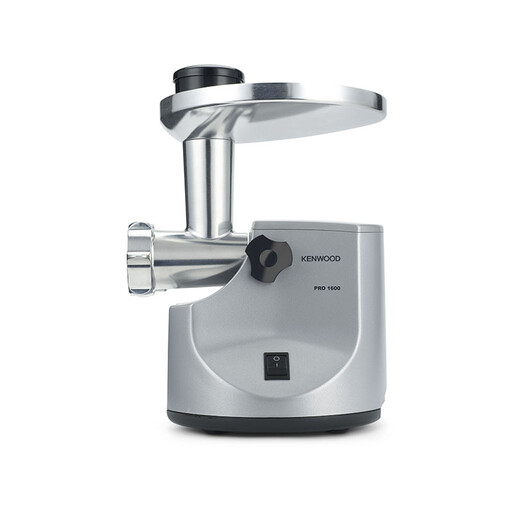
Why This Fits Their Persona: A practical match for families and batch cooks preparing mince, sausages or kebbe at home.
Three screen sizes clarify the available textures, while overload protection and a reverse function address demanding preparation tasks.
1600W maximum power, stated processing capacity of up to 2kg per minute and sausage and kebbe attachments.
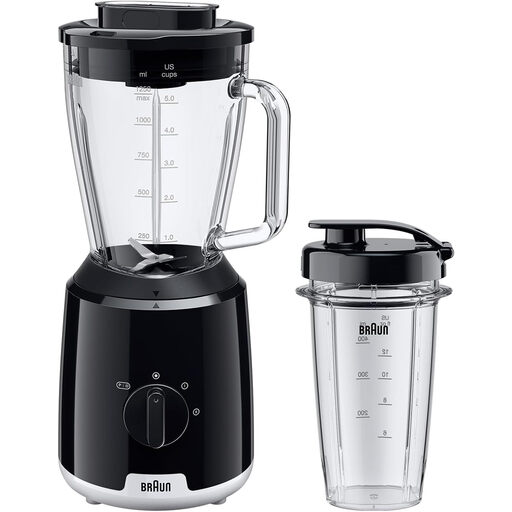
Why This Fits Their Persona: Useful for shared smoothies, sauces and frozen drinks where a single-serve portable blender may be too small.
Its 1.5L glass jug, two speeds and stated ice-crush function make the intended family use clearer than a small cup-based design.
600W motor, 1.5L triangular glass jug, Smoothie2Go bottle and dishwasher-safe jug, lid and blades.
We have compiled a complete, real-time list of products that fully satisfy these strict selection criteria and UK safety regulations.
A personal blender, portable blender or compact food chopper usually takes up less worktop and cupboard space than a full-size jug blender. Measure the storage area first, including the height needed for a coffee grinder hopper or jug. A detachable cup or nesting bowl can also reduce the number of separate containers required.
Running cost depends on the appliance’s power rating, grinding time and electricity tariff. Coffee grinders generally operate for short periods, so the amount of electricity used per serving is usually influenced more by usage frequency than by a single grinding cycle. Avoid running the grinder beyond the manufacturer’s stated limits, as overheating can affect reliability.
No. Dishwasher-safe parts still require correct assembly, careful blade handling and prompt rinsing after use. Motor bases should only be wiped with a damp cloth unless the instructions state otherwise. Check seals, lids and burr chambers regularly, and unplug the appliance before cleaning or removing any cutting or grinding component.