
24/7 Customer Support

Free returns

Same-day & Next-day Delivery

Quality Guaranteed

Unlock Your Welcome Offers: FREE Delivery | Up to 80% OFF | Free 30-day JoyPlus trial
Download the APP
A humidifier can be useful in centrally heated UK homes, offices, nurseries and plant rooms, but choosing one based only on tank size or a “quiet” label can lead to disappointment. The most suitable model depends on room size, mist type, cleaning requirements and how often you want to refill it.
Before buying, watch for these common pitfalls.
A 5L or 6L water tank sounds substantial, but runtime also depends on mist output. A unit producing 350ml per hour will use water faster than one running at a lower setting. Check both tank capacity and maximum mist output, rather than relying on litres alone.
Noise levels are normally measured under particular operating conditions. A product described as a quiet humidifier may be quieter on sleep mode than at maximum output. For a bedroom humidifier or nursery, look for a stated decibel figure and adjustable settings. Models listed at approximately 16–28dB may be suitable for light sleepers, but room placement and surface vibration can also affect perceived noise.
A humidifier requires regular cleaning, even when it has a filter or automatic shut-off. Hard water can leave mineral deposits, particularly in ultrasonic humidifiers. White residue on nearby furniture is a sign that minerals may be dispersing into the room.
Follow the manual’s water instructions. Several models recommend clean, cool or distilled water, while some evaporation-style products specify fresh tap water. Do not add essential oils directly to a water tank unless the manufacturer expressly permits it. Use a dedicated aroma tray or pad where provided.
A cool mist humidifier usually uses a fan or ultrasonic disc to disperse water without heating it. Ultrasonic models are often compact and energy-efficient, but they may require more attention to water quality and cleaning.
A warm mist humidifier heats water before releasing moisture. This can increase power consumption and create hot surfaces, so it requires careful positioning around children and pets. Some combined models offer both cool and warm mist, giving you more control across different seasons.
Evaporative models, such as the Philips 2000 series Air Humidifier HU2510/10, use a humidification filter and fan rather than an ultrasonic disc. The product specification lists an 11W maximum power rating, a 2L tank and coverage up to 31m². It also includes automatic power-off when the tank is empty.
Match the stated coverage to your room. A small portable mini humidifier may suit a desk, bedside table or car cup holder, but it is not designed to humidify an entire open-plan living room.
For larger spaces, look for coverage in square metres and a higher mist output. The Bear 5L model lists up to 350ml/h and coverage up to 30m². The DREO HHM411S lists coverage up to approximately 28m², while the Luxaid 6L model is designed for larger rooms and offers adjustable cool and warm mist settings.
A top-fill humidifier is generally easier to refill without carrying a full tank to a sink. A wide tank opening also makes it easier to inspect and clean internal surfaces.
Useful features include:
Place any humidifier on a flat, stable, water-resistant surface, away from radiators and electrical sockets. Do not cover the mist outlet, exceed the MAX line or operate it without water.
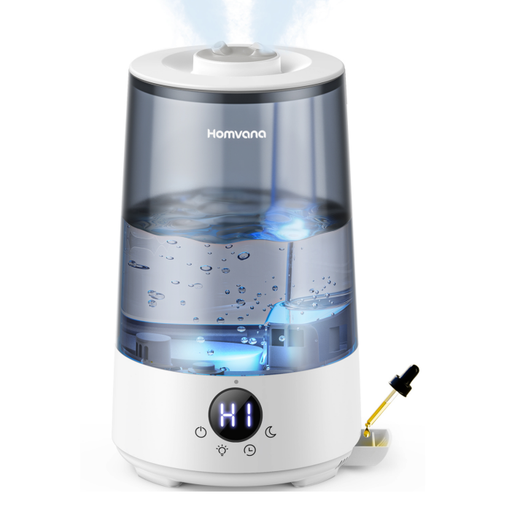
Why This Fits Their Persona: A practical bedroom or office option for shoppers wanting a top-fill design, timer settings and a compact footprint without moving to a larger 5L humidifier.
The stated tank size, mist range and sleep-mode runtime provide more useful information than a capacity-only claim. Essential oils go in the dedicated aroma tray, not the tank.
3.6L tank, five timer options, top-fill construction and a listed noise level of 16dB.
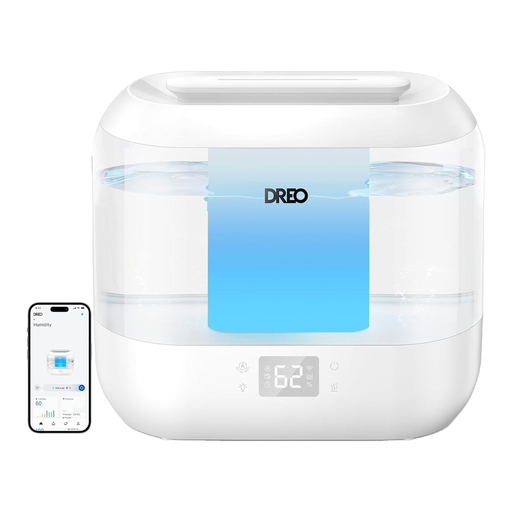
Why This Fits Their Persona: Suitable for connected UK households, home offices and bedrooms where app control, scheduling and automatic humidity adjustment are priorities.
Its listed sensor and automatic mode are more specific than simply calling a product “smart”. The unit also has automatic shut-off when the tank is empty.
4L tank, up to 32 hours’ stated runtime, app and voice control, 28dB operation and a dedicated fragrance tray.
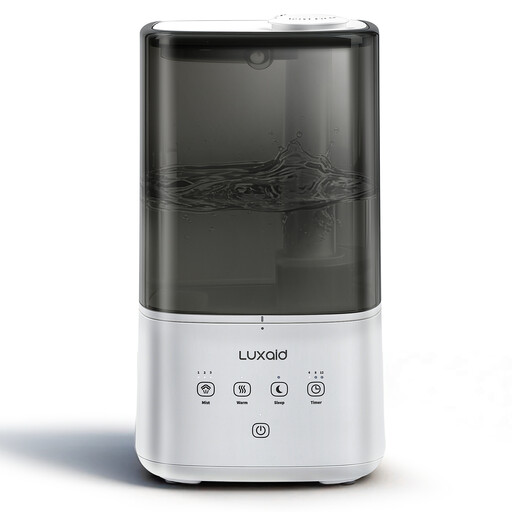
Why This Fits Their Persona: A 6L humidifier for larger rooms, frequent daily use or households that want both cool and warm mist modes.
The specifications separate cool and warm mist output and state the warm-mist power rating, helping buyers consider electricity use and placement requirements.
6L top-fill tank, 360° nozzle, touch controls, 4/8/12-hour timer and a removable leak-resistant tank design.
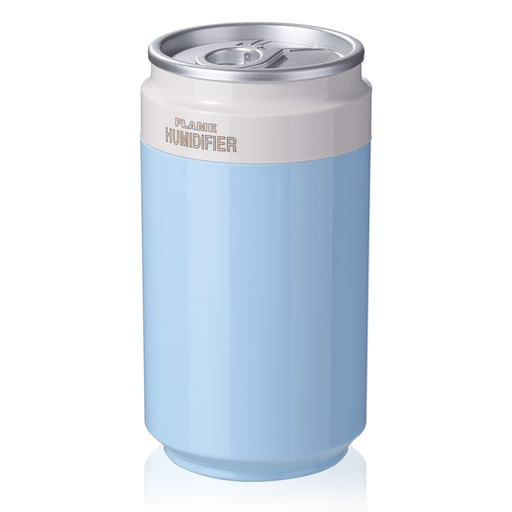
Why This Fits Their Persona: Designed for desks, car cup holders, small-footprint offices and targeted plant care where portability matters more than whole-room output.
Its 260ml capacity makes its intended use clear. Continuous and intermittent modes have stated four- and six-hour automatic shut-off periods, rather than suggesting all-day operation.
USB power, dual spray modes, 7-colour light, compact dimensions and leak-resistant construction.
We have compiled a complete, real-time list of products that fully satisfy these strict selection criteria and UK safety regulations.
For safer, cleaner operation:
A quiet humidifier can run overnight, but a timer or automatic humidity mode may prevent unnecessary operation. For a bedroom, choose a model with a manageable noise level, low-light controls and enough runtime for your usual sleep period.
Running cost depends mainly on wattage, operating time and electricity tariff. Cool mist and ultrasonic humidifiers often list lower power ratings than warm mist models. For example, the Philips HU2510/10 lists up to 11W, while the Luxaid 6L model lists 25W for cool mist and 150W for warm mist. Use the wattage shown in the product specification to compare likely consumption.
Empty and rinse the tank frequently, ideally daily when used regularly, and follow the manufacturer’s descaling schedule. Hard-water areas may require more frequent cleaning. Never immerse the electrical base, and replace filters or cotton wicks according to the instructions.
A baby humidifier should be placed well out of reach, on a stable surface, with the cord secured safely. Choose automatic shut-off, avoid warm mist where hot surfaces could create a burn risk, and do not add essential oils unless the product instructions specifically support their use. A humidifier is not a substitute for medical advice or suitable ventilation.