
24/7 Customer Support

Free returns

Same-day & Next-day Delivery

Quality Guaranteed

Unlock Your Welcome Offers: FREE Delivery | Up to 80% OFF | Free 30-day JoyPlus trial
Download the APP
A saucepan may look like a straightforward purchase, yet the wrong one can quickly become frustrating. A coating may lose its release performance, a handle may become awkward over a crowded hob, or a supposedly universal pan may not work properly on induction.
For UK home cooks, couples, small families and parents preparing baby food, three buying traps deserve particular attention:
A stainless steel saucepan is a practical choice for boiling, reheating and preparing sauces or baby food. Food-grade 304 stainless steel is commonly selected for its resistance to rust and corrosion, although the cooking surface may require more attention than a coated pan. Avoiding high heat and drying the pan after washing can help reduce discolouration and water marks.
An aluminium saucepan generally offers responsive heat conduction, particularly when paired with a stainless steel induction base. It is often used beneath non-stick coatings to support quick heating.
A ceramic saucepan can offer easy food release, but buyers should check the care instructions. Ceramic-coated cookware usually benefits from low to medium heat and non-metal utensils, even where the product description highlights non-stick performance.
Check the product listing for your hob type:
A heavy or thickened base can support more even heating, but it may also increase the pan’s weight. For simmering milk, porridge or a delicate sauce, controllable heat is more useful than simply choosing the thickest construction.
A small saucepan between 14cm and 18cm can suit single servings, milk warming, porridge and baby food. A 20cm model with around 3 litres of capacity is more suitable for batch cooking, soups and family portions.
A saucepan with lid helps retain heat and moisture while reducing splashes. A transparent glass lid allows you to monitor simmering without repeatedly lifting it. If you frequently cook pasta, vegetables or grains, a straining saucepan with draining holes in the lid can reduce the need for a separate colander.
Also check the handle, rim and lid knob. A straight or shaped pouring rim may reduce drips, while heat-resistant components can make serving easier. Remember that handles and lids may still become hot during cooking, so use suitable protection.
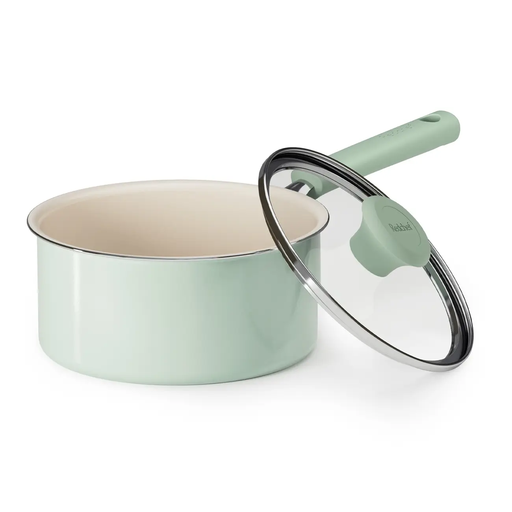
Why This Fits Their Persona: Its 18cm format suits smaller kitchens, single servings and everyday sauces, while compatibility with induction, glass, electric and gas hobs supports renters or households that may move home.
The listing specifies all-hob compatibility and provides care warnings, including avoiding empty-pan overheating and metal utensils.
Ceramic non-stick coating, stay-cool ergonomic handle and included lid.
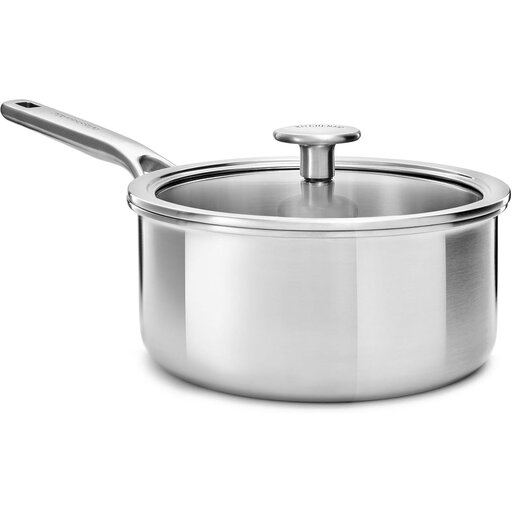
Why This Fits Their Persona: The 3.11-litre capacity is suited to family-style sauces, soups and batch cooking, while the seamless construction supports regular kitchen use.
Its larger capacity avoids relying on a small pan for batch meals, and the product information clearly states oven and dishwasher suitability.
Aluminium core, included lid, oven-safe specification up to 220°C and dishwasher-safe design.

Why This Fits Their Persona: Frequent pasta, vegetable and grain cooking benefits from the integrated straining function, while the 2.8-litre capacity covers more than a single portion.
The listing specifies induction, gas, electric and ceramic compatibility, plus care information for the non-stick surface.
Built-in straining lid, aluminium core, oven suitability up to 200°C and dishwasher-safe specification.
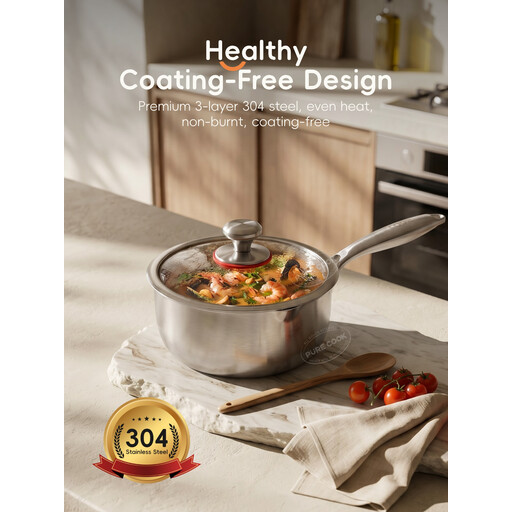
Why This Fits Their Persona: The straight-sided 18cm format is practical for warming milk, preparing small portions and making soft meals, including baby food.
The 304 stainless steel body avoids dependence on a non-stick coating, while the straight-cut rim is designed for smoother pouring.
Glass lid, heat-resistant handle and compatibility with gas, induction and electric ceramic hobs.
A stainless steel option may suit shoppers who want an uncoated cooking surface, while a non-stick saucepan can reduce scrubbing for porridge, sauces and milk-based recipes. For a compact kitchen, compare the available mini sauce pots by size, base construction and lid design before choosing.
We have compiled a complete, real-time list of products that fully satisfy these strict selection criteria and UK safety regulations.
An 18cm saucepan is usually a practical starting point for single servings, sauces, porridge and milk warming. Check the stated capacity rather than relying on diameter alone. A 14cm model may suit one-person cooking, while a 20cm saucepan is more useful for larger portions and batch meals.
No. An induction saucepan needs a suitable magnetic or conductive base. Look for clear compatibility information covering induction. If the listing only mentions gas or electric cooking, confirm suitability before buying.
A non-stick surface is generally designed for easier food release and simpler cleaning, but it needs appropriate utensils and heat control. Stainless steel can tolerate a wider range of utensils, though food residue and mineral marks may require soaking or gentle cleaning. The right choice depends on whether convenience or an uncoated surface is more important for your cooking routine.