
24/7 Customer Support

Free returns

Same-day & Next-day Delivery

Quality Guaranteed

Unlock Your Welcome Offers: FREE Delivery | Up to 80% OFF | Free 30-day JoyPlus trial
Download the APP
A smartwatch can make daily routines easier, whether you want quicker access to messages, route guidance on a run or a simple way to review activity trends. However, product pages often place dozens of features side by side without explaining what matters in everyday UK use.
The main purchasing mistakes usually come from three areas:
Before choosing a fitness smartwatch, compare the functions you will genuinely use rather than paying for specifications that do not match your routine.
Start with your phone. An Apple Watch requires an iPhone for setup and access to its main features. A Samsung Galaxy Watch can connect with Android and may support iPhone compatibility with limitations, so check the current app and feature requirements before ordering.
Many affordable models are advertised as a smartwatch for Android and iPhone. This generally means the companion app supports both systems, but notification replies, health dashboards, voice assistants and music controls may differ.
For calls, distinguish between:
If you regularly leave your phone at home, a cellular model such as the Apple Watch SE 3 or Samsung Galaxy Watch7 may be more suitable, provided your network supports the required service.
A GPS smartwatch with independent positioning can record routes without carrying a phone. This is useful for runners, cyclists, walkers and anyone who exercises outdoors.
Check whether GPS is:
Sports mode counts should also be viewed carefully. A watch with 100 modes may include several activity profiles that record similar basics, such as time, steps, distance and calories. Look for the activities you actually practise and check whether route tracking is available for them.
Battery life is one of the clearest differences between a basic activity tracker and a feature-rich smartwatch. Large AMOLED displays, always-on screens, Bluetooth calls, frequent notifications and GPS can reduce the quoted runtime.
For reference, the supplied product details list:
These figures are not directly comparable because manufacturers use different test conditions. Consider how often you are willing to charge, particularly if you want continuous sleep tracking.
For water protection, IP67 and IP68 ratings are intended for dust and water resistance under defined test conditions. They can be suitable for rain, sweat and handwashing, but an IP rating does not automatically mean the watch is appropriate for swimming. Models with a stated swimproof design or a 5ATM rating provide clearer guidance, but always follow the product instructions and avoid diving or high-velocity water activities unless specifically supported.
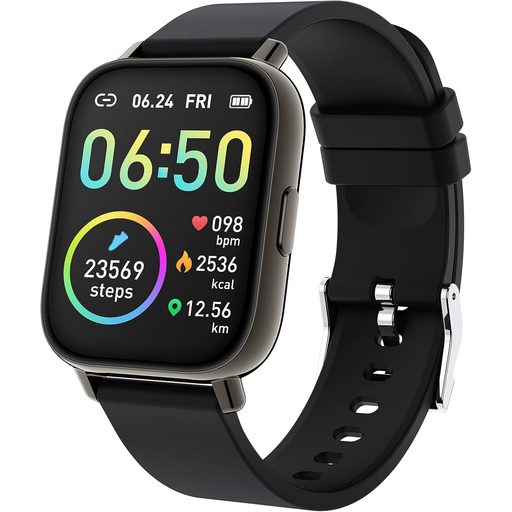
Why This Fits Their Persona: It brings together notifications, step counting, sleep monitoring and 24 sports modes for shoppers seeking a straightforward everyday wearable.
The listed features identify the supported sports modes and notification functions, rather than relying only on broad health-monitoring language.
Includes heart rate, blood oxygen and sleep monitoring, plus IP68 protection and Android/iOS support.
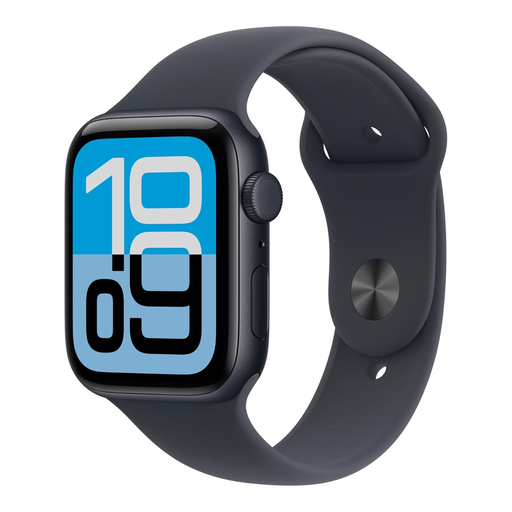
Why This Fits Their Persona: iPhone users wanting integrated notifications, workout tracking, sleep tracking and safety functions in the Apple ecosystem may prefer this option.
Its iPhone requirement is clearly stated, helping buyers avoid purchasing a smartwatch whose main functions will not work with their phone.
Offers GPS + Cellular connectivity, a 44mm Retina display, automatic workout detection and up to 18 hours of stated battery life.
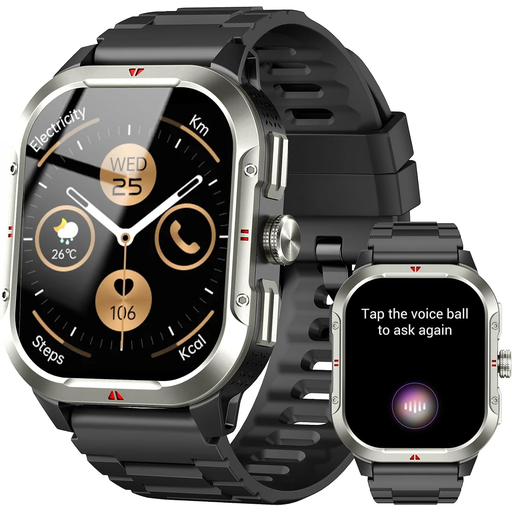
Why This Fits Their Persona: Runners, hikers and outdoor users can benefit from independent GPS and a wide selection of sports modes without carrying a phone for every session.
The product description specifies high-precision GPS and route recording without a smartphone, addressing the limitation of phone-dependent tracking.
Lists more than 110 sports modes, GPS route recording and IP68 dust and water resistance.
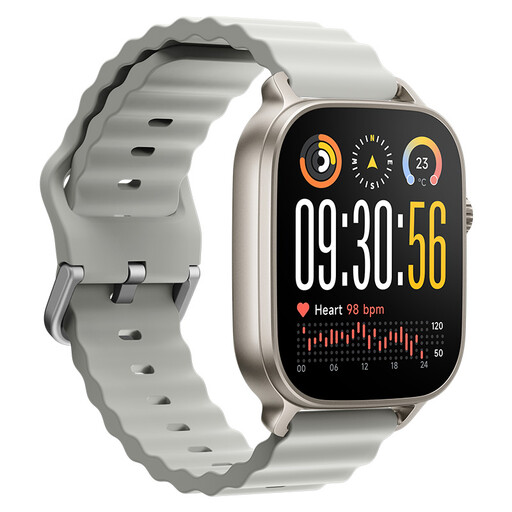
Why This Fits Their Persona: It suits commuters and active users who want a large display, Bluetooth calling, GPS and fewer charging interruptions.
The stated battery capacity, typical-use estimate, GPS type and IP68 rating make it easier to compare practical specifications separately.
Features a 1.97-inch 600-nit AMOLED display, 5-GNSS positioning, Bluetooth 5.3 calling, 108 sports modes and a 460mAh battery.
We have compiled a complete, real-time list of products that fully satisfy these strict selection criteria and UK safety regulations.
Before checkout, confirm the following details:
A gold-plated design such as the Smartwatch G208 - Gold may appeal to shoppers prioritising appearance, Bluetooth calls, notifications and multiple sports modes. Those who prefer a traditional round case and several days of normal use could consider the Smartwatch G87 - Black, while the AOC New T11 offers a smaller 1.47-inch display, Bluetooth 5.3 and more than 100 exercise modes.
Some models support both platforms through a companion app, but the available functions can vary. Check compatibility before purchase, especially for call replies, health features, voice assistants and music controls. Apple Watch models require an iPhone for setup and core functions.
It depends on the model and usage. Basic watches may last several days, while cellular, GPS-heavy and bright-display models may need charging daily or every few days. Always compare normal-use figures rather than standby claims.
Generally, consumer smartwatch sensors provide fitness and wellness information. They should not be used to diagnose a condition or replace advice from a qualified healthcare professional. Follow the product safety guidance and consult a clinician about health concerns.