Occasional backrest spill cleaner
You want to tackle isolated marks on a chair or sofa backrest, and the furniture’s care instructions permit wet cleaning.


For an occasional mark on a fabric backrest, consider a compact spot cleaner with an upholstery tool; for several seats or recurring messes, consider tank capacity, reach and separate cleaning tools. Check the furniture maker’s care instructions first: a cleaner marketed for upholstery is suitable only if those instructions permit wet cleaning of your particular fabric.
You want to tackle isolated marks on a chair or sofa backrest, and the furniture’s care instructions permit wet cleaning.
You regularly clean suitable upholstery after food, muddy marks or pet messes and want tools you can keep separate for different tasks.
You expect to clean several suitable fabric backrests or other soft furnishings in one session, so tank emptying and hose reach matter more to you.
Start with the fabric-care label, then match the tools, storage size and tank capacity to the amount of upholstery you expect to clean. Sofa.com advises following the sewn-in label for the specific fabric; the cleaner’s own upholstery claim cannot replace that check.
| Concern | What to check | Who this matters to |
|---|---|---|
| Fabric compatibility | Check the furniture’s care instructions for permission to wet-clean, then check the cleaner and solution instructions. | If I am unsure how my backrest responds to moisture, avoiding an unsuitable cleaning method comes before choosing a machine. Around 33% of consumers would put fabric compatibility first. |
| Recurring messes | Look for an included upholstery tool and a separate tool for messier tasks; check the solution requirements. | When food marks or pet messes keep recurring, I want to avoid using a soiled attachment for routine upholstery cleaning. Roughly 27% of consumers would make recurring-mess handling their primary concern. |
| Storage and carrying | Compare the machine’s dimensions, weight and how its tools are stored. | For an occasional spill, I need a cleaner I can retrieve and put away without difficulty. Around 20% of consumers would prioritise storage and carrying. |
| Capacity and reach | Compare clean- and dirty-water tanks separately, as well as hose length and tool width. | If I plan to clean several suitable backrests in one session, frequent stops to refill or empty a tank matter to me. About 20% of consumers would put capacity and reach first. |
A spot cleaner uses moisture, but upholstery fabrics have different care requirements. Sofa.com directs owners to the sewn-in label for fabric-specific guidance.
Follow the furniture maker’s instructions. If they do not permit wet cleaning, do not use a water-extraction cleaner just because its packaging mentions upholstery.
A claim about cleaning performance does not tell you whether a tool fits narrow sections or whether your backrest tolerates wet cleaning. SharkNinja’s stated 20x claim is a laboratory comparison involving its own formula, not a comparison across all brands.
Check the included upholstery tool, clean- and dirty-water capacities, hose reach, weight and solution instructions against your planned use.
A tool used for a pet mess can carry debris into the next cleaning task. VAX supplies separate Everyday and Messy Clean Up tools with its SpotWash Duo.
Keep tools separate for those tasks where possible, or clean the attachment thoroughly before using it on routine upholstery.
The solution’s label may contain handling and storage precautions. The Health and Safety Executive explains that safety data sheets describe chemical hazards and handling measures.
Check which solution the machine calls for, and read its label before storing or using it in your household.
Allow for replenishing cleaning solution during ownership.
Its SpotWash range includes compact upholstery-oriented models and larger-capacity Max Pet-Design variants.
Its SpotClean line includes the SpotClean Pro 1558E, identified by BISSELL UK as a model for this market.
The StainStriker line includes the pet-oriented PX200UKT, marketed by SharkNinja for upholstery.
These spot cleaners offer choices for isolated backrest marks, separate-tool cleaning and different stated tank sizes. Use any wet-cleaning model only where the backrest’s own care instructions allow it.
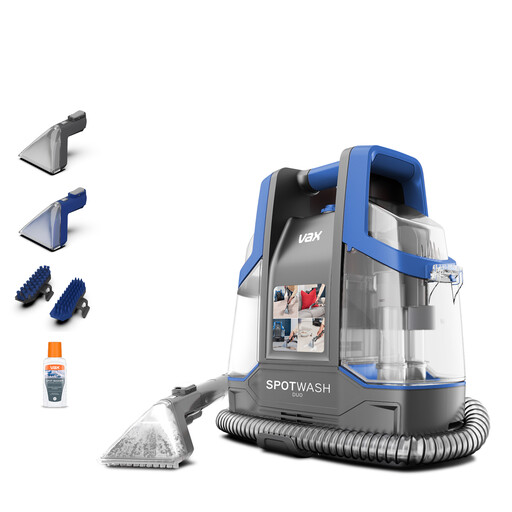 No image available
Consider this for suitable backrests when you want to keep routine upholstery cleaning separate from messier tasks. VAX describes separate Everyday and Messy Clean Up tools and an attachment for sofas and upholstery; check the furniture’s wet-cleaning instructions before use.
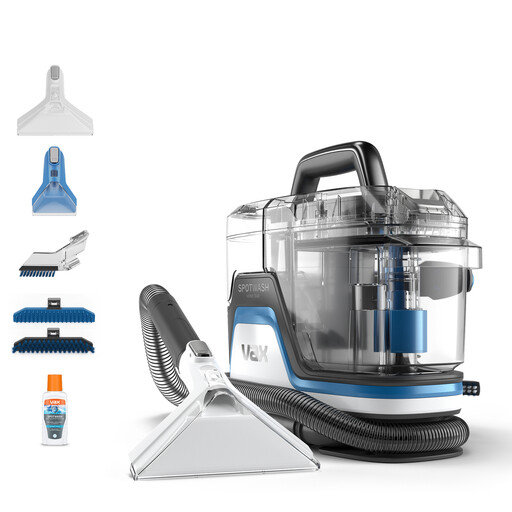 No image available
Consider this for suitable upholstery with broad areas and awkward edges. VAX describes an extra-wide wash tool and a crevice tool for the Home Duo. Confirm that your backrest permits wet cleaning before choosing either tool.
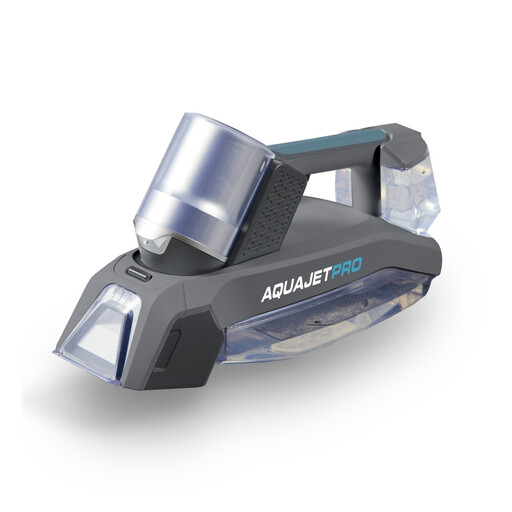 No image available
Consider this cordless model for an isolated mark on a backrest approved for wet cleaning. Its stated 0.3 L clean tank, 0.4 L dirty tank, 80 W motor and rotating brush bar are worth weighing against the amount of upholstery you plan to clean.
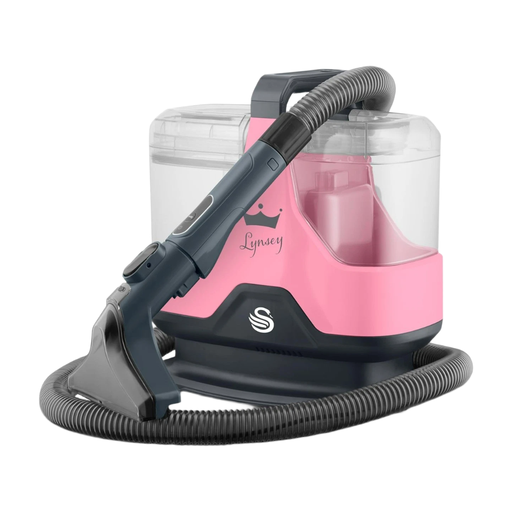 No image available
Consider this for suitable upholstery if a flexible hose and interchangeable heads fit your cleaning tasks. The product name specifies a 600 W machine with an auto-stopping function; check its carrying and storage fit if those are important to you.
No. Follow the furniture maker’s sewn-in care label or written instructions for that fabric. Sofa.com directs owners to the label for fabric-specific care; a cleaner’s upholstery claim does not override it.
Blot liquid with a clean, dry cloth rather than rubbing it in. Use a wet-cleaning method afterwards only if the backrest’s care instructions permit it.
Not necessarily: an upholstery-capable model may meet your needs for ordinary spills on wet-cleanable fabric. Consider separate messy-clean-up or pet tools if you expect recurring pet messes, and clean attachments before returning to routine upholstery work.
Read and follow the label’s hazard and precautionary information, as well as the machine and furniture-care instructions. The Health and Safety Executive explains that chemical safety information covers handling, storage and emergency measures.
Compare clean- and dirty-water capacities before buying, and empty the dirty tank as instructed during use. BISSELL notes that a full dirty tank can change the machine’s sound and reduce suction; a larger tank can reduce emptying stops but cannot eliminate them.