Regular batch bakers
If you make several trays of cinnamon buns or bake them often, compare your complete recipe weight with the machine's stated dough limit. Check the supplied dough tool as well as the bowl configuration.


Choose a stand mixer by checking its stated dough limit against the weight of your complete cinnamon bun recipe, then confirm that it has a suitable dough tool and fits your kitchen. A larger machine may suit frequent batches, while a smaller one may suit occasional baking if its dough guidance covers your recipe; bowl volume and motor wattage do not replace a dough limit.
If you make several trays of cinnamon buns or bake them often, compare your complete recipe weight with the machine's stated dough limit. Check the supplied dough tool as well as the bowl configuration.
A smaller mixer may be easier to keep accessible between occasional bakes. Its size still needs to be weighed against the exact model's dough guidance and your recipe quantity.
If the mixer will also be used for cakes or whisking, compare the included tools and bowl arrangement. Check accessory compatibility separately rather than assuming every attachment fits every model.
Start with the dough quantity you actually make. Once a mixer can accommodate that recipe, consider whether its size and other uses justify the space it occupies.
| Concern | What to check | Who this matters to |
|---|---|---|
| Dough suitability | Compare the complete recipe weight with the exact model's stated dough or yeast-dough limit, and check its dough tool. | If I regularly make more than one tray, I need a stated limit that covers the whole batch rather than a bowl size alone; around 45% of consumers put dough suitability first. |
| Space and handling | Measure the storage space and worktop, allowing room to access the bowl; consider the machine's weight. | When I bake buns occasionally, I need a mixer I can keep or retrieve without it taking over the kitchen; roughly 33% of consumers prioritise space and handling. |
| Other baking uses | Check which mixing tools are included and which accessories fit the exact model. | If I also make cakes or whisk mixtures, I want the supplied tools to cover those jobs once my bun recipe is accommodated; about 22% of consumers place other baking uses first. |
Litres describe bowl volume, not the weight of dough a machine is rated to mix. Bosch states a 3.9 L bowl and an up-to-1.9 kg yeast-dough limit for the MUM5XW49GB as separate specifications.
Weigh the complete cinnamon bun recipe, including its added ingredients, and compare it with the guidance for the exact mixer.
A power rating does not tell you the stated dough limit or which tools come with the mixer. Which? also identifies mixing time and ease of use as practical differences between stand mixers.
Check dough guidance, the supplied hook and how you will access and clean the bowl alongside the power rating.
A machine chosen for bigger batches also has to fit where it will be used or stored. Kenwood lists its Titanium Chef Baker XL KVL85.004SI at 11.5 kg.
Measure the intended space and allow clearance to add ingredients and remove the bowl.
Kenwood's range includes smaller stand mixers and larger Chef models. For frequent batches, its Titanium Chef Baker XL KVL85.004SI provides a manufacturer-stated 2.56 kg dough capacity.
Bosch's MUM5XW49GB is a mid-size option with a 3.9 L bowl and a manufacturer-stated limit of up to 1.9 kg of yeast dough.
KitchenAid offers tilt-head and bowl-lift mixers. It describes the 5KSM70JPX bowl-lift model as intended for heavy, regular use and lists a 6.6 L bowl with a spiral dough hook.
These stand mixers offer different sizes and configurations to consider for cinnamon bun dough. Check each exact model's dough guidance against your complete recipe before choosing.
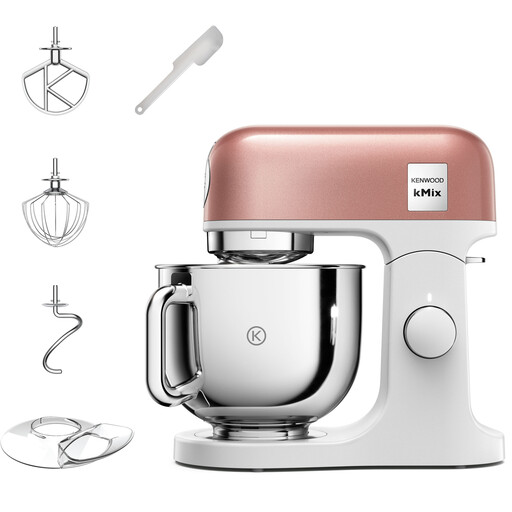 No image available
Consider this model for cinnamon bun batches only after checking its dough guidance against your complete recipe. Confirm the supplied dough tool and the space needed to access the bowl.
 No image available
If kitchen space matters, consider this model once you have checked its dimensions and dough guidance for your recipe. Its product name specifies a 4.3 L bowl, 1,000 W and three bowl tools; confirm which tools are included and how the dough limit is defined.
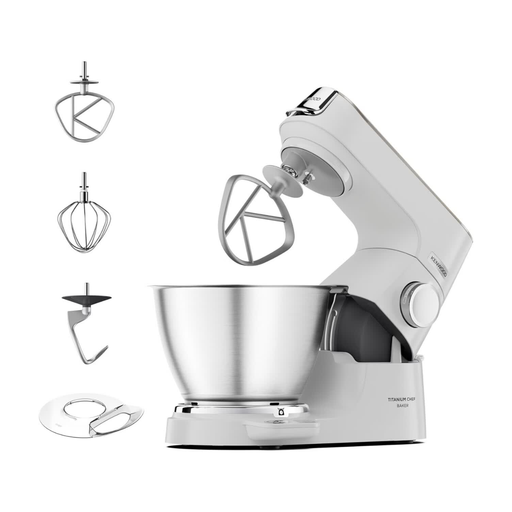 No image available
Consider this model if you want to compare a Chef Baker with smaller mixers for your baking routine. Check its exact dough guidance, supplied tools and dimensions before deciding whether it accommodates your cinnamon bun recipe and kitchen.
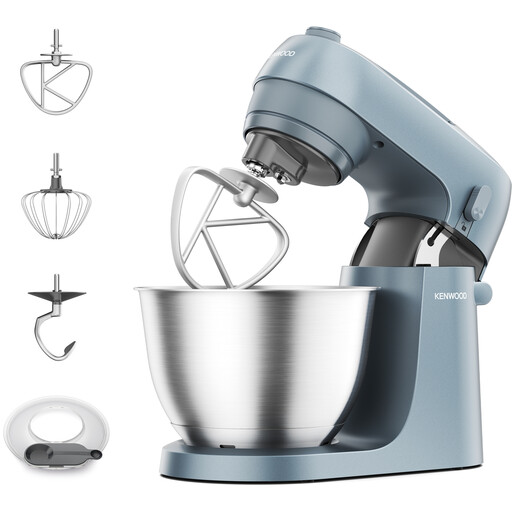 No image available
For occasional buns in a space-conscious kitchen, check whether this model's dimensions work for you. Confirm its dough limit and supplied tool against your complete recipe before relying on it for kneading.
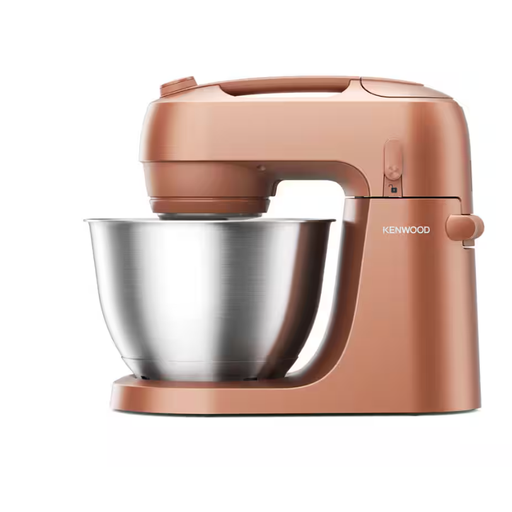 No image available
If storage space shapes your choice, check this model's measurements against your cupboard and worktop. Confirm the exact dough guidance and supplied tool before deciding whether it suits your cinnamon bun batches.
Compare the weight of your complete recipe with the exact model's stated dough or yeast-dough limit. For instance, Bosch specifies up to 1.9 kg of yeast dough for the MUM5XW49GB separately from its 3.9 L bowl volume; litres alone are not a dough-weight limit.
No: bowl-lift format alone does not establish whether a mixer suits your batch. KitchenAid describes its 5KSM70JPX as intended for heavy, regular use and supplies a spiral dough hook, but you should still check its guidance against your recipe quantity.
Do not assume so. Follow the use-and-care instructions for the exact mixer and each supplied tool, particularly when comparing different finishes or accessory bundles.
Yes. The Food Standards Agency's guidance covers materials and articles expected to contact food, which makes the bowl and food-contact tools relevant when checking a mixer's product documentation. Do not infer a particular material or coating from the mixer's appearance.
Check the mixer's product identity, safety instructions and information for the market in which it will be used. The Office for Product Safety & Standards explains that the Electrical Equipment (Safety) Regulations 2016 set requirements for electrical equipment placed on the Great Britain market; if the mixer is destined for Northern Ireland, confirm the applicable information for that market rather than assuming the Great Britain guidance is identical.