Frequent linen-table setter
If you press several napkins before meals or events, sustained steam, a practical tank size and a stable ironing surface matter more than a boost figure on its own.


For linen napkins, choose a steam generator around the size of your usual pressing batch and the other fabrics you iron, rather than its maximum steam boost alone. Frequent, heavily creased batches make continuous steam and boost worth comparing; mixed loads may make automatic controls more useful, while longer sessions put tank capacity and descaling higher on the list. Check the napkins’ care labels and whether your ironing surface can accommodate the generator base.
If you press several napkins before meals or events, sustained steam, a practical tank size and a stable ironing surface matter more than a boost figure on its own.
If napkins share an ironing session with other textiles, automatic steam or temperature controls may reduce setting changes. Every item still needs to be suitable for ironing.
If limescale is a concern at home, look closely at the exact model’s scale-removal procedure. Tefal’s anti-scale guidance notes that limescale can reduce steam generation and stain fabric.
Begin with the number and condition of the napkins you usually press, then weigh refill interruptions, other ironable fabrics and the cleaning routine you can accommodate.
| Concern | What to check | Who this matters to |
|---|---|---|
| Steam for stubborn creases | Compare continuous steam in g/min for sustained work and the separate boost figure for pronounced folds. Neither figure guarantees a particular finish. | When I press a batch of creased linen napkins, I want to deal with fold lines without repeatedly going over each one; around 33% of consumers put crease removal first. |
| Tank capacity | Check capacity, how the tank is filled and whether the base fits your ironing setup. A larger tank does not itself mean stronger steam. | For a long run of place settings, I would rather keep pressing than stop to refill; fewer interruptions are the main concern for roughly 27% of consumers. |
| Mixed-fabric controls | Confirm what automatic steam or temperature control does on the exact model, and check each item’s care label and trim. | If I iron napkins alongside other textiles, changing settings less often would make the session simpler; about 20% of consumers prioritise that convenience. |
| Descaling | Check the model’s cleaning steps, expected maintenance schedule and any required consumables. A scale collector still needs attention. | Where limescale is a concern, I want a cleaning routine I can follow so it does not disrupt pressing; maintenance is the primary concern for around 20% of consumers. |
A boost addresses individual stubborn folds, but a batch also calls for sustained steam and a workable refill routine. A stated output is not a promise of the same result on every napkin.
Compare continuous steam, boost and tank capacity on the exact model, then consider how often you press large batches.
Claims about avoiding burns apply to ironable fabrics; embroidery, trims and finishes may need different handling.
Read each napkin’s care label and, where appropriate, test an inconspicuous area before pressing decorative details.
Tefal’s anti-scale guidance identifies reduced steam and fabric staining as possible effects of limescale. A collector or cleaning programme does not replace the model’s maintenance instructions.
Check how descaling works, when it is required and whether the procedure needs any consumables.
An unfamiliar plug, unclear instructions or missing manufacturer details should prompt a closer look before purchasing an appliance for UK use.
Electrical Safety First advises checking for a UK three-pin plug and fuse. Check the seller, product marking and manufacturer details, and inspect the plug and cable during use.
Relevant if you are comparing stated steam output and a removable scale collector for repeated linen pressing.
Relevant to mixed ironing loads where fewer manual steam and temperature changes would be useful.
Relevant if tank capacity, handling and a dedicated cleaning system are priorities during frequent sessions.
These steam generators offer different points to consider for linen-napkin batches, including stated tank size, controls and the space needed for a separate base. Check the exact model’s instructions before relying on a fabric or cleaning feature.
 Image unavailable
For repeated napkin batches, consider this model if tank size is a priority. Its stated capacity is 1.8 L and its power rating is 2800 W; wattage alone does not establish how it will handle creases.
Check its scale-cleaning instructions, each napkin’s care label, and the plug and product marking for UK use.
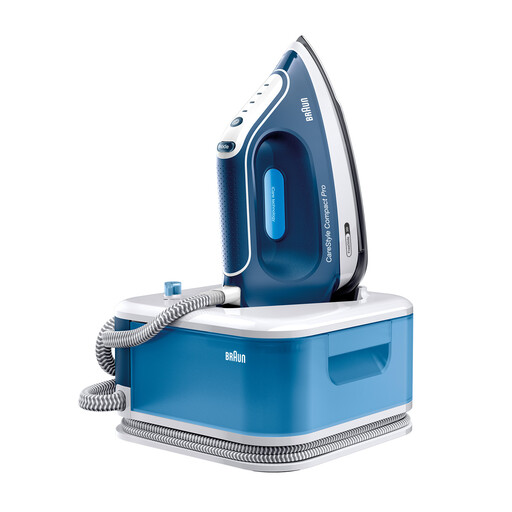 Image unavailable
For longer pressing sessions, compare its stated 1.5 L tank with the number of napkins you normally prepare. The model is also listed with 7.5 bar pressure, FreeGlide 3D and iCare technology; pressure alone does not establish the finish you will achieve.
Check the descaling instructions, napkin care labels, and the plug and product marking for UK use.
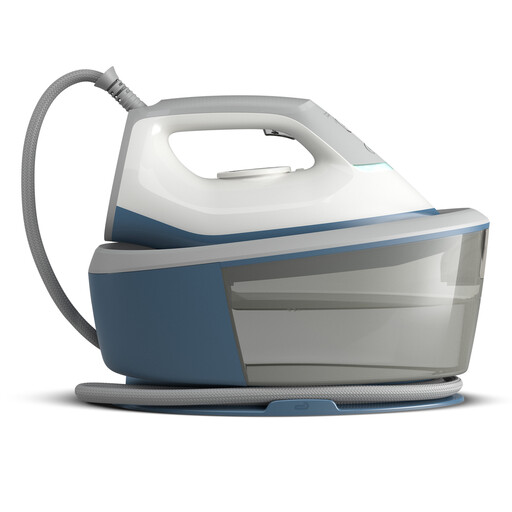 Image unavailable
For linen napkins, consider this model if selecting a setting for the fabric fits your routine; do not assume it has automatic no-setting operation. Its stated power rating is 2400 W, which by itself does not indicate crease-removal performance.
Check the applicable temperature setting, descaling steps, napkin care label, and the plug and product marking for UK use.
No. The Laundress advises ironing linen while it is still damp to make the task easier. Follow the napkin’s care label, particularly if it has a dyed finish or decorative details.
Not necessarily: the case for sustained steam is stronger when you regularly press larger or more heavily creased batches. For occasional napkins, compare how much ironing you actually do with the generator’s tank size, base footprint and maintenance routine rather than choosing by pressure alone.
Check the seller’s identity, product marking, instructions and manufacturer details. Electrical Safety First also advises checking for a UK three-pin plug and fuse, registering the appliance and inspecting its plug and cable regularly.
No. Tefal notes that limescale can reduce steam generation and stain fabric. Follow the cleaning procedure for the exact model, including any instructions for emptying its collector or running a descaling cycle.