
24/7 Customer Support

Free returns

Same-day & Next-day Delivery

Quality Guaranteed

Unlock Your Welcome Offers: FREE Delivery | Up to 80% OFF | Free 30-day JoyPlus trial
Download the APP
Buying a treadmill for home can make regular walking or running more convenient, but the wrong model may end up taking up valuable floor space, disturbing neighbours or limiting your workouts. Product pages often focus on motor wattage, app features and maximum speed while giving less attention to the details that affect everyday use.
Before choosing a treadmill, watch for these common buying pitfalls:
For walking, a walking pad treadmill with a running surface around 40 x 100 cm may be suitable for a compact home office routine. However, taller users, joggers and runners usually benefit from a longer and wider deck that allows more natural foot placement.
Measure both the treadmill and its storage location. Check:
A folding treadmill can reduce its storage footprint, but folding mechanisms vary. Confirm whether the unit folds vertically, flat or only at the handlebar.
A treadmill for walking and running should match your intended pace rather than simply offering the highest stated speed. Models capped at 6 km/h are generally aimed at walking, while a 10–12 km/h range gives more flexibility for brisk walking and jogging.
Incline can increase workout intensity, but compare the adjustment method carefully:
Maximum user weight is an important safety and durability consideration. Avoid choosing a machine where the user’s weight is close to the stated limit; allow reasonable margin for movement and clothing. A high-capacity treadmill may be more appropriate for heavier users or households where several people will share the machine.
Cushioning systems also vary. Look for clear information about the running belt, deck and shock-absorbing components rather than relying on vague terms such as “joint-friendly”. Cushioning can affect comfort, but it does not replace suitable footwear, sensible progression or safe operation.
For a quiet treadmill, manufacturer-listed figures such as below 45 dB can provide a useful comparison point. Nevertheless, place the machine on a stable, level surface and consider a protective mat to reduce vibration through hard floors. In flats, schedule faster sessions at considerate times and check the building’s noise policy.
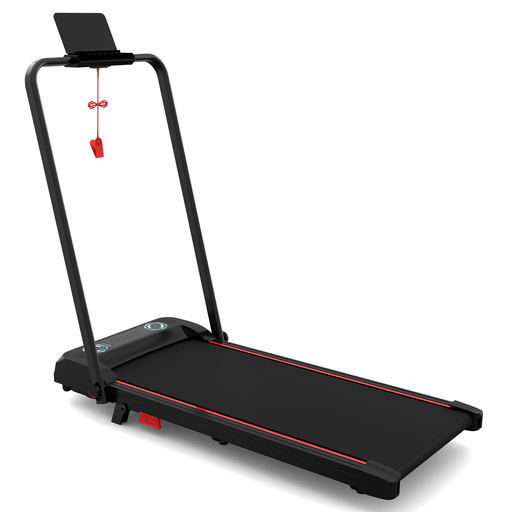
Why This Fits Their Persona: A practical option for beginners who want walking, jogging and occasional incline sessions without a complicated setup. Its foldable design and transport wheels suit many UK flats and rooms with limited space.
The listing specifies a 1–10 km/h range, 0–6% manual incline and below-45 dB operation, making the core functions clearer than relying on a headline motor claim alone.
Three usage modes, a cushioned non-slip belt, remote control, phone holder and stated 120 kg maximum load.
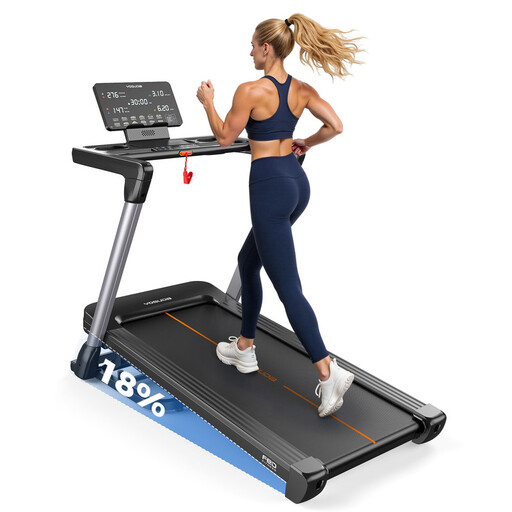
Why This Fits Their Persona: Suits users who want a more substantial treadmill for planned running sessions, incline training and shared household use.
The specification separates its automatic incline, motor type, cushioning system and load rating, helping buyers compare meaningful features rather than a single headline figure.
Automatic incline up to 18%, 3.0 HP brushless motor, four-way cushioning and stated maximum load of 172 kg.
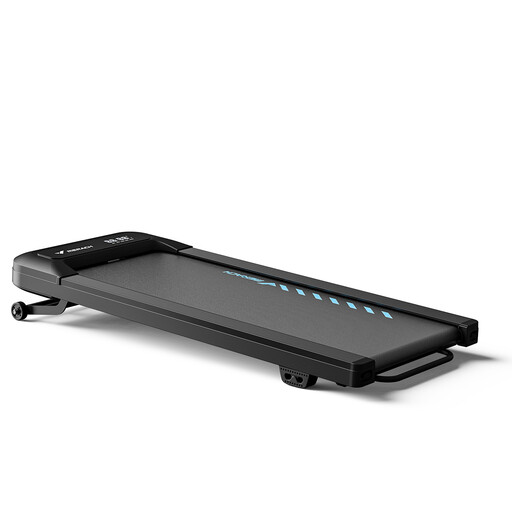
Why This Fits Their Persona: Designed for home-office workers and users with a small footprint who prioritise low-speed walking, app tracking and easy storage.
Its 1–6 km/h range makes its walking-pad purpose clear, while the automatic incline and remote control avoid the inconvenience of manual deck adjustment.
9% automatic incline, under-45 dB listed noise level, transport wheels, no assembly and compatibility with the MERACH app.
We have compiled a complete, real-time list of products that fully satisfy these strict selection criteria and UK safety regulations.
Running cost depends mainly on the machine’s power draw, workout duration and electricity tariff. A simple estimate is:
Power in kilowatts × hours used × electricity price per kWh
A 1,400W motor is rated at 1.4 kW, although actual consumption varies with speed, user weight and incline. Check the product manual or specification sheet for more precise information. Folding the treadmill away after use does not necessarily disconnect it, so unplug it during extended periods when appropriate.
Lifespan depends on frequency of use, user load, belt quality, storage conditions and maintenance. Keep the running deck clean, inspect belt alignment and lubricate it according to the manual. Do not exceed the stated maximum capacity, and stop using the machine if the belt, power cord or safety key shows damage.
Usually, but the floor must be level and strong enough for the equipment and user. Consider the treadmill’s weight, vibration, transport route and available clearance. A compact treadmill or walking pad treadmill may be easier to position, while a heavier running model may require more careful planning. Always use the supplied safety key, keep children and pets away during operation, and follow the manufacturer’s instructions before starting a session.