
24/7 Customer Support

Free returns

Same-day & Next-day Delivery

Quality Guaranteed

Unlock Your Welcome Offers: FREE Delivery | Up to 80% OFF | Free 30-day JoyPlus trial
Download the APP
From a simple Victoria sponge to a hearty Sunday roast, the right bakeware can make all the difference. Yet, choosing new pieces for your kitchen can feel like navigating a minefield of marketing claims. Many of us have been disappointed by a non-stick baking tray that starts to peel after a month, or a roasting pan that warps and buckles in a hot oven.
As the Joybuy Product Recommendation Officer, my role is to help you see past the hype. Before you invest in new kitchen essentials, it's worth understanding the common pitfalls that lead to buyer's remorse.
glass baking dish that claims to be 'oven-safe' can sometimes hide a crucial weakness. If it's not made from the right type of glass, moving it between temperature extremes—like from the fridge to a preheated oven—can cause it to crack or even shatter.By understanding what to look for, you can equip your kitchen with reliable, long-lasting bakeware that delivers consistent results for years to come.
Instead of focusing on brand names, let's break down the core features that determine performance and durability. Paying attention to these three areas will help you select pieces that are genuinely fit for purpose.
The material of your bakeware is the single most important factor. Each has distinct properties suited to different tasks.
cake tins, loaf tin pans and non-stick baking trays where a uniform golden-brown finish is desired. Look for heavier-gauge carbon steel bakeware, as it is more resistant to warping.oven dishes and a versatile casserole dish, borosilicate glass is an excellent choice. Its key advantage is high resistance to thermal shock. It's also non-reactive, meaning it won't impart any flavour to acidic ingredients like tomatoes or citrus. The transparency allows you to monitor cooking from all angles.A good non-stick surface makes for effortless food release and quick cleaning. However, durability is key. Look for pans that specify a double-layer or reinforced coating, as these are generally more robust. Many modern coatings are also made without PFOA, PTFE or BPA, which is often noted in the product description. To preserve any non-stick surface, it is always advisable to avoid metal utensils and harsh scouring pads, opting for silicone or wood tools and gentle cleaning instead.
Beyond the material, small design features can significantly improve your cooking experience.
cake tins with a removable or loose base. This allows you to release delicate sponges without having to tip them upside down. Springform pans with a side buckle are essential for cheesecakes.roasting tray might feature a pouring lip for easily draining off fats or juices to make gravy. Deeper sides prevent spills and help to keep meat moist.ramekins are perfect for everything from individual crème br?lées and soufflés to serving dips and condiments. Their oven-to-table nature makes them both practical and presentable.To help you match the right product to your needs, we've identified a few items that align with common baking profiles.
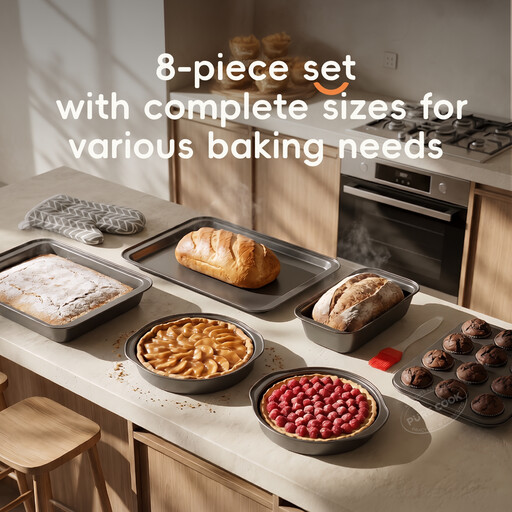
Why This Fits Their Persona: For anyone starting their baking journey, this set provides exceptional value. It covers a wide range of baking needs—from square cakes and brownies to small trays—without requiring a large initial investment. It's a complete starter kit in one box.
The non-stick coating is designed for easy release, which helps build confidence for beginners. By following the care instructions (avoiding metal utensils), you can sidestep the common pitfall of a quickly degrading non-stick surface.
The carbon steel construction ensures even heat conductivity for consistent bakes. The sheer versatility of an 8-piece set means you are equipped for multiple recipes from day one.
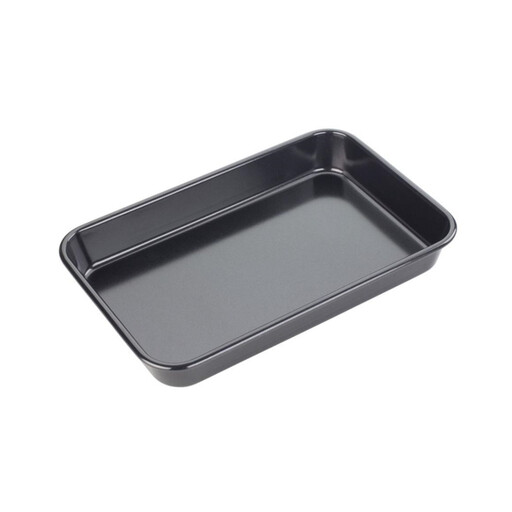
Why This Fits Their Persona: This is for the home cook who takes their roasts seriously. It's a robust, purpose-built tool designed for performance and longevity, rather than a flimsy, all-purpose tray. The 10-year guarantee reflects its durable construction.
Made from robust, 1mm+ heavy-weight carbon steel, this roaster is engineered to resist warping at high oven temperatures. This directly counters the common pitfall of flimsy pans buckling under heat.
The clever pouring lip simplifies making gravy by allowing you to drain juices easily. Its advanced Whitford Eclipse double-layer non-stick coating is durable enough for use with metal utensils.
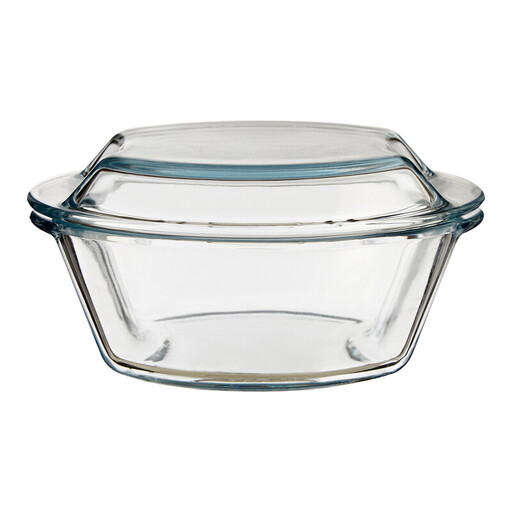
Why This Fits Their Persona: This set is for the practical home cook who values versatility and efficiency. It's perfect for preparing meals that can be baked, served and stored in the same dish, streamlining the entire cooking process from oven to table to fridge.
Crafted from premium borosilicate glass, these dishes are highly resistant to thermal shock. This means they can safely go from the freezer or fridge directly into a preheated oven, eliminating the risk of shattering.
The clear glass allows you to monitor cooking without lifting the lid, locking in moisture and flavour. The set of three sizes with lids offers great versatility for different recipes and household numbers.
We have compiled a complete, real-time list of products that fully satisfy these strict selection criteria and UK safety regulations.
The lifespan of bakeware depends heavily on the material and how it's cared for. A heavy-gauge carbon steel or cast iron pan can last for decades if maintained properly. Good quality non-stick items with multi-layer coatings may last for several years with correct use (avoiding high heat and metal utensils). Borosilicate glass and ceramic dishes are also very long-lasting, provided they are protected from sudden drops or extreme thermal shock.
As a general rule, you should avoid using metal utensils on any non-stick surface. While some premium coatings claim to be metal-utensil safe, using wood, silicone or nylon tools is the most reliable way to prevent scratches and prolong the life of the non-stick coating. Scratches can compromise the pan's performance and cause the coating to degrade faster.
This depends entirely on the type of glass. If your dish is made from borosilicate glass, it is specifically designed to withstand thermal shock and can typically go from the fridge to a preheated oven. However, if it is made from standard soda-lime glass, such a sudden temperature change can cause it to crack or shatter. Always check the manufacturer's instructions for your specific dish.