
24/7 Customer Support

Free returns

Same-day & Next-day Delivery

Quality Guaranteed

Unlock Your Welcome Offers: FREE Delivery | Up to 80% OFF | Free 30-day JoyPlus trial
Download the APP
As a cat owner, navigating the aisles of cat food can feel overwhelming. With countless brands, formulas and marketing claims, it’s difficult to know if you’re making the right choice for your feline companion. Many of us have bought food that our cats turned their noses up at, or worse, paid a premium for features that offered little real benefit.
As the Joybuy Product Recommendation Officer, my role is to help you see past the marketing clutter. Let's look at some common pitfalls UK cat owners face and how to choose a food that truly meets your cat's needs and your budget.
The "With Chicken" Label Illusion: When you see a pouch labelled "with chicken," you might assume it's packed with poultry. However, UK food labelling regulations only require the named ingredient to make up 4% of the total product. The rest is often composed of unspecified "meat and animal derivatives." This isn't necessarily bad, but it's a trap for those seeking high-meat content without carefully reading the composition list.
The "Grain-Free" Halo Effect: The market is saturated with grain-free cat food, often presented as a universally superior option. While essential for cats with specific grain allergies or sensitivities, it's not a mandatory requirement for every cat. Many felines digest high-quality grains perfectly well. Don't feel pressured into paying more for a grain-free diet unless your vet has recommended it or you've noticed it benefits your cat's digestion.
The Ambiguity of "Natural": The term "natural" sounds reassuring, but it lacks a strict legal definition in pet food. It generally means the food is free from artificial colours, flavours or preservatives. However, it doesn't guarantee the quality of the core ingredients. A natural cat food can still be low in high-quality protein, so it's vital to look beyond this single word.
Instead of getting swayed by front-of-pack claims, focus on these three key factors to make an informed decision.
This is the single most important distinction to understand.
wet cat food or dry cat food, contains all the necessary nutrients, vitamins and minerals for your cat's daily health. It can be fed as their sole diet.cat treats and some specialised food toppers. They are not nutritionally complete and should only be given as a small part of a balanced diet. Feeding only complementary food can lead to serious nutritional deficiencies.The ingredients list is your most powerful tool. Ingredients are listed in order of weight, so you want to see high-quality, named protein sources at the top.
Wet cat food pouches typically have around 80% moisture, which is excellent for keeping your cat hydrated. Dry food has a much lower moisture content.A cat's nutritional needs change dramatically throughout its life.
kitten food is higher in protein, fat and specific nutrients like DHA to support brain and eye development.Senior cat food (for ages 7+) is often lower in calories to prevent weight gain and may contain added nutrients like glucosamine for joint support and extra vitamins to bolster their immune system.To help you apply this knowledge, here are a few options from our catalogue, matched to different owner profiles and needs.

Why This Fits Their Persona: This owner needs a reliable, complete food that won't break the bank. They buy in bulk to ensure they always have meals on hand and appreciate the variety that keeps their cat from getting bored.
It provides a straightforward, cost-effective and complete meal. While it uses the "With X" 4% meat claim, it doesn't pretend to be a high-meat boutique brand, offering honest value for a daily diet.
Excellent value in a large 40-pouch cat food multipack. The mixed selection of four flavours (White Fish, Salmon, Chicken, Lamb) helps prevent palate fatigue.
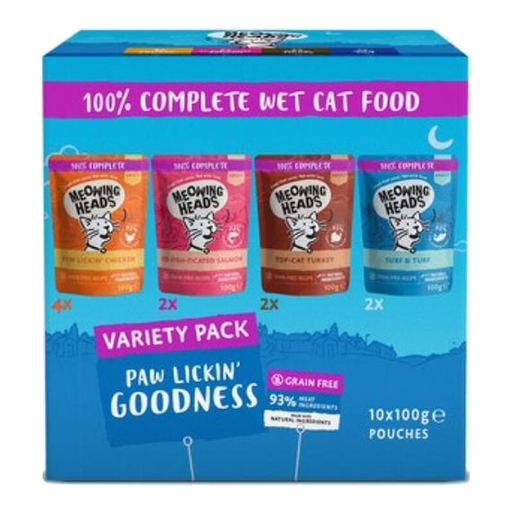
Why This Fits Their Persona: This owner prioritises high meat content and clean ingredients. They are willing to invest more in their cat's diet for a grain-free, natural recipe that closely mimics a cat's ancestral diet.
It completely bypasses the "4% meat" trap by boasting an impressive 93% real meat and fish content. It also delivers on the "natural" promise by being a genuinely grain-free cat food with no artificial additives.
Exceptionally high, named protein sources (chicken, beef, salmon, tuna) and a slow-cooked preparation method. The variety pack prevents mealtime boredom.
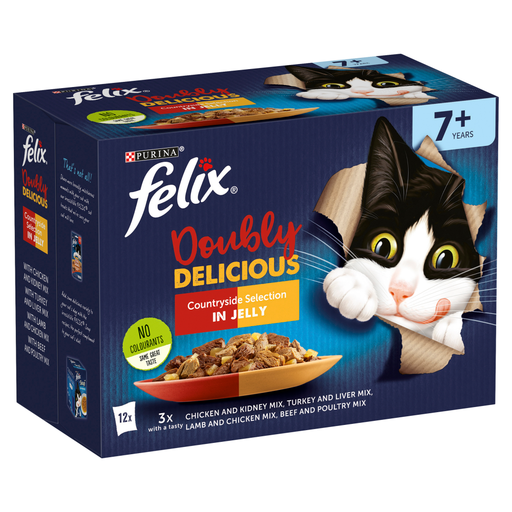
Why This Fits Their Persona: This owner is attentive to the changing needs of their ageing cat. They are looking for a diet specifically formulated to support the health and vitality of a senior feline (7+ years).
It avoids the "one-size-fits-all" trap by being a targeted senior cat food. The formula is specifically adjusted to meet the nutritional needs of older cats, which differ from those of kittens or younger adults.
Enriched with Vitamins A & E to support natural defences in ageing cats. The tender, dual-flavour meat chunks in jelly are easy for older cats to eat and highly palatable.
We have compiled a complete, real-time list of products that fully satisfy these strict selection criteria and UK safety regulations.
The amount varies depending on your cat's weight, age and activity level. A typical 4kg adult cat usually needs around 3-4 pouches (85g each) per day, split into at least two meals. However, always check the feeding guide on the packaging, as calorie content differs between brands. Adjust the amount to maintain a lean, healthy body condition.
Both have their benefits, and many owners choose to feed a mix of the two.
To avoid digestive upset, you should transition your cat to a new food gradually. Start by mixing a small amount of the new food (around 25%) with their old food (75%). Over the next 7-10 days, slowly increase the proportion of the new food while decreasing the old until you are feeding 100% of the new diet.