Batch cooks keeping their existing pans
If you make several portions in one casserole or sauté pan, establish whether its base works on induction and suits the intended cooking zone before changing hob type.


A standard four-zone induction hob is a sensible starting point if you make batch risotto in a conventional induction-compatible pan and use ordinary saucepans for stock or sides. Consider flex or bridge zones when a wider pan or more adaptable placement matters. In either case, check the pan base, worktop opening and electrical connection before choosing a model.
If you make several portions in one casserole or sauté pan, establish whether its base works on induction and suits the intended cooking zone before changing hob type.
If stock, mushrooms or sides cook alongside the risotto, consider how the pans occupy the hob together. A bridge or flex area is most relevant when a pan is unusually wide or its placement is awkward on fixed zones.
Match the exact model to the existing worktop opening and electrical arrangement. A nominal 60 cm width alone does not establish that a new hob will fit or connect in the same way.
Start with the pans you will use, then consider heat controls and how many pans need space at once. Check the installation requirements of the exact model before ordering.
| Concern | What to check | Who this matters to |
|---|---|---|
| Pan and zone fit | Check the pan base with a magnet or induction symbol, then compare its diameter with the model’s zone guidance. Which? advises that the pan base should be about the size of its cooking zone. | If I want to keep my batch-cooking pan, I need it to activate on the zone I plan to use. Around 36% of consumers put pan and zone fit first. |
| Heat control | Look at how power settings are selected while stirring and whether the controls suit the changes between sautéing and lower-heat cooking. | When I move from cooking mushrooms and rice to adding stock, I want to change the heat without losing track of the pan. For around 29% of consumers, control is the primary concern. |
| Space for batch cooking | Count the pans used simultaneously and compare their bases with the zone layout. Consider a bridge or flex area if a wide or elongated pan needs it. | If the risotto pan competes with stock and side pans for space, placement matters more to me than a feature name. Around 21% of consumers prioritise a flexible layout. |
| Built-in fit and connection | Compare the installation sheet with the worktop opening and confirm the connection and electrical requirements for the exact model. | Before replacing a built-in hob, I need to know that the new appliance can be fitted and connected in my kitchen. That is the first concern for around 14% of consumers. |
Induction needs compatible magnetic cookware. Even a compatible pan needs to suit its intended zone; Which? advises checking that the base is about the size of the cooking zone.
Test each risotto, stock and side pan you intend to keep, then consult the hob manual for cookware-size guidance.
The appliance width does not tell you the required worktop cut-out or connection type. For example, AEG specifies a 560 × 490 mm built-in opening and hardwired connection for the TI64IG00FZ.
Measure the existing opening and check the installation sheet and electrical requirements for the exact model before ordering.
Bridge and flex areas can accommodate different pan placements, but that capability may add little to a routine built around one conventional risotto pan and ordinary saucepans.
Set out the pans you actually use together and compare their base sizes and positions with the proposed zone layout.
The Bosch PUG61RAA5B listing specifies a 13 A plug-in arrangement and a maximum connected load of 3.0 kW. Its power-management behaviour matters if several pans need high power at once.
Read that model’s instructions and check whether its simultaneous-zone operation suits your batch-cooking routine and existing electrical arrangement.
These model examples show different zone and installation approaches; the stated features apply to the named hobs, not every appliance from each brand.
The 60 cm TI64IG00FZ is an example to consider when large or irregular cookware makes a flexible built-in layout useful.
The T56TT60N0 is a 60 cm-format option for cooks considering adaptable pan placement.
The HII64400MT illustrates a conventional four-zone approach when adaptable zones are not the main requirement.
Bosch has induction-hob approaches that include combinable zones, while its PUG61RAA5B is a distinct plug-in example.
These choices include conventional four-zone layouts and models with a stated bridge or flex feature. Compare each one with your pans and kitchen installation rather than assuming the same layout or fitting requirements across the list.
 No image available
Consider this layout if a conventional risotto pan will cook alongside other pans on separate zones.
The product name specifies four zones and a black-glass finish. Check the pan-to-zone fit and confirm the worktop opening and hardwired installation requirements before buying.
 No image available
Its four-zone layout is worth considering if you use separate conventional pans for risotto, stock and sides.
The product name identifies modular power control. Compare your pan bases with the model’s zone guidance, and confirm the connection requirements before ordering.
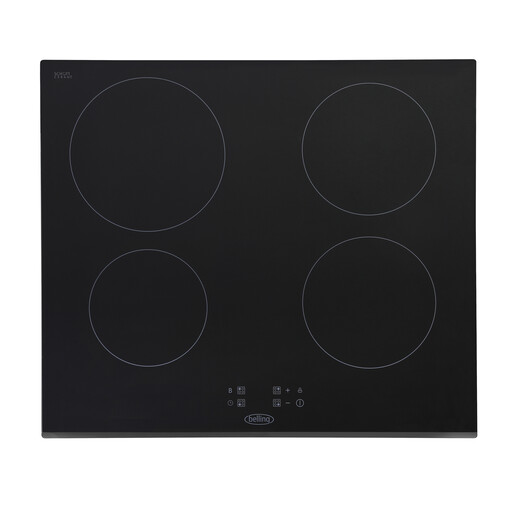 No image available
This is a 60 cm-format candidate for a built-in kitchen where the pan layout and opening need checking together.
Compare the intended risotto pan with the cooking-zone guidance, and check the exact installation sheet for cut-out and electrical requirements.
 No image available
Consider the flexible bridge if an unusually wide pan makes fixed-zone placement awkward during batch cooking.
The product name specifies four cooking zones, touch controls and boost mode. Its 77 cm width makes checking the worktop opening especially important; confirm the connection requirements too.
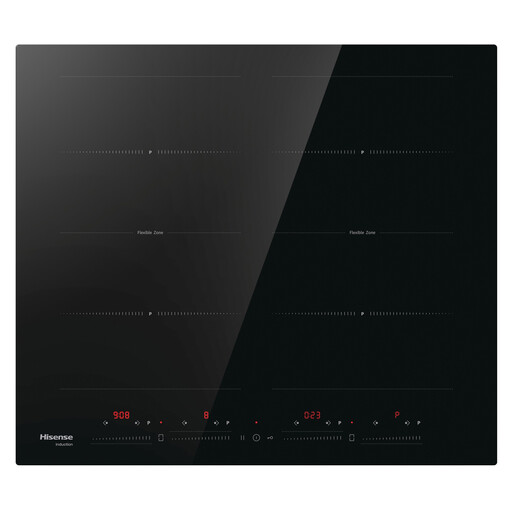 No image available
Area Flex makes this a model to examine if adaptable pan placement matters to your batch-cooking setup.
Check your largest pan against the model’s cookware guidance, then confirm the cut-out and electrical requirements in its installation instructions.
It will work only if its base is induction-compatible and suits the intended cooking zone. Beko recommends checking whether a magnet clings to the base; also compare the base size with the hob’s cookware guidance rather than assuming every metal pan will work.
Not necessarily: a conventional induction-compatible risotto pan and ordinary saucepans may suit a standard four-zone layout. Consider a flex or bridge area when a wide or elongated pan, or the placement of several pans, makes fixed zones awkward.
The nominal width alone cannot establish that it will fit. AEG specifies a 560 × 490 mm built-in opening and hardwired connection for the TI64IG00FZ, while the Bosch PUG61RAA5B listing describes a 13 A plug-in arrangement. Check the installation sheet for the exact model against your opening and electrical setup.
Confirm the hob’s connection requirements and the work involved at your property with a competent installer before purchase. Requirements depend on the nation and scope of work: GOV.UK’s Approved Document P addresses electrical safety and notification in England, while GOV.WALES provides separate guidance for Wales. Ask the installer or local authority which route applies rather than assuming one rule covers every UK installation.