Frequent batch cooks
If you prepare several fish parcels in one session, usable tray space and shelf positions matter more than a capacity figure on its own. Check whether your intended arrangement fits without crowding the oven.


Choose an oven by the number of fish parcels you need to cook at once and whether your trays fit its usable shelves—not by litre capacity alone. A large countertop convection oven is worth considering if you need a separate appliance and have the worktop space; a compact mini oven suits smaller batches, while a suitable built-in fan oven is another option for frequent multi-tray cooking. In every format, check the controls, cleaning access and how you will confirm the fish is thoroughly cooked.
If you prepare several fish parcels in one session, usable tray space and shelf positions matter more than a capacity figure on its own. Check whether your intended arrangement fits without crowding the oven.
A countertop oven avoids finding space for another built-in appliance, but it still needs a suitable worktop position, room to open the door and somewhere practical to keep its trays.
Accessible trays and clear temperature controls make the cooking and cleaning routine easier to plan. When checking doneness with a food thermometer, use a clean probe and follow the applicable cooking instructions.
Decide whether an existing built-in oven, a large countertop model or a compact mini oven fits the batches you actually make. Then check tray fit and worktop or housing requirements before comparing programmes.
Consider it when: You need a separate appliance and want to use more than one cooking level where the model and recipe allow it.
Allow for: A substantial worktop footprint and enough space to open the door and handle the trays.
Consider it when: You usually cook fewer parcels and worktop space is the tighter constraint.
Allow for: More cooking cycles if your planned parcel layout will not fit in one batch.
Consider it when: You cook batches regularly and have suitable kitchen housing or an existing oven with enough usable shelf space.
Allow for: Housing and installation requirements if you are buying a replacement, rather than assuming any built-in model will fit.
| Concern | What to check | Who this matters to |
|---|---|---|
| Usable batch capacity | Compare your widest tray and parcel layout with the internal tray dimensions and usable shelf clearance. Check which racks and trays are included. | If I want to cook several parcels together, I need to know they fit without relying on repeated cycles. Around 33% of consumers put usable capacity first. |
| Cooking control | Look for adjustable temperature and timing, and model-specific evidence of heat distribution where available. Check doneness rather than relying on a preset. | When parcels sit on different shelves, I want control over the cooking and a way to check the food at the centre. For around 27% of consumers, this is the primary concern. |
| Kitchen fit | For a countertop model, measure its footprint and open-door clearance; for a built-in model, confirm the housing and installation requirements. | I cannot give up preparation space or assume a replacement will fit my kitchen. Kitchen fit comes first for around 20% of consumers. |
| Cleaning and later meals | Check which food-contact parts are removable and how the manual says to clean them. Plan to follow appropriate guidance when cooling, storing and reheating portions. | If I am saving parcels for another meal, I need a manageable cleanup and storage routine as well as thoroughly cooked food. Around 20% of consumers prioritise this workflow. |
A capacity figure cannot tell you whether your tray, parcels and intended shelf arrangement will fit. Ninja describes the DT200UK as a two-level countertop oven, while Tefal identifies the Optimo 19L as a compact convection model; neither description replaces checking your own layout.
Measure your tray and planned parcel spacing, then confirm the oven’s internal dimensions, included accessories and door clearance before ordering.
Which? assesses heat distribution in its built-in-oven testing. A convection label or preset does not, by itself, establish how evenly a particular model will cook fish parcels.
Use model-specific evidence where available, follow the recipe and oven instructions, and check that the food is thoroughly cooked before serving.
Fish juices can reach trays and other accessible surfaces. A claim about washable accessories should not be taken to mean that the whole oven can be cleaned in the same way.
Check the exact model’s manual for removable parts, cleaning restrictions and safe tray placement. Clean food-contact accessories and any thermometer probe after use.
Ninja’s DT200UK is a large countertop option for cooks considering a separate, two-level oven.
The Optimo 19L is a compact convection-oven option for cooks making smaller batches.
Sage is relevant if you are also considering a smart countertop oven or an air-fryer-style convection appliance.
These built-in double ovens are options for cooks planning regular fish-parcel batches in a fitted kitchen. Compare the required installation position and the space available for your trays before choosing a model.
 No image available
Consider this built-in double-oven format if you prepare recurring batches in a fitted kitchen. Check the appliance and housing dimensions before installation, including the differing height figures in the product information; measure your trays against the usable shelf space.
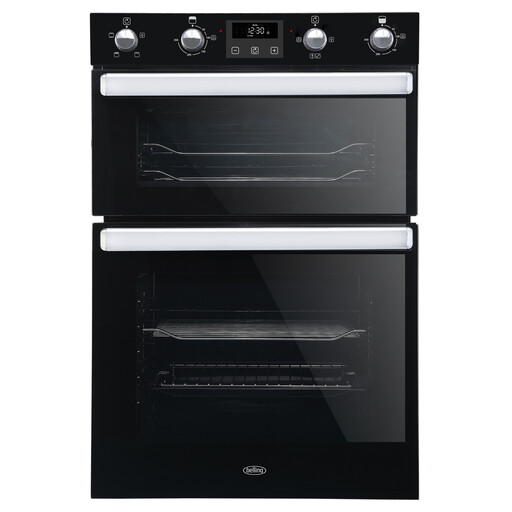 No image available
This built-in double-oven format is relevant if you have suitable housing and want room to plan more than one dish or tray. Confirm the installation dimensions and your parcel-tray fit; do not assume that parcels on different shelves will finish together.
 No image available
Consider this double oven if you are planning an eye-level built-in installation for regular cooking. Confirm the intended housing and connection requirements, then check that your parcel trays fit the usable shelf space; do not plan it as an under-worktop replacement.
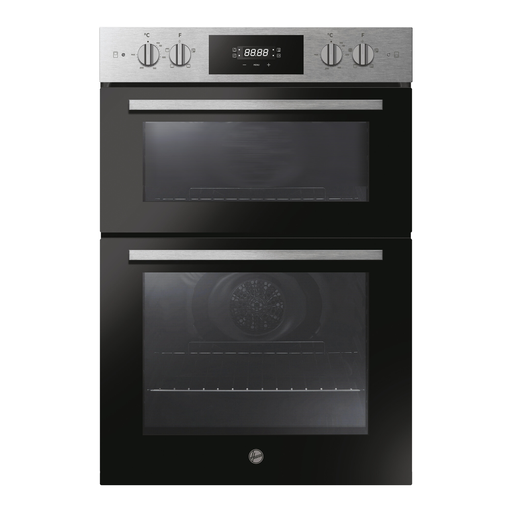 No image available
This built-in double oven is a candidate for a fitted kitchen used for repeated batches. Product information conflicts on whether the model is electric or dual-fuel, so confirm its exact fuel type and connection requirements before arranging installation; check parcel-tray fit too.
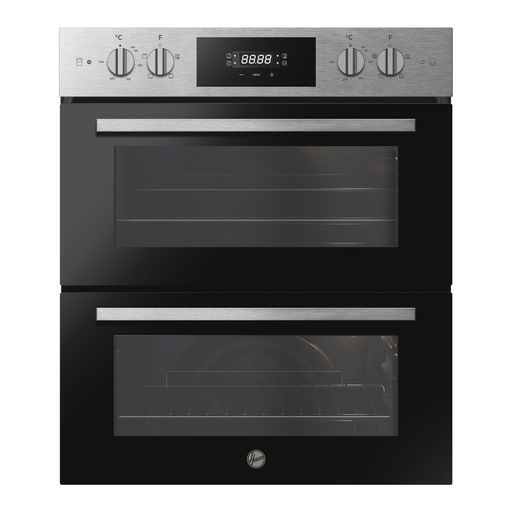 No image available
Consider this built-under format if that is the installation your kitchen requires. Product information conflicts on electric versus dual-fuel operation: resolve the fuel type and connection requirements before installation, and confirm that your parcel trays fit.
No: the useful size depends on how many parcels you cook together and whether your trays fit. A compact mini oven can suit smaller batches; consider a larger countertop or suitable built-in oven when you regularly need more usable shelf space.
Yes, if the exact oven supports that arrangement, the parcels fit without crowding and the recipe permits simultaneous shelves. Ninja describes two-level cooking for the DT200UK, but that feature alone does not establish identical cooking at both positions; check the food thoroughly before serving.
No preset alone confirms that the centre of each parcel is thoroughly cooked. Follow the recipe or packet instructions and, where appropriate, use a clean food thermometer to check the thickest portion; GOV.UK cooking guidance also recommends checking food rather than relying on appearance alone.
Cook the fish thoroughly, then follow home food-safety guidance for cooling, storing and reheating the portions you save. Plan this routine alongside oven capacity: fitting every parcel into one cooking session does not remove the need to handle leftovers safely.