
24/7 Customer Support

Free returns

Same-day & Next-day Delivery

Quality Guaranteed

Unlock Your Welcome Offers: FREE Delivery | Up to 80% OFF | Free 30-day JoyPlus trial
Download the APP
Navigating the pet food aisle can feel like a chore. With shelves packed with brightly coloured bags and tins, all promising a happy, healthy pet, it is difficult to know which claims to trust. As a UK pet owner, you want to provide quality nutrition without falling for marketing hype or overspending on features your pet may not need. This guide is designed to help you understand the key factors in choosing the right cat and dog food in the UK, so you can make a confident and informed decision.
Before we look at our recommendations, let's address some common purchasing pitfalls that can lead to wasted money and nutritional imbalances for your pet.
grain free dog food and cat food has grown, often positioned as a premium or hypoallergenic option. While beneficial for pets with specific grain allergies, it is not automatically superior for every animal. Some grain-free formulas replace grains with high levels of potato or pea starch, which may not be ideal for all pets. The focus should always be on the overall quality and balance of the ingredients, not just the absence of one type.complete dry cat food) provides all the nutrients your pet needs in a single product. A complementary food, such as many wet cat food toppers or natural dog treats, is designed to be fed alongside a complete meal and is not nutritionally balanced on its own. Feeding a complementary food as a main diet can lead to serious nutritional deficiencies over time.To avoid these traps, focus on a few key parameters on the product label. Understanding these will empower you to see past the marketing and assess the true quality of the food.
Ingredients are always listed in descending order by weight before cooking. This means the first three to five ingredients make up the majority of the product.
dog training treats.The "Analytical Constituents" section provides a breakdown of the food's nutritional content. Here is what the key terms mean for your pet:
low fat dog chews for treats.Wet cat food and pouches have high moisture content (around 80%), which is excellent for hydration, whereas dry kibble has very little (around 10%).The choice between wet and dry food often comes down to your pet's needs and your lifestyle.
complete dry cat food can be a convenient staple.multipack cat food pouches can offer variety and value for money.dog training treats that are palatable but not packed with calories or sugar.Here are a few options that align with different needs and preferences, helping you make a practical choice.
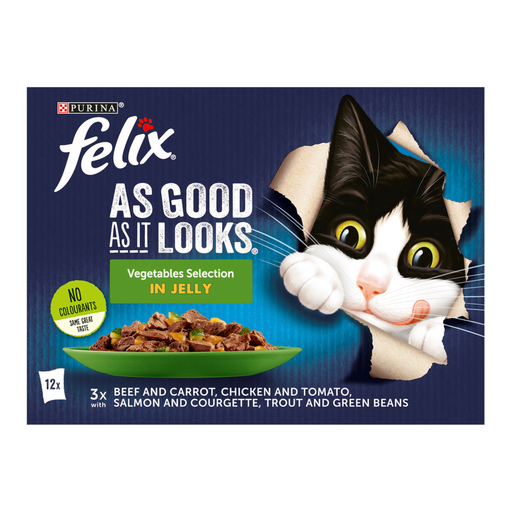
Why This Fits Their Persona: This owner wants a reliable, affordable daily food from a known brand. This `Felix cat food` multipack offers variety and convenience, providing balanced meals without a premium price tag. The single-serve pouches ensure freshness and portion control.
It is clearly labelled as 100% complete and balanced nutrition, ensuring owners do not fall into the complementary food trap. The meat percentages are stated, providing transparency on the "with" claim.
Provides essential hydration through its high moisture content (82%) and is enriched with vitamins A, D3 and E, plus Omega-6 fatty acids for skin and coat health.
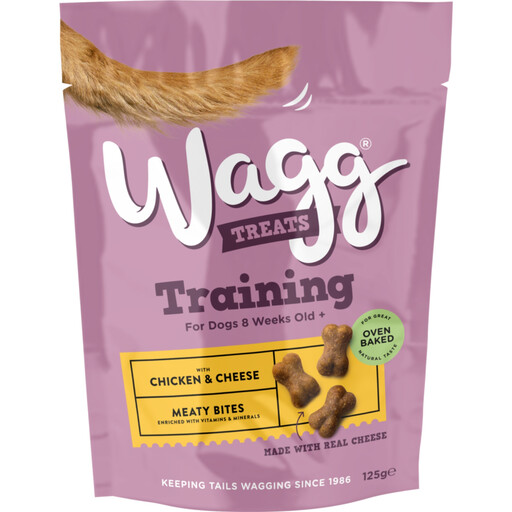
Why This Fits Their Persona: This owner needs a high-value reward for training sessions that is healthy enough for regular use. These treats are specifically designed for training, are suitable for dogs from 8 weeks old and come in a convenient bulk pack.
It has no added sugar and no artificial colours or flavours, directly avoiding the trap of unhealthy fillers common in many treats. It is also clearly marked as a complementary food, guiding the owner to use it correctly.
These oven-baked treats are enriched with vitamins and minerals to support health. The high protein content (24%) makes them a satisfying and motivating reward for training.

Why This Fits Their Persona: This dog owner wants to enhance their pet's dry food with high-quality, natural ingredients. They prioritise high meat content and avoid fillers. This `Encore` product serves as an ideal, flavourful topper to make meals more appealing.
It is transparently labelled as a complementary pet food, preventing misuse as a sole diet. The high, specific meat content (46% chicken breast) avoids the vague "with meat" labelling trap entirely.
Made with 100% natural ingredients and contains no cereals, fillers or artificial preservatives. It is a natural source of Omega-3 & 6 for skin and coat health.
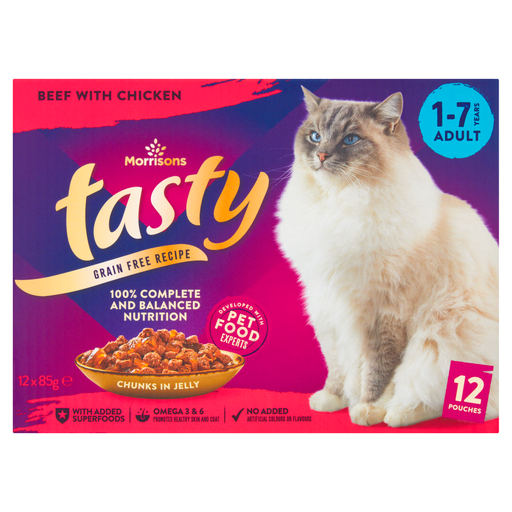
Why This Fits Their Persona: This cat owner is looking for an accessible, grain-free option during their regular shop. This `Morrisons pet food` offers the specific dietary feature they want in a convenient `multipack cat food pouches` format.
This product avoids the "grain-free halo" trap by being a 100% complete and balanced meal, not just a marketing feature. It also has a very high, clearly stated meat content (26% Beef, 23% Chicken).
The grain-free recipe is ideal for cats with sensitive digestion. It includes Omega 3 & 6 for a healthy coat and superfoods like cranberry and rosemary for added nutritional benefits.
We have compiled a complete, real-time list of products that fully satisfy these strict selection criteria and UK safety regulations.
1. How do I switch my cat or dog to a new food without upsetting their stomach? To avoid digestive upset, introduce the new food gradually over 7-10 days. Start by mixing a small amount of the new food (around 25%) with their old food (75%). Every few days, increase the proportion of the new food while decreasing the old, until you have fully transitioned.
2. Is wet food or dry food better for my pet? Neither is inherently "better" as both can provide complete nutrition. Dry food is good for dental health and is often more economical. Wet food is great for hydration, especially for cats, and is highly palatable for fussy eaters. Many owners find a mixed-feeding approach, offering both wet and dry food, works well.
3. What is the difference between 'complete' and 'complementary' pet food? A complete food contains all the necessary nutrients in the correct balance to be fed as your pet's sole diet. A complementary food, like treats or toppers, is not nutritionally balanced and must be fed alongside a complete food. Always check the label to ensure you are feeding your pet correctly.