Regular family-laundry pressers
If several linen tea towels go into the same ironing session as other household laundry, sustained steam and enough water for the session matter more than a headline boost figure.


For linen tea towels pressed in regular family-laundry batches, choose a steam generator iron by its continuous steam, tank capacity and scale-care routine rather than its steam-boost figure alone. If sessions are smaller, cupboard space is tight or you iron several fabrics together, give more weight to storage size and temperature controls; always check each textile’s care label.
If several linen tea towels go into the same ironing session as other household laundry, sustained steam and enough water for the session matter more than a headline boost figure.
If the iron and its separate base must fit in a small cupboard or on a crowded ironing board, compare the assembled footprint and handling weight before choosing a larger tank.
If you press linen tea towels alongside other ironable fabrics, automatic-temperature controls may reduce setting changes. The care label still determines whether each item can be ironed.
For family tea-towel ironing, start with the size of a typical session, then weigh scale maintenance against the space and effort of storing the base.
| Concern | What to check | Who this matters to |
|---|---|---|
| Regular ironing batches | Compare continuous steam in g/min and tank capacity in litres; treat boost figures as intermittent output. | If tea towels join a substantial family load, I want to keep pressing without frequent refill breaks. Around 45% of consumers would put that batch-handling need first. |
| Scale care | Identify the exact model’s filter, collector or descaling procedure and the steps needed to use it. | When I iron regularly, I want a cleaning routine I can keep up with so scale does not disrupt steam. That would be the primary concern for around 33% of consumers. |
| Storage and fabric changes | Check base dimensions and handling weight; if considering automatic temperature, check which fabrics the claim covers. | If storage is tight or I switch between ironable household fabrics, I would favour a manageable setup. Around 22% of consumers would make that their main deciding need. |
A boost is intermittent, so it does not describe how the iron supplies steam throughout a family-laundry session.
Compare continuous output, tank size, scale care and the space the base needs alongside the boost specification.
Philips notes that scale can affect steam output and contribute to brown water, marks or leaks; cleaning methods differ between models.
Read the chosen model’s instructions for its filter, collector or descaling programme, including cooling and draining steps.
A larger tank may mean fewer refill interruptions, but the separate base still needs a suitable place on the board and in storage.
Measure both spaces and compare the complete appliance dimensions and weight before ordering.
Automatic-temperature claims for the models discussed apply to ironable fabrics; they do not override restrictions on a particular textile.
Check the label before applying heat or steam, especially when a towel has a blend, print or trim.
Tefal’s steam-generator range includes smaller-tank models and larger removable-tank models for different ironing-session sizes.
Philips has automatic-temperature options relevant to households ironing different ironable fabrics alongside linen.
Braun’s CareStyle range is worth examining when storage space and straightforward temperature control are priorities.
The Speed Steam line provides a larger removable-tank option to consider for longer family-laundry sessions.
These steam generator irons offer different tank sizes and controls to weigh against the length of your ironing sessions, available storage and the other fabrics you press.
 No image available
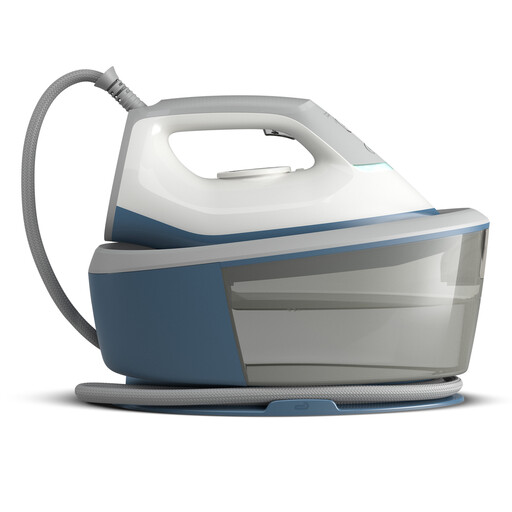
Consider this model if tea towels are part of longer household ironing sessions and a 1.8 L tank suits the space you have.
The listed power is 2800 W. Check the model’s scale-collector instructions and your towels’ care labels before use.
 No image available
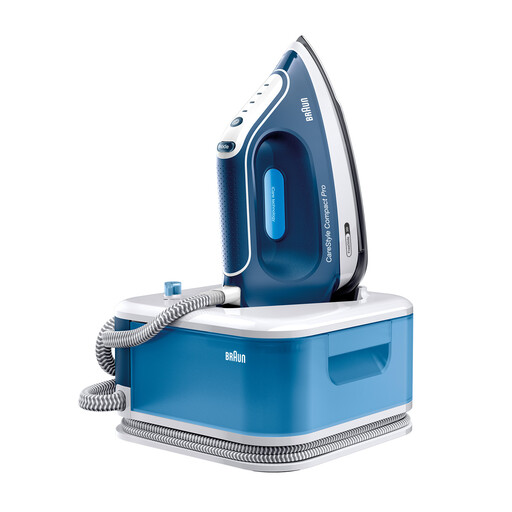
Consider this model for household tea-towel pressing if its size and filling arrangement suit your usual batch.
The product name specifies 2400 W. Check its tank capacity, temperature settings and descaling instructions for the exact unit before choosing it.
 No image available
Consider this model if you press tea towels alongside other ironable fabrics and want to assess its iCare temperature control.
The product name specifies a 1.5 L tank, 7.5-bar pressure and a FreeGlide 3D soleplate. Check storage dimensions, scale-care instructions and each fabric’s care label.
For repeated tea-towel pressing, compare continuous steam and tank capacity first, then consider the boost for individual stubborn creases. Which? treats ironing ability and limescale performance as relevant testing factors; manufacturers’ output figures describe their specified models, not independently measured results for your towels.
A large tank is more relevant when tea towels join a longer family-laundry session; smaller batches may not justify the extra base space. Compare the tank size with how often you are willing to refill and check whether the exact model permits refilling during use.
Follow the cleaning procedure for your exact model rather than assuming an anti-scale feature needs no attention. Philips says regular descaling helps prevent brown water, marks, leaks and reduced steam output; unplug the appliance and follow its specified cooling and draining instructions before maintenance.
No: the automatic-temperature claims discussed here apply to ironable fabrics. Check each tea towel’s care label, particularly if it has a blend, coating, print or trim, before applying heat or steam.