
24/7 Customer Support

Free returns

Same-day & Next-day Delivery

Quality Guaranteed

Unlock Your Welcome Offers: FREE Delivery | Up to 80% OFF | Free 30-day JoyPlus trial
Download the APP
A chopping board seems like one of the simplest purchases for your kitchen. Yet, many of us have a collection of warped, stained or cracked boards tucked away in a cupboard. The right cutting board is more than just a surface for slicing vegetables; it's a workhorse for daily prep, a guardian of your expensive knives and can even double as a stylish serving platter.
However, navigating the market can be tricky. Misleading claims and poor design can lead to a purchase you regret within months. Before you invest, let's look at the common pitfalls that UK shoppers encounter.
To avoid these issues, focus on a few core parameters. Understanding the materials and design features will help you select a board that is durable, safe and suits your kitchen style.
The material of your chopping board is the most critical decision. Each has distinct advantages for different uses.
Wooden and Bamboo Boards: A classic wooden chopping board is prized for being gentle on knife edges. Hardwoods like maple and walnut are durable, and some have properties that can help reduce the visibility of knife marks. A bamboo cutting board is a popular, sustainable alternative. Bamboo is a grass, not a wood, and its dense fibres make it naturally resistant to water and less prone to scoring than some softer woods. Both require occasional oiling to prevent drying out and cracking.
Stone Boards (Marble & Granite): A marble chopping board or granite chopping board brings a touch of elegance to any kitchen. Their non-porous surfaces are highly hygienic, as they don't absorb liquids or odours, making them simple to wipe clean. The naturally cool surface is ideal for working with pastry or chocolate. While they are exceptionally durable, they are very hard and can dull knife blades more quickly than wood. Their weight provides stability, but look for models with non-slip feet to protect your work surfaces. They also make a fantastic serving board for a stylish cheese board or charcuterie board presentation.
Composite and Plastic Boards: Modern composite boards, such as those combining stainless steel and food-grade plastics, offer unique solutions. Double-sided designs allow you to separate raw meat from vegetables, enhancing food safety. They are often lightweight, dishwasher-safe, and designed to be a hygienic cutting board solution for busy kitchens.
Beyond material, look for features that enhance functionality and safety.
We've filtered through the options to match specific boards with different kitchen needs and styles.

Why This Fits Their Persona: For the host who values aesthetics as much as function, this board transitions effortlessly from a prep surface to a stunning centrepiece for a charcuterie or cheese presentation. Its large size and sophisticated black marble finish complement modern UK kitchen designs.
The non-porous marble surface directly counters the "hygienic illusion" of scored plastic. Integrated protective feet prevent it from becoming a "countertop damager".
Dual-purpose design for both prep and elegant serving. The hygienic, easy-clean surface resists stains and odours.
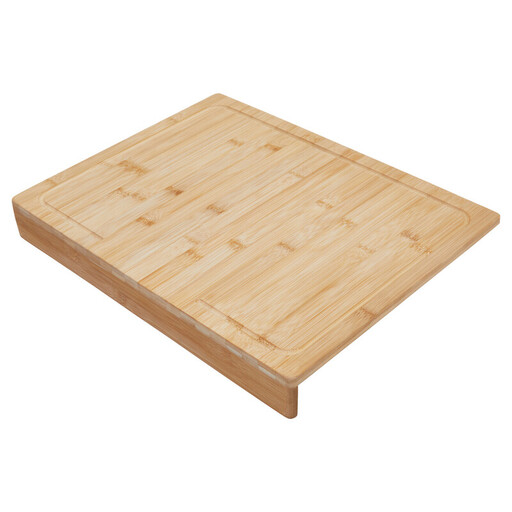
Why This Fits Their Persona: This is a true kitchen workhorse for the person who cooks daily. Its large size, sustainable bamboo material and practical raised edge make it ideal for heavy-duty chopping in a busy family kitchen.
The substantial 5cm thickness and dense bamboo construction are engineered to resist the "warping trap" that plagues thinner, lower-quality boards.
Features a practical raised edge to contain juices and food. The durable, non-porous bamboo is hygienic and gentle on knives.
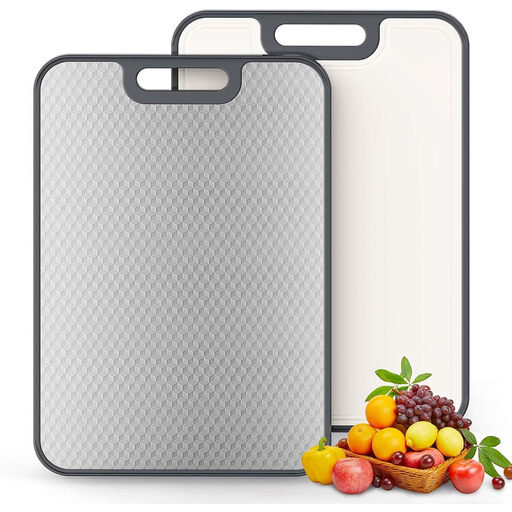
Why This Fits Their Persona: Perfect for those with smaller kitchens or a strong focus on food safety. This board provides two distinct surfaces—stainless steel for meats and a composite for vegetables—in one slim profile, saving space and reducing cross-contamination risk.
Its dual-sided design is a direct solution to the cross-contamination aspect of the "hygienic illusion". The durable, non-porous materials are easy to clean and resist odours.
Two-in-one design for enhanced food safety. The board is dishwasher-safe for ultimate convenience in a modern kitchen.
We have compiled a complete, real-time list of products that fully satisfy these strict selection criteria and UK safety regulations.
The lifespan of a chopping board depends on the material and how well it's maintained. A key indicator for replacement is deep, hard-to-clean grooves. For plastic boards, if they have many deep knife scars, it's time for a new one. For wooden or bamboo boards, if they develop deep cracks that can't be repaired or if the board has warped significantly, it should be replaced to ensure a stable and hygienic surface.
There are arguments for both. A new, unscratched plastic board has a non-porous surface that is easy to sanitise. However, once it becomes heavily scored, those grooves can harbour bacteria. A well-maintained wooden board can be very hygienic; some woods contain natural compounds that inhibit bacterial growth. The most important factor for any board is keeping it clean and dry, and replacing it when it becomes worn.
You can, but it's important to be aware of the trade-offs. Stone surfaces are extremely hard and will cause your knife blades to become dull much more quickly than wood or bamboo. For this reason, many people reserve their marble chopping board for tasks that don't require heavy chopping, such as working with dough, assembling sandwiches or using it as an elegant serving board.