
24/7 Customer Support

Free returns

Same-day & Next-day Delivery

Quality Guaranteed

Unlock Your Welcome Offers: FREE Delivery | Up to 80% OFF | Free 30-day JoyPlus trial
Download the APP
A good chopping board is the unsung hero of the kitchen. It’s a fundamental tool used daily, yet finding the right one can be surprisingly difficult. The market is flooded with options, from rustic wooden boards to sleek marble slabs, each with its own set of promises. However, many home cooks find their new purchase quickly warps, dulls their knives or becomes a hygiene concern.
Before you invest, it’s crucial to understand the common pitfalls that lead to buyer’s remorse. By avoiding these traps, you can select a board that is not only a pleasure to use but also a lasting addition to your culinary toolkit.
To choose wisely, focus on a few core parameters that determine a board's performance, longevity and suitability for your cooking style.
The material of your chopping board dictates how it treats your knives, how you clean it and what tasks it’s best for.
Wooden and Bamboo Boards: A classic wooden chopping board, often made from acacia, cedar or mango wood, is a favourite for good reason. Wood has a slight give, which helps protect the sharp edge of your knives. Some woods even exhibit self-healing properties, where minor cuts can close up over time. A thick, end-grain butchers block is the gold standard for heavy-duty prep. A bamboo cutting board is another popular choice, valued for being a sustainable, hard and less porous material than some woods. However, be aware that the hardness of bamboo can be slightly less forgiving on knives compared to traditional woods. Both wood and bamboo require hand-washing and occasional oiling to prevent drying out.
Stone and Slate Boards: Materials like marble, granite and slate are non-porous, making them resistant to stains and odours. This, combined with their naturally cool surface, makes them ideal for working with pastry and dough. They also excel as an elegant serving board for presenting a charcuterie board or cheeses. Their primary drawback is extreme hardness, which makes them unsuitable for regular chopping.
Plastic and Composite Boards: A modern plastic cutting board offers convenience. They are typically lightweight, affordable and dishwasher-safe. Many are designed as a chopping board set with different colours for different food types to prevent cross-contamination. Some advanced models feature a dual-sided design, perhaps with stainless steel on one side for meat, which can be a very hygienic option. The main downside remains the potential for deep scarring over time, so they need to be replaced more frequently than wood or stone.
Beyond material, a few design elements can significantly improve your daily use.
To help you navigate the options, we’ve matched some standout products to different kitchen needs and user profiles.
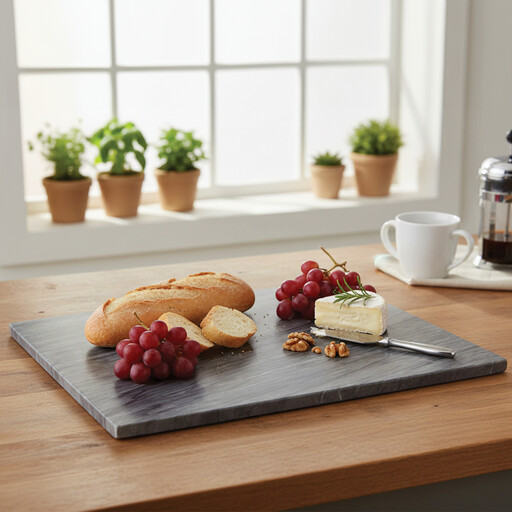
Why This Fits Their Persona: This board is for the home cook who values aesthetics as much as function. Its large size and sophisticated black marble finish make it a stunning centrepiece for serving cheese, charcuterie or canapés, effortlessly transitioning from a prep surface for pastry to a beautiful serving platter.
It sidesteps the "blade-dulling beauty" pitfall by excelling at its intended purpose: serving and light prep like pastry work. Its protective feet also prevent it from scratching countertops, a common oversight with heavy stone boards.
Its non-porous marble surface is hygienic, resisting stains and odours. The substantial weight and non-slip feet provide excellent stability during use.
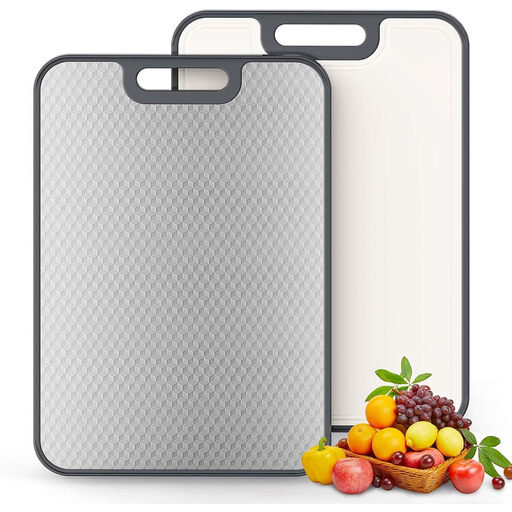
Why This Fits Their Persona: This is for the busy, health-conscious cook who prioritises efficiency and food safety. The dual-sided design—stainless steel for raw meat and wheat straw for vegetables—is an intelligent solution for preventing cross-contamination in a compact form.
It directly counters the "hygienic plastic" trap. The non-porous stainless steel side won't harbour bacteria from raw meat, and the wheat straw side is more durable than cheap plastic, resisting deep grooves for longer.
The dual-sided design is its core strength, promoting safe food handling. It is also dishwasher-safe, offering maximum convenience for cleanup.
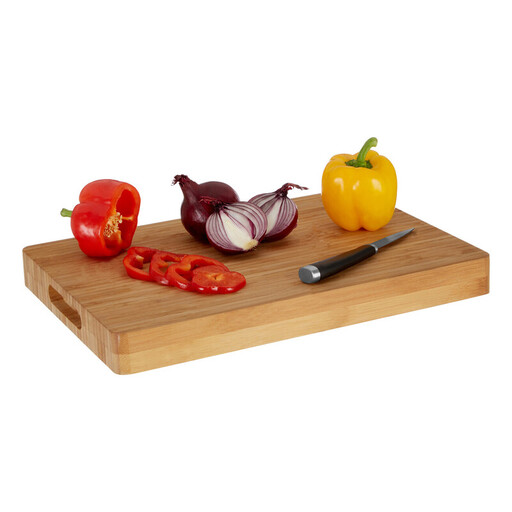
Why This Fits Their Persona: This is for the home chef who needs a reliable, heavy-duty work surface. Its thick, 4cm bamboo construction gives it the heft and stability of a traditional butchers block, making it perfect for everything from vigorous chopping to portioning large cuts of meat.
This board completely avoids the "unstable lightweight board" pitfall. Its substantial weight (2.75kg) and thickness ensure it stays firmly planted on the counter, providing a safe and secure foundation for any cutting task.
The integrated handles are a major plus, making it easy to lift and position this heavy board. The durable bamboo is also gentle on knife edges, preserving their sharpness.
We have compiled a complete, real-time list of products that fully satisfy these strict selection criteria and UK safety regulations.
The simplest method is to use separate chopping boards for different food groups. A common system is one board for raw meat, poultry and fish, and another for fresh produce and ready-to-eat foods like bread and cheese. If you only have one board, always wash it thoroughly with hot, soapy water after preparing raw meat and before using it for anything else.
Never soak a wooden or bamboo board or put it in the dishwasher, as this can cause it to warp and crack. After each use, wash it by hand with mild soap and warm water, then dry it immediately with a towel and let it air dry completely standing on its edge. To keep the wood from drying out, periodically apply a food-safe mineral oil.
You should replace your plastic cutting board once it has developed deep, hard-to-clean grooves and scratches. A heavily scarred surface is not only difficult to sanitise but can also shed microplastics into your food. If the board is permanently stained or warped, it is also time for a replacement.