Small-batch olive cooks
If you usually make a topping, dressing or dip for one, a compact tool may be more proportionate to the job. Kenwood describes its Easy Chop mini chopper as intended for small quantities.


For a regular one-person portion of pitted olives, start by comparing a compact electric mini chopper with a manual pull-cord processor. Choose electric pulse control if you want to chop frequently; consider a manual model if plug-free use and stopping at a particular texture matter more. A full-size processor makes more sense when you will also use its wider food-preparation functions.
If you usually make a topping, dressing or dip for one, a compact tool may be more proportionate to the job. Kenwood describes its Easy Chop mini chopper as intended for small quantities.
If you want recognisable olive pieces for a salad or topping, look for a way to stop and inspect the chop. Kenwood lists pulse control for the Easy Chop, while the Zyliss Easy Pull uses a manual pull mechanism.
If olives are only one of several regular preparation jobs, consider whether you would use a larger processor’s other functions. Bosch lists chopping and grating among the functions of its MCM3100W, though that model is no longer available.
For one-person olive portions, decide whether you chiefly need a chopping tool or will regularly use broader food-preparation functions; then weigh texture control, storage and washing.
Consider it: When small olive portions are a frequent job and you want electric operation with control over when chopping stops.
Trade-off: A mini chopper does not replace the slicing, grating and other functions of a full-size processor.
Consider it: When you want plug-free chopping and prefer to control the process by stopping between pulls.
Trade-off: Repeated pulling takes effort, particularly if you prepare olives often.
Consider it: When you will regularly use functions beyond olive chopping, such as slicing or grating.
Trade-off: A larger bowl and accessory set take more storage and washing than a small chopping task alone may warrant.
| Concern | What to check | Who this matters to |
|---|---|---|
| Small portions and storage | Check the appliance’s footprint and whether its instructions cover the small quantity you usually chop; bowl capacity alone is not a minimum-quantity guarantee. | If I only make a small olive topping, I want a tool that fits both the portion and my cupboard. Around 36% of consumers would put portion size and storage first. |
| Texture control | Look for electric pulse control or a manual mechanism you can stop between pulls; inspect the olives in stages. | For a salad, I want to stop while the olive pieces are still distinct rather than continue towards a finer chop. Roughly 29% of consumers would make texture control their main concern. |
| Cleaning | Check care instructions part by part, especially for the blade unit and lid. | When I chop only a little, I do not want washing the appliance to become the larger task. Cleaning would come first for around 21% of consumers. |
| Other preparation jobs | Consider a larger bowl and accessories only for functions you expect to use regularly. | If I also prepare other ingredients, I need those functions to justify a larger machine. Approximately 14% of consumers would prioritise wider versatility. |
Extra capacity and accessories are useful only if you will use them; a recurring one-person portion may not justify the additional storage and washing.
Compare compact electric and manual options first, then consider a full-size model if other preparation jobs are part of your routine.
Motor rating does not tell you how easily you can stop at the olive texture you want.
Check for pulse or speed control on an electric model, or a manual mechanism you can stop between pulls. Chop in short stages and inspect the result.
Care instructions can differ between components. For the Zyliss Easy Pull, Joybuy specifies a dishwasher-safe bowl and blade unit but a lid that should be washed by hand.
Read the instructions for the exact model and each removable part before washing it.
Kenwood offers both compact choppers and larger food processors. It markets the Easy Chop CHP61.100WH for small quantities.
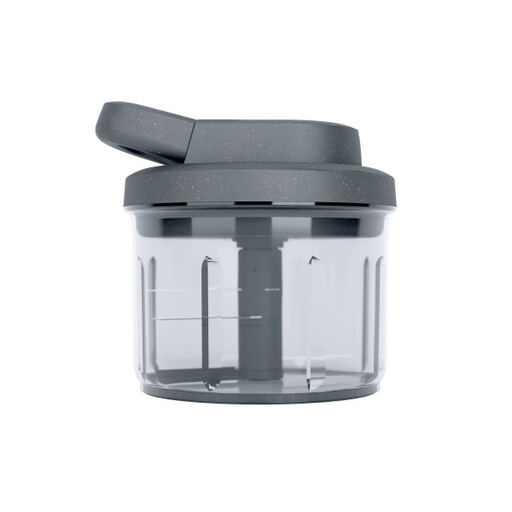
The Easy Pull is a manual option for chopping without electricity and stopping between pulls.
The MCM3100W illustrates a larger, multi-function processor for preparation jobs beyond a small olive portion.
This manual pull-cord option is relevant if you want plug-free olive chopping and control over when to stop. Check that its bowl suits the portion you normally prepare.
 No image available
Consider this manual processor if you want to chop olives without a plug and stop between pulls to check their texture.
Joybuy describes the bowl and blade unit as dishwasher-safe; the lid should be washed by hand. Manual chopping takes repeated pulls, and you should check whether the bowl suits your usual one-person portion.
Usually, a compact electric mini chopper or manual pull-cord processor is the more proportionate starting point for a small olive portion. Consider a full-size processor if you will also use its wider preparation functions regularly.
Process them in short stages and inspect the texture between stages. An electric pulse control or a manual pull mechanism gives you a way to stop and check before continuing.
No; follow the instructions for each part of the exact model. Kenwood lists dishwasher-safe tools for its Easy Chop CHP61.100WH, while Joybuy specifies that the Zyliss Easy Pull lid should be washed by hand even though its bowl and blade unit are dishwasher-safe.
Yes. UK Department for Education food-safety guidance for early years providers says to remove stones and pips from fruit before serving it to young children. Use pitted olives or remove the stones before preparing a child’s portion.