Choose a stereo pair you can position properly if following the placement of voices across a choir matters to you; KEF’s stereo and placement guidance supports this as a setup choice, not a measured promise of choral clarity. An active pair keeps streaming and amplification together, while passive speakers need a compatible amplifier; consider larger designs for choral-orchestral works only if you have space to position them well. Audition familiar recordings where possible, because cabinet size and published specifications alone cannot tell you how a choir will sound in your room.
Who these choices suit
Listeners following individual vocal lines
If diction and the placement of choir sections matter more to you than bass weight, make room for two speakers placed symmetrically. Use familiar, densely scored passages to judge whether you can follow the voices; KEF’s placement guidance makes positioning a sensible starting point, not a guarantee of clarity.
Listeners wanting simple streaming
If recordings come mainly from a phone, computer, TV or streaming service, an active stereo system can avoid a separate amplifier. Check the exact inputs you use: KEF lists streaming and wired connections for its LSX II, but connection sets vary by model.
Listeners playing large choral-orchestral works
If organ, orchestra and chorus are central to your listening, larger floorstanding and three-way speakers are options to audition. Q Acoustics’ 3050i and Wharfedale’s Linton illustrate those different formats; allow space for the speakers and their recommended placement before choosing either route.
What matters when choosing
Start with the system you can accommodate, then decide which aspect of choral playback would most affect your choice. The four concerns below describe different primary needs; none makes a speaker format suitable for every room.
Active wireless stereo
Choose when: you want streaming and amplification within a two-speaker system.
Trade-off: the system’s built-in connections and amplification shape what you can change later.
Passive standmounts
Choose when: you own or want to select a compatible amplifier separately.
Trade-off: amplification, speaker cable and suitable support become part of the setup.
Larger floorstanding or three-way speakers
Choose when: substantial choral-orchestral works are a priority and the room can accommodate larger cabinets.
Trade-off: more floor space and careful positioning are needed; size alone does not establish how natural voices will sound.
| Concern |
What to check |
Who this matters to |
| Vocal clarity and separation |
Check that you can place left and right speakers apart and audition dense passages you know. |
If I want to follow individual choir sections, I would prioritise a stable stereo presentation over extra bass. Around 29% of consumers would put that need first. |
| Scale and low-frequency foundation |
Compare cabinet size and published bass information, then audition organ or orchestral passages in a suitable room. |
For large sacred works, I would want the chorus and accompanying instruments to have enough presence without choosing by driver size alone. Roughly 29% of consumers would make that their primary concern. |
| Simple streaming |
Confirm the inputs and services required for your phone, computer or TV on the exact model. |
If I mainly stream recordings, I would rather have an integrated system than choose a separate amplifier. About 21% of consumers would put straightforward playback first. |
| Room fit and compatibility |
Measure speaker and listening positions; for passive models, check the amplifier requirements. |
Limited placement options or an existing amplifier might decide what I can use before I compare speaker size. Around 21% of consumers would prioritise that fit. |
Buying pitfalls
-
Buying passive speakers as a complete playback system
Passive speakers need external amplification. KEF, for example, specifies a 40–100 W amplifier requirement for the LS50 Meta.
Before ordering, check the complete path from your recording source through a compatible amplifier to the speakers.
You may also need speaker cable and suitable stands.
-
Choosing cabinet size before planning placement
Speaker and listening positions affect the stereo image and bass balance. KEF recommends adjusting placement rather than treating one position as final.
Measure where both speakers and your seat can go, then use the chosen model’s guidance and familiar recordings to adjust spacing and wall distance.
-
Treating a larger driver or lower bass figure as a listening verdict
Published specifications describe particular designs, not how clearly a choir will sound with your room, placement and amplifier.
Use specifications to narrow the options, then audition solo voices, a dense chorus and low orchestral or organ passages if possible.
-
Overlooking plugs, cables and socket loading
Adding active speakers and source equipment can increase the number of devices connected in one area. Electrical Safety First advises against overloaded extension leads or sockets.
Use undamaged leads and sockets, and stop using equipment that shows overheating, burn marks or other electrical faults.
Brands to consider for these setups
KEF
KEF offers two distinct examples here: the integrated LSX II wireless stereo system and the passive LS50 Meta standmount.
- KEF lists streaming options, HDMI ARC, Bluetooth, USB-C and a subwoofer output for LSX II.
- LS50 Meta instead needs a separate amplifier; KEF specifies a 40–100 W amplifier requirement. Check placement and support for the system you choose.
Q Acoustics
The 3030i standmount and 3050i floorstander offer different cabinet formats to consider for the available room.
- Q Acoustics quotes a 46 Hz low-frequency response for the 3030i and lists twin 165 mm drivers for the 3050i. Those figures describe the models, not their in-room choral performance.
- The 3030i needs suitable amplification and support; the 3050i takes floor space. Check each model’s placement needs.
Wharfedale
The Linton is a larger, three-way standmount to consider if you have space for speakers and separate amplification.
- Wharfedale specifies a 200 mm bass driver, 135 mm midrange driver and 25 mm tweeter for the Linton.
- Its substantial cabinet and external-amplifier requirement make room fit and system planning important; matching stands are optional.
Joybuy product choices
These choices cover compact powered speakers and passive bookshelf models for choral listening. Check package quantity before relying on a stereo setup, and allow for a compatible amplifier with either passive model.
 No image available
Edifier M60 Bluetooth 5.3 desktop speakers
Consider these for a compact listening position where you can place speakers apart. The title specifies 66 W RMS, 3-inch mid-bass drivers, 1-inch tweeters, LDAC, USB-C and AUX inputs; confirm the package quantity and power arrangements before planning the stereo setup.
View on Joybuy
 No image available
HiVi-Swans DIY3.1 passive bookshelf speakers, one pair
Consider this stated pair if you want a separate-amplifier stereo system. The title specifies a 6.5-inch driver; check amplifier compatibility, speaker dimensions and whether suitable supports are included before ordering.
View on Joybuy
 No image available
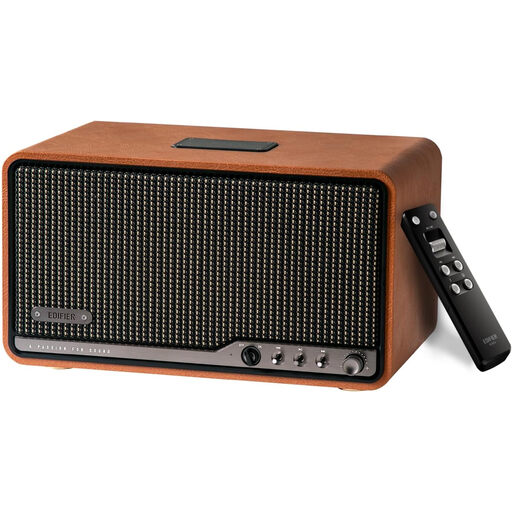
Edifier S300 wireless tabletop speaker, brown
Consider this model for a tabletop streaming setup, but plan for two S300 units if you want left/right stereo: this listing is for one item. Check the pairing requirements, power arrangement and connections you need before ordering.
View on Joybuy
 No image available
HiVi-Swans D3.1MKII passive bookshelf speakers
Consider this two-way design if you are assembling a passive-speaker system. The title specifies a 6.5-inch mid-bass driver, 28 mm soft-dome tweeter, rear bass reflex, 8 ohms and a 10–120 W range. Confirm amplifier compatibility, dimensions and whether the package contains two speakers.
View on Joybuy
Common questions
Is one Bluetooth speaker enough for choral recordings?
One speaker can play the recording, but choose two speakers you can position apart if stereo placement of choir sections is your priority. KEF describes a stereo soundstage from its separated LSX II speakers; that is useful setup guidance, not a choral-specific listening test.
Do passive bookshelf speakers need an amplifier?
Yes, passive bookshelf speakers need external amplification. KEF specifies a 40–100 W amplifier requirement for LS50 Meta, while Q Acoustics specifies a 25–75 W stereo-amplifier range for 3030i; check the requirements of the exact speakers and your amplifier before connecting them.
How should I position speakers for a choir recording?
Start with the left and right speakers at equal distances from your listening seat, then adjust their spacing and distance from the wall while playing a familiar passage. KEF suggests an equilateral listening triangle as a starting point; follow your chosen speaker’s manual where its instructions differ.
What else do I need for passive standmount speakers?
Plan for a compatible amplifier and speaker cable, plus suitable stands or other support where needed. Check the contents of the particular speaker package rather than assuming accessories are included.


